How to trade gold (XAU/USD): drivers, strategies and risk
Gold moves in dollars per ounce, not pips, and its daily range dwarfs most currency pairs. Here is what actually drives the metal, how position sizing differs from forex, and how to trade it without getting shaken out.
Gold is the instrument traders graduate to when currencies start to feel slow. It moves in dollars per ounce rather than pips, its daily ranges dwarf most currency pairs, and its swings test both stops and patience in equal measure. Done well, gold trading is one of the cleanest ways to express views on real yields, the dollar and fear. Done badly, it is one of the fastest ways to give back a currency-trading account.
This guide explains what actually drives the gold price, how gold's mechanics differ from forex, and how to build a plan that fits the metal's character instead of fighting it.
What you are actually trading
XAU/USD is the price of one troy ounce of gold in US dollars. There is no second economy on the other side of the trade — only the dollar — which makes gold a pure dollar-and-macro instrument rather than a relative-value one. That single fact explains most of its behaviour: when the dollar weakens, gold tends to rise, and when the dollar strengthens, gold tends to fall. The full driver map is in what moves the gold price.
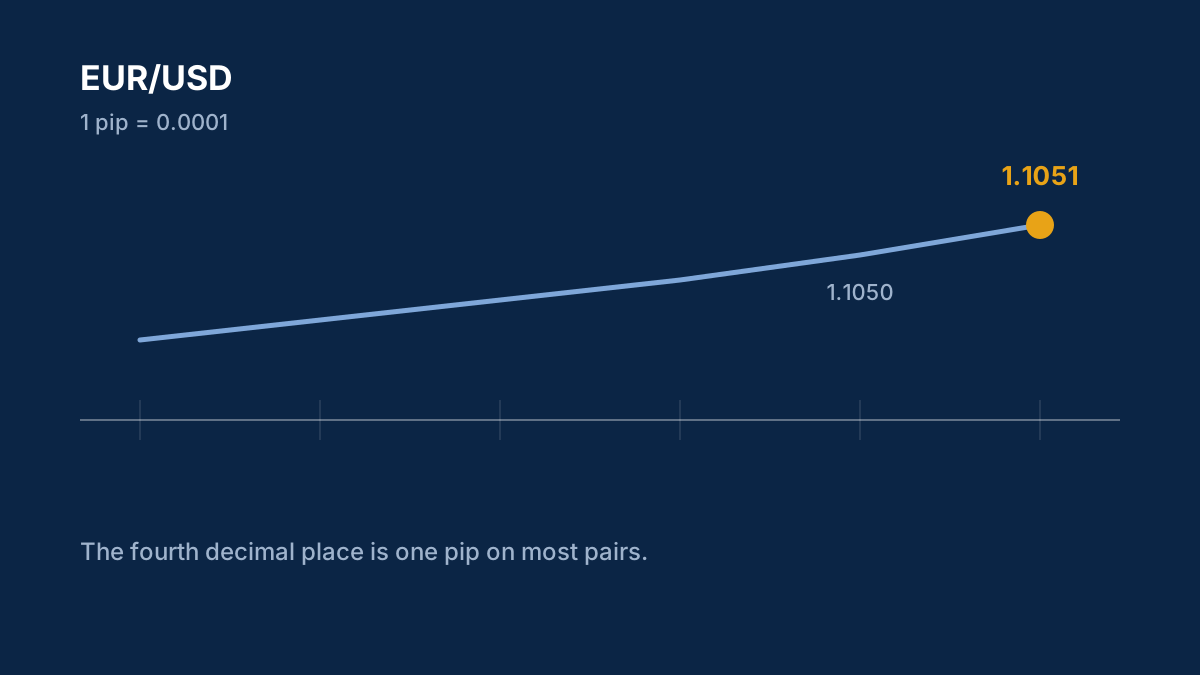
The mechanics matter before the strategy. Gold is quoted to two decimal places, contract sizes vary between brokers, and a "pip" on gold means different things on different platforms — always check the contract specifications before trading it. A one-dollar move in the gold price is typically worth $100 per standard lot where one lot is 100 ounces, but brokers differ, so verify on your own platform first.
The drivers, in order of importance
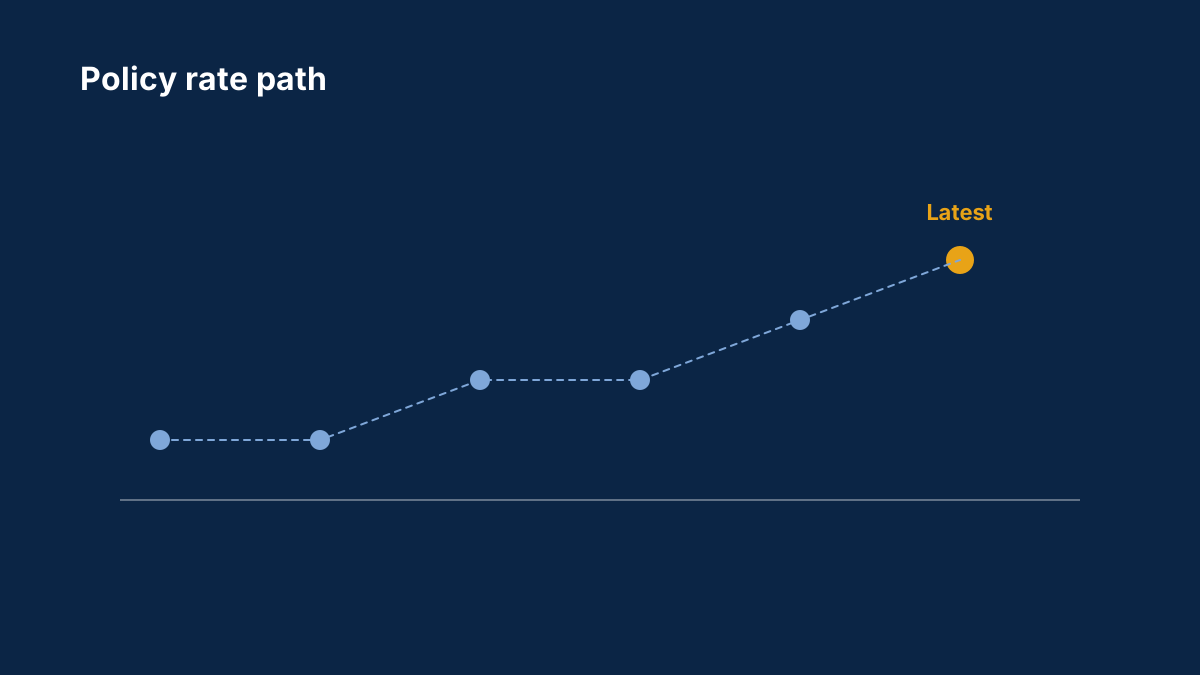
Real yields. The most reliable driver of gold is the real (inflation-adjusted) return on bonds. When real yields fall, holding gold — which pays nothing — becomes relatively more attractive. When real yields rise, gold loses ground to interest-bearing assets. This is why gold often falls when the Fed hikes and rises when markets expect cuts. Bond yields and exchange rates explains the yield side of the equation.
The dollar. Because gold is priced in dollars, a stronger dollar mechanically lowers the gold price, and a weaker dollar lifts it — before any other factor is considered. The dollar index guide covers how to read dollar strength at a glance.
Fear and haven demand. In crises, money flows into gold as a store of value. The metal's behaviour in 2026 has been a live demonstration: gold set a record of $5,589 an ounce in January and traded far below it in September as real yields and the dollar's strength reasserted themselves (report).
Central bank buying. Central banks have been large net buyers of gold for years, and their purchases put a floor under the market. The buying is slow, structural and hard to trade day to day, but it explains why gold's dips find support more reliably than they used to.
How gold differs from currency pairs
Three differences reshape every part of the plan:
Volatility. Gold's daily range in dollar terms is enormous compared with a currency pair. A move of $40 an ounce is an ordinary day; the same percentage move in EUR/USD would be a historic event. The ATR guide is the practical tool for measuring exactly how big your gold stop needs to be.
Sizing. Position sizes that feel right on EUR/USD are reckless on gold. The correct method is identical — decide the stop distance first, then size the position so the loss fits your risk per trade — but the stop distance will be far wider, so the position will be far smaller. Position sizing and risk per trade has the full calculation.
The news profile. Gold reacts to US data through two channels at once — the dollar channel and the real-yield channel — so CPI and payrolls days can produce two waves of movement. Fed days are the metal's biggest scheduled events, because the whole rate path reprices at once.
Session rhythm
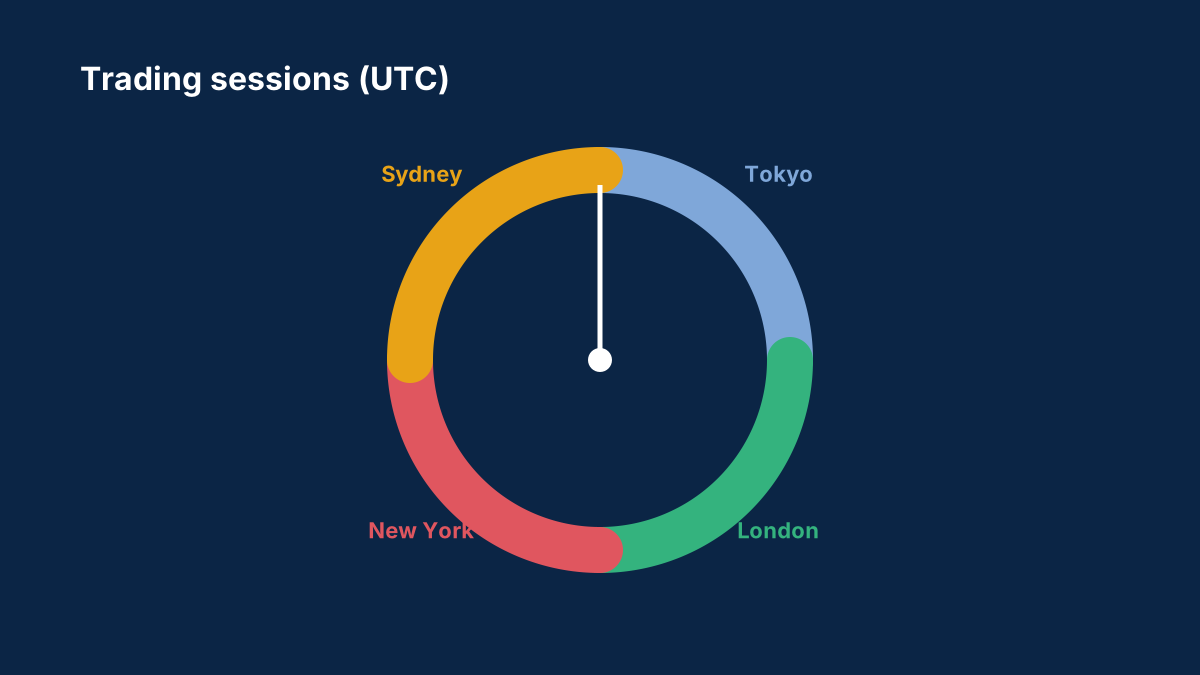
Gold trades nearly around the clock, with the deepest liquidity during London and New York hours. US data releases are the metal's main scheduled catalysts, and Fed decision days produce its largest moves. Asian hours are thinner and can produce sharp, illiquid spikes. The practical rhythm most gold traders adopt: plan during Asia, trade during London and New York, and treat US data and Fed days as reduced-size or flat days unless the position was built for the event.
A workable framework
A starting structure for gold:
- Before each week, mark US CPI, payrolls and the Fed calendar — gold's scheduled catalysts.
- Read the pair of drivers together: what are real yields doing, and what is the dollar doing? When they agree, the trend is usually strong; when they diverge, expect chop.
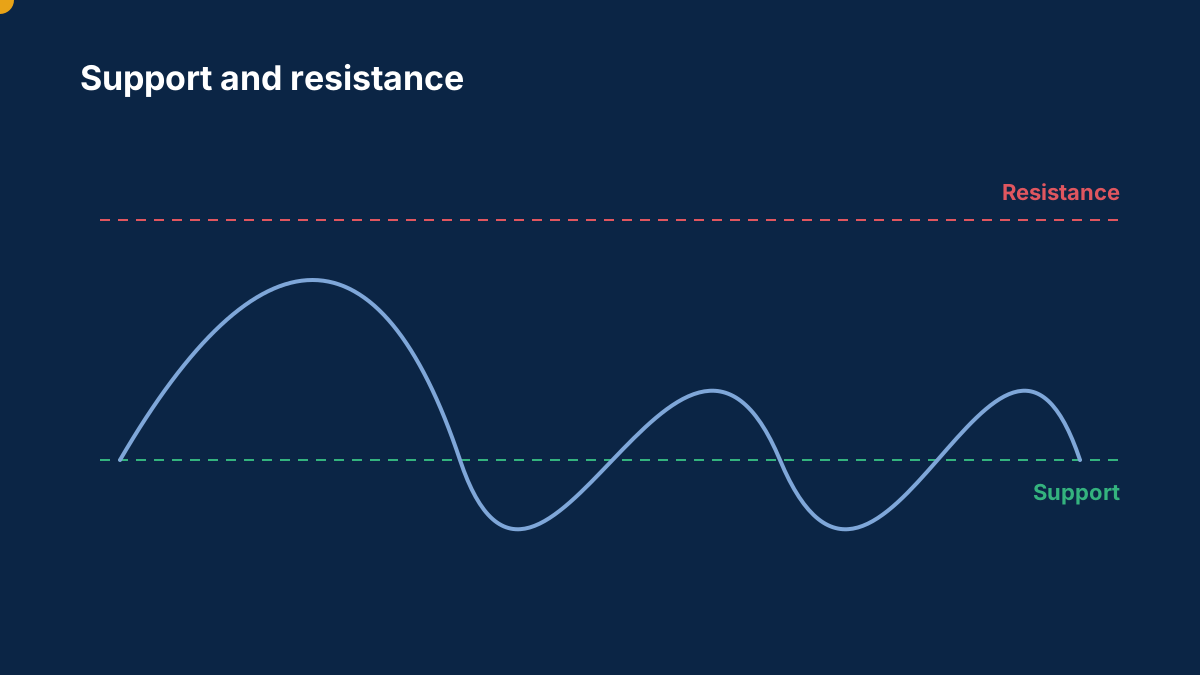
- Mark obvious levels — round numbers like $100 increments, previous highs and lows — where gold's reactions are most reliable.
- Size for gold's range, not for a currency pair's: wider stops, smaller positions.
- Prefer pullbacks to chasing spikes. Gold's rallies and declines both retrace deeply, and chasing either is how accounts die in this market.
The mistakes that define gold trading
The classic gold mistakes are all sizing mistakes wearing analytical costumes: the trader who sizes like it's EUR/USD and gets stopped out by normal noise, the trader who chases a $60 spike and buys the top, the trader who holds through payrolls and discovers what a two-channel reaction feels like. The metal punishes impatience with unusual speed and rewards the traders who treat its volatility as the first fact of the plan.
Gold is not a harder market than forex — it is a different one. Learn its drivers, respect its range, and size for its character, and it becomes one of the cleanest instruments in the world to trade.
Sources
Common questions
What is XAU/USD?
XAU/USD is the price of one troy ounce of gold in US dollars. XAU is the market's code for gold, and the pair is how most retail traders access the metal.
Why does gold rise when interest rates fall?
Gold pays no interest, so it competes with bonds. When real yields fall, bonds pay less after inflation, and gold becomes relatively more attractive, which lifts its price.
How much is a pip on gold?
Gold is not standardised like currency pairs. Brokers quote it to two decimal places and contract sizes vary, so one dollar of price movement can be worth different amounts per lot at different brokers. Check the symbol specification before trading.
Is gold more volatile than forex pairs?
Yes, in dollar terms. A normal day can move gold $30–$40 an ounce, which is a far larger dollar swing per lot than most currency pairs produce. Position sizes must be smaller to compensate.
What data moves gold the most?
US CPI and payrolls move gold through both the dollar and real-yield channels, and Federal Reserve decisions are the metal's biggest scheduled events.
This article is for information only and is not financial advice. Trading forex and CFDs carries a high risk of losing money. Read the risk warning. Spotted an error? Tell the editors.
Comments
Log in to join the discussion. Comments follow the community guidelines.
Log in to commentLoading comments…