Why the Swiss franc behaves differently from other currencies
The franc is a haven, a funding currency and an SNB-managed instrument at once — and the combination produces behaviour no other currency shows. Here is what makes it different and how to read it.
The Swiss franc is the currency market's most unusual major: a safe haven that its own central bank fights against, a funding currency with the world's lowest rates, and an instrument whose behaviour is shaped as much by the SNB's interventions as by the market's flows. No other major combines those three forces, and the combination produces the franc's distinctive behaviour — the sudden rallies, the capped strength, the violent 2015-style shocks.
This guide explains the franc's three roles and how they interact. The context is in safe-haven currencies and the 2015 shock; the trading side in the USD/CHF guide.
Role one: the haven
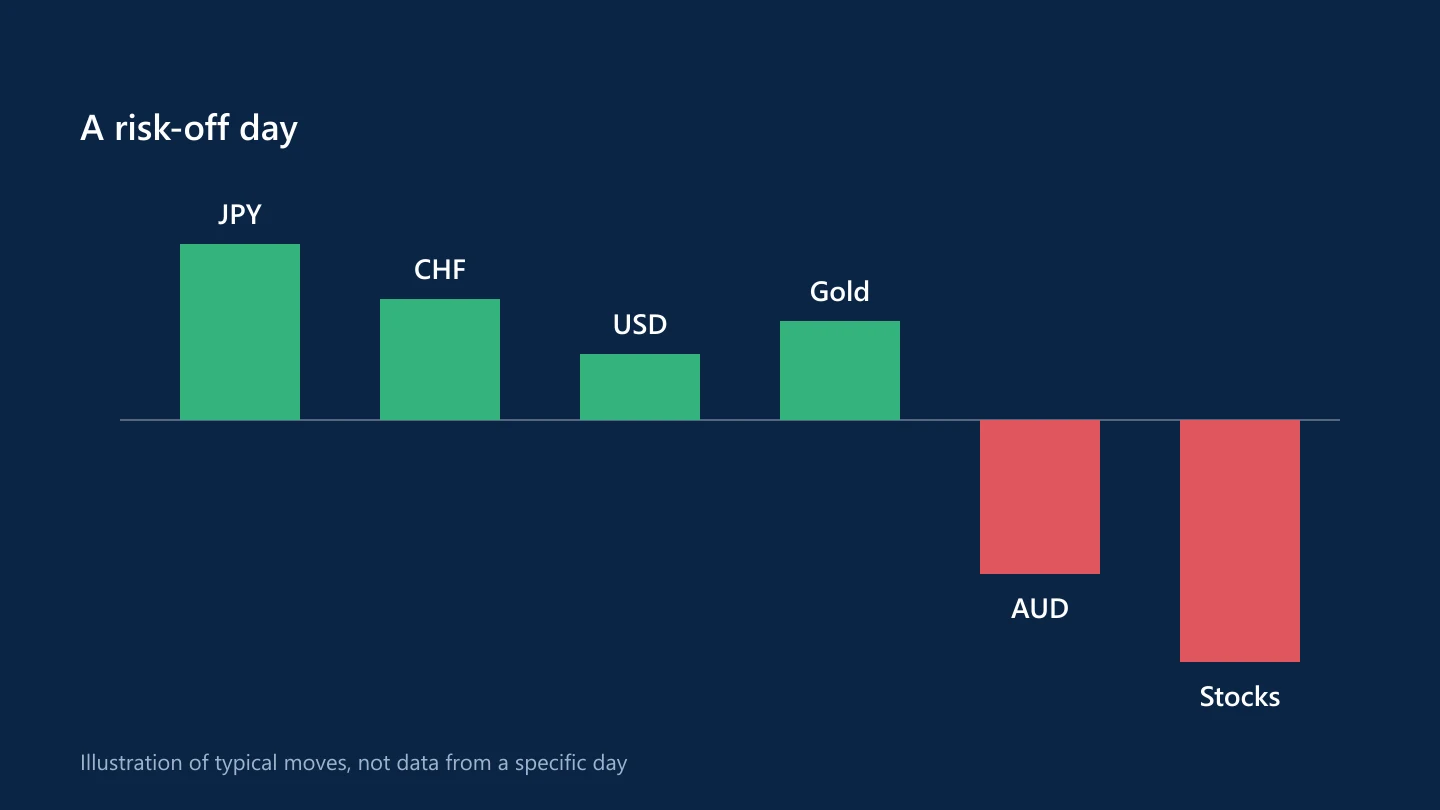
The franc's oldest role is the safe haven. Switzerland's institutions, its neutrality and its persistent current-account surplus give the franc a century-long record as a store of value, and the world's money flows into it when fear rises. The haven role produces the franc's signature behaviour: sudden, sharp appreciation in risk-off episodes, regardless of Switzerland's own news. The mechanics mirror the yen's, covered in the yen haven explainer, with one difference: the franc's haven flows come more from wealth preservation than from carry unwinds, because Switzerland is where the world's rich store money, not where it borrows.
Role two: the funding currency
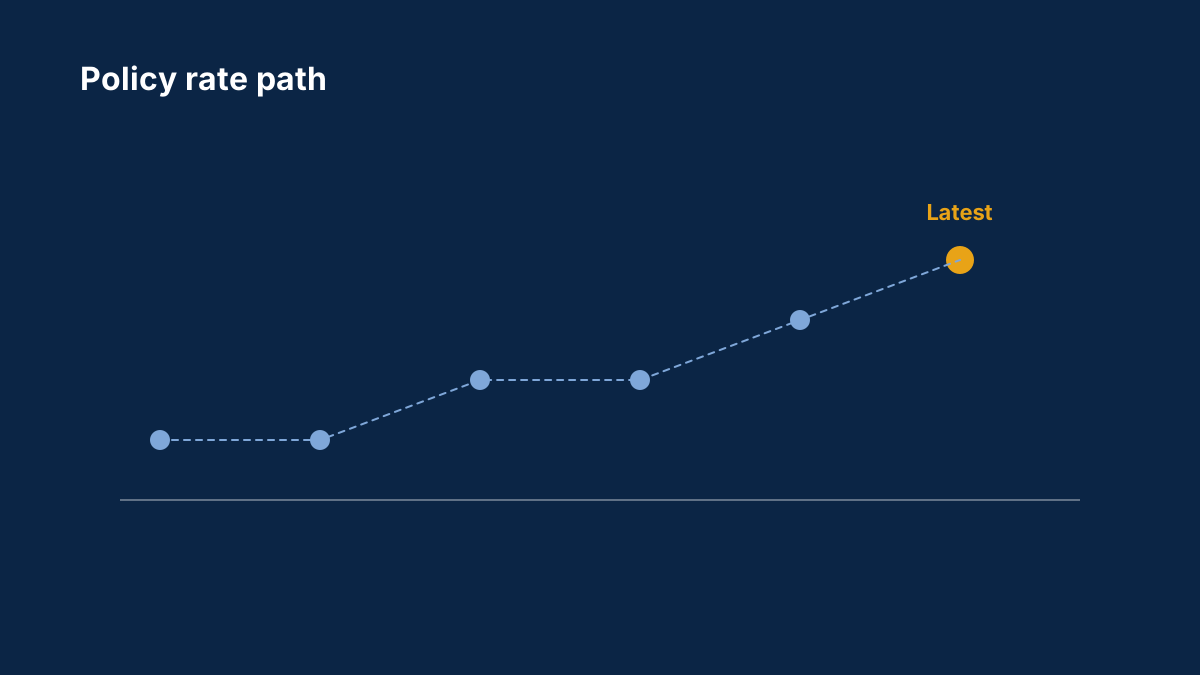
The franc's second role is the funding side of the European carry trade. The SNB's 0% rate (preview) makes the franc the cheapest borrowing currency in Europe, and the carry trade uses it: borrow francs, sell them, buy higher-yielding assets. The role creates the same unwind dynamics as the yen's — when risk appetite turns, the borrowed francs are bought back and the currency spikes. The 2015 shock was the extreme version: when the SNB abandoned its floor without warning, the franc's funding role detonated, and EUR/CHF collapsed about 30% in minutes as the carry unwound at once. The 2015 shock guide reconstructs the day.
Role three: the SNB's instrument
The franc's third role is the one no other major carries: it is actively managed by its own central bank. The SNB has spent years fighting the franc's strength, because a too-strong franc squeezes Switzerland's exporters and imports deflation. The tools are the 0% rate and intervention — buying foreign currencies to weaken the franc when appreciation runs too fast.
The SNB's presence shapes the franc's behaviour in two ways. It caps the haven rallies: when the franc strengthens sharply, the market knows the SNB may intervene, and the expectation itself slows the move. And it creates the tail risk: when the SNB's stance changes — as in 2015 — the accumulated pressure releases in one violent repricing. The intervention explainer covers the tool's mechanics and limits.
How the three roles interact
The roles interact in a distinctive cycle:
Calm markets: the funding role dominates. The franc drifts, the carry trade borrows it, and the pair trades on the rate gap — the SNB's 0% against the other majors' rates.
Risk-off episodes: the haven role fires. The franc strengthens as the world's money seeks safety — and the funding role adds fuel, as the carry's unwind buys francs back. The two roles compound, which is why the franc's risk-off rallies are among the sharpest in the market.
The SNB's response: the third role intervenes. When the franc's rally runs too far, the SNB's actions — or the threat of them — cap the move, and the franc's strength stalls. The cycle then resets, with the market testing the SNB's tolerance at each new level.
The trader's read follows the cycle: which role is active, and is the SNB about to push back? The USD/CHF explainer generalises the multi-driver diagnostic; the franc's version is the three-role cycle above.
The signatures to read
Each role has its fingerprint:
The haven leading: the franc rising against everything, including the euro and the dollar, on fear headlines rather than Swiss data.
The funding unwind leading: the franc rising with the carry trades' collapse — high-yielders falling, volatility spiking, and the franc's move accelerating with the unwind. The carry unwind explainer supplies the signature.
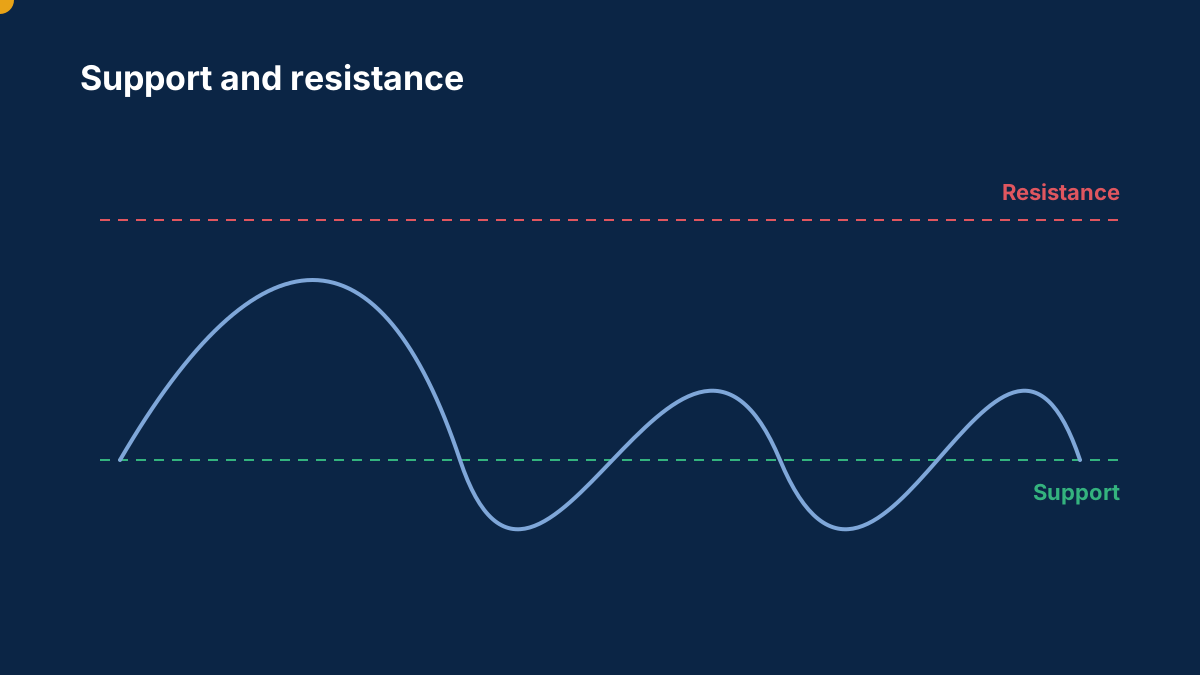
The SNB leading: the franc's rally stalling at a level, reversing partially, and EUR/CHF's behaviour diverging from the haven flows — the intervention's fingerprint. The intervention explainer covers the tell-tale signs.
The practical read
The franc's three-role map compresses into a routine:
- Check the risk mood first — the haven role fires on the world's schedule.
- Check the carry picture — the funding role's unwind is the franc's sharpest move.
- Check EUR/CHF — the SNB's own watchlist, and the intervention warning's first screen.
- Name the active role and trade it: the haven's direction, the unwind's acceleration, or the SNB's cap.
- Size for the franc's two-speed nature: slow drift in calm, vertical moves in fear — the sizing method is in position sizing.
The franc is three currencies in one — the world's vault, the carry trade's lender and the SNB's instrument. Read the roles, watch the cycle, and the market's most unusual major becomes one of its most legible.
Sources
Common questions
Why is the Swiss franc a safe haven?
Switzerland's institutions, neutrality and persistent current-account surplus give the franc a century-long record as a store of value. The world's wealth flows in when fear rises.
Why does the SNB fight the franc's strength?
A too-strong franc squeezes Switzerland's exporters and imports deflation. The SNB's tools are its 0% rate and intervention — buying foreign currencies to weaken the franc.
What made the 2015 franc shock so violent?
The SNB abandoned its euro floor without warning, and the franc's funding role detonated — the European carry trade unwound at once, collapsing EUR/CHF about 30% in minutes.
How do I know if the SNB is intervening?
The franc's rally stalling at a level and reversing partially, with EUR/CHF diverging from the haven flows — the intervention's fingerprint, covered in the intervention explainer.
Which role drives the franc on a given day?
Risk headlines mean the haven role, carry unwinds mean the funding role, and stalled rallies at levels mean the SNB's cap. The three-role cycle is the franc's daily read.
This article is for information only and is not financial advice. Trading forex and CFDs carries a high risk of losing money. Read the risk warning. Spotted an error? Tell the editors.
Comments
Log in to join the discussion. Comments follow the community guidelines.
Log in to commentLoading comments…