Tokyo's October CPI due 30 October: September core inflation reached 2.7%
Japan's Statistics Bureau publishes Tokyo's October consumer prices on 30 October, the day the Bank of Japan's two-day meeting ends. Tokyo's September core rate was 2.7%.
News
Central bank decisions, economic data, gold and oil, and plain-English guides to how currency trading works. Every article links to its primary sources.
Japan's Statistics Bureau publishes Tokyo's October consumer prices on 30 October, the day the Bank of Japan's two-day meeting ends. Tokyo's September core rate was 2.7%.
The Bank of Japan's two-day meeting ends on 30 October with the quarterly Outlook for Economic Activity and Prices. September's opinions showed a board focused on preventing an inflation overshoot, and a minority urging no haste.
Five central banks decide in three days, from the Fed and the Bank of Canada on Wednesday to the ECB on Thursday and the Bank of Japan on Friday. US third-quarter GDP and September PCE inflation come on Thursday, and Europe's clocks go back on Sunday.
Update: Japan's national CPI rose 2.1% on the year in September. Core inflation, excluding fresh food, was 2.1%, and core-core, excluding fresh food and energy, was 2.4%.
Update: Canada's CPI rose to 3.1% in September, UK unemployment was 4.7% and UK CPI 3.5%, the flash PMIs put the UK composite at 53.1 and the euro area at 51.9, and Japan's national CPI rose 2.1%.
Update: US CPI rose 3.7% on the year in September, Australia lost 39,300 jobs, UK GDP grew 0.1% in August, US retail sales rose 0.8%, and euro area inflation was confirmed at 3.8%.
METI's preliminary index fell to 102.6 and shipments dropped 2.5%. Its survey of manufacturers points to output rising 3.2% in September and 3.1% in October.
The European Central Bank's daily reference rate has fallen 3.6% since 4 September and 6.4% from its January high. Sterling, the Australian dollar and the yen also lost ground to the dollar.
Consumer prices excluding fresh food in Tokyo's 23 wards rose 2.7% from 1.8% in August, and the measure excluding fresh food and energy reached 3.0%. The Statistics Bureau credits water and childcare charges and lodging prices.
The Summary of Opinions from the 17–18 September meeting says one member called for a shift in policy phase and another said the Bank should accelerate hikes if prices overshoot. Another said there was no need for haste. The Tankan showed large manufacturers' sentiment at +24.
Update: the week's releases are out, from the flash PMIs to the SNB, Norges Bank and Riksbank decisions, Australian jobs and Canadian retail sales, and US PCE inflation and GDP followed on 30 September.
Consumer prices excluding fresh food rose 1.7% from a year earlier, down from 1.8% in July, while inflation excluding both fresh food and energy held at 1.9%. Falling energy prices explain the gap between the two.
The Bank for International Settlements says 10-year yields rose by 24 to 34 basis points in major economies over its review period, and that the US Treasury's buyback plan of 19 August lowered yields and the dollar only briefly.
The Fed hiked, the BoE held on a split vote and the BoJ raised its rate to 1.25% — three decisions in four days that reset the rate map. Here is the week's full picture and what it changed for every currency.
The BoJ raised its rate to 1.25% on 18 September while the Fed sits near 4%, and Japan has already intervened once this year — jointly with the US. Here is the three-sided dilemma and how it shapes the yen.
The Policy Board voted 7–2 on 18 September to lift the overnight call rate target from 1.00% to 1.25%, saying underlying inflation is approaching its 2% goal. Two members dissented.
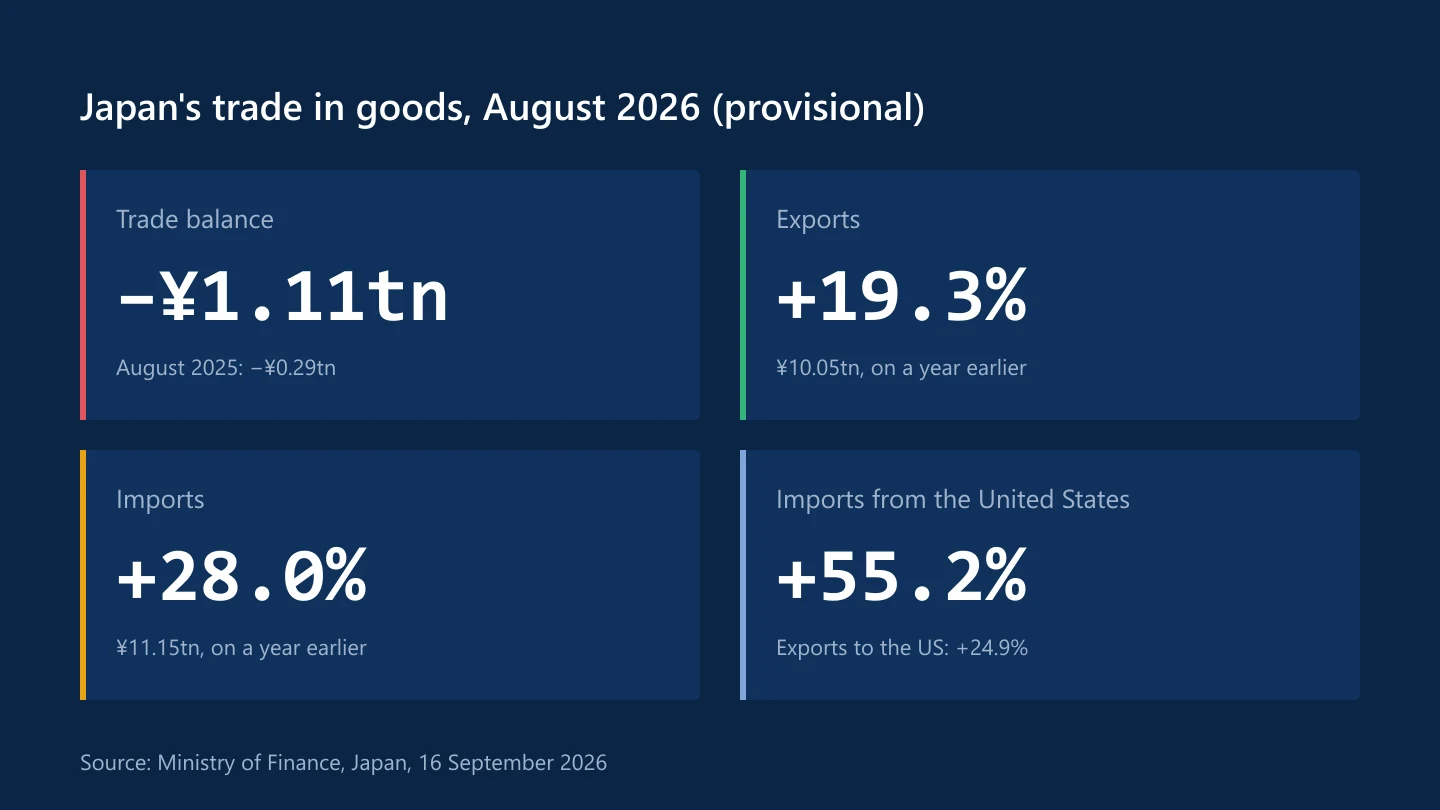
Exports rose 19.3% from a year earlier and imports 28.0%, according to the Ministry of Finance's provisional figures. Imports from the United States climbed 55.2%.
Update: on 18 September the Bank of Japan raised its policy rate from 1.00% to 1.25% on a 7–2 vote. This preview sets out what traders were watching beforehand.
Japan's Ministry of Finance bought yen on 31 July in coordination with the US Treasury, Finance Minister Katayama Satsuki said on 3 August, adding that Japan stands ready to act again.