The carry trade explained, and why it can unwind so quickly
Borrowing in a low-interest currency to hold a high-interest one can earn steady income, until the exchange rate turns. How carry works and where the risk hides.
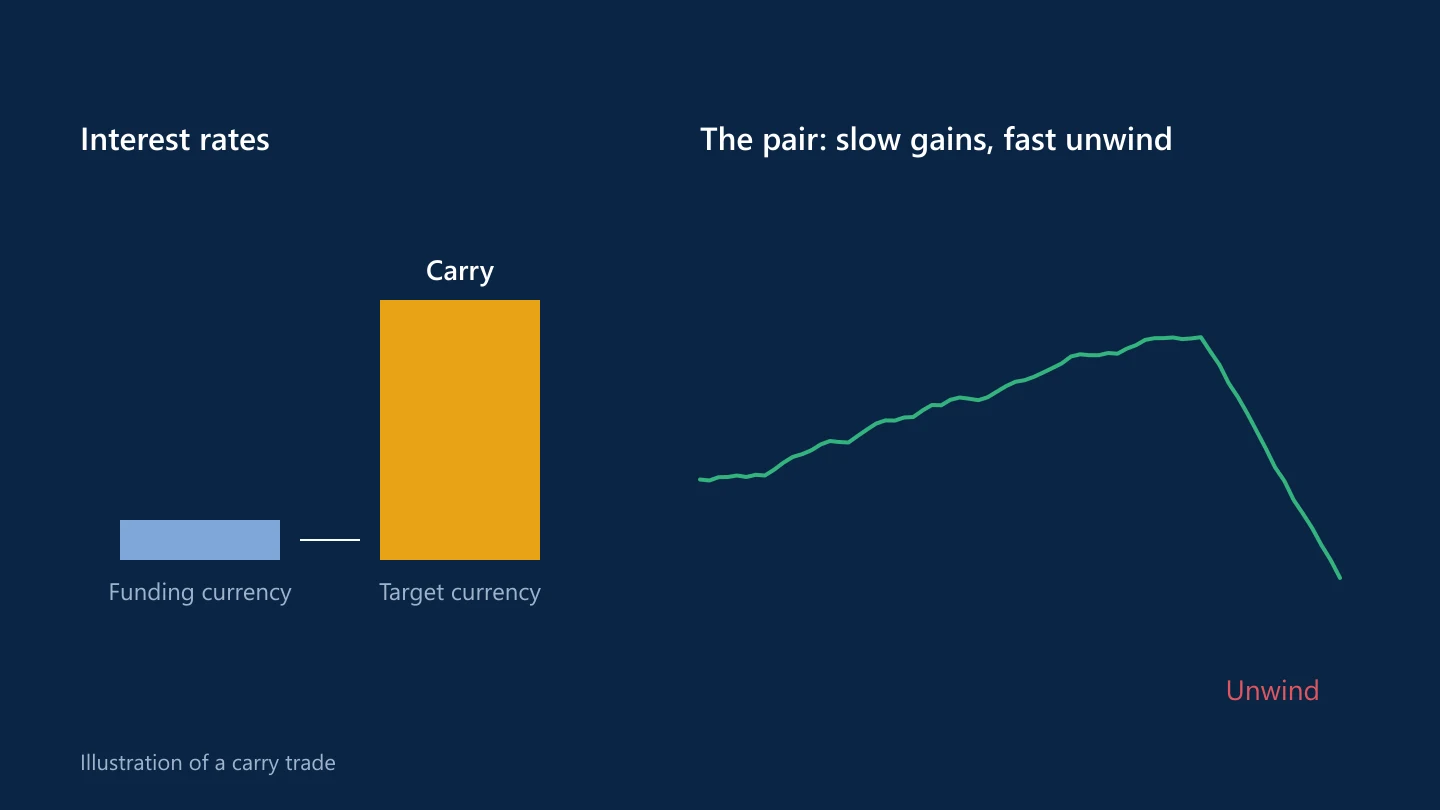
A carry trade aims to earn the difference between two countries' interest rates. It is one of the oldest strategies in currency markets, and one of the most crowded.
How it works
- Borrow in a currency with low interest rates, the funding currency.
- Hold a currency with higher interest rates, the target currency.
- Earn the difference, as long as the exchange rate doesn't move against you.
For a retail trader, a carry trade is simply a position that earns a positive swap: buying the higher-yielding currency against the lower-yielding one and holding it overnight. The swap is credited or charged each day at the broker's rollover.
The Japanese yen has long been the classic funding currency because Japanese rates were very low for decades. Pairs such as AUD/JPY have been typical carry trades.
Where the risk is
The interest income is small and steady; exchange rate moves can be large and sudden. A few days of adverse movement can wipe out months of carry.
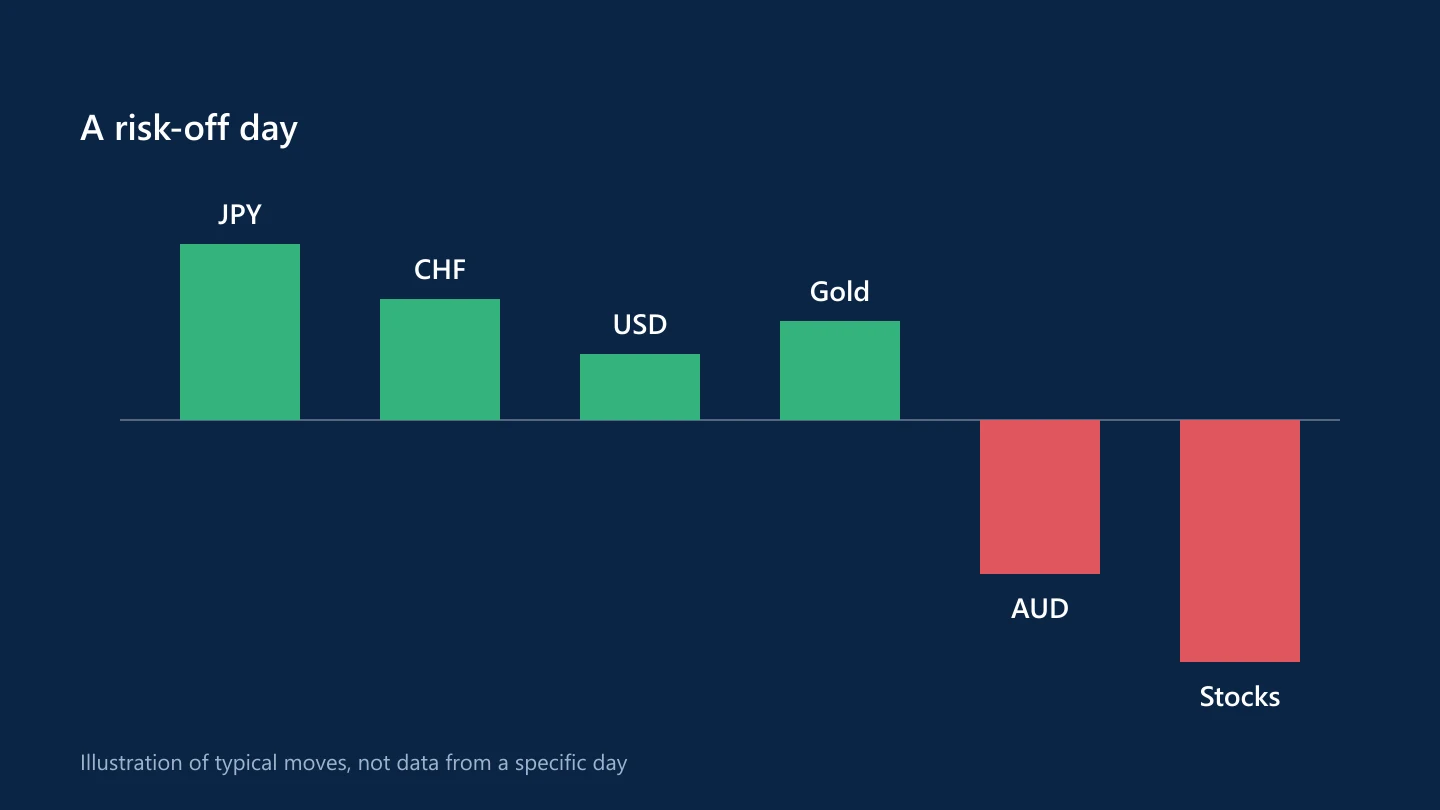
Carry trades also tend to be crowded. When many traders hold the same positions and something frightens markets, they all try to close at once. Closing a yen carry trade means buying back yen, which pushes the yen up and forces more traders out.
That happened on 5 August 2024. A rapid unwinding of yen carry trades coincided with a 12.4% fall in Japan's Nikkei 225 index, its worst day since 1987, and a sharp jump in the yen.
Check the swap your broker actually pays
The interest rate gap between two countries isn't what you receive. Brokers add a markup to overnight financing, so a pair with a modest rate differential can show a negative swap on both the buy and the sell side. Check the swap rates in the instrument's specification on your platform before assuming a trade earns carry.
When carry tends to work
Carry strategies have historically done best in calm markets with low volatility and stable or widening interest rate gaps. They tend to suffer when volatility spikes, when the funding currency's central bank raises rates, or when authorities intervene. The yen's recent history includes all three: see currency intervention explained and safe-haven currencies.
Common questions
What is a carry trade in forex?
Buying a higher-yielding currency against a lower-yielding one to earn the interest rate difference, usually received as a positive overnight swap.
Why do carry trades unwind suddenly?
They are often crowded. When markets turn fearful, many traders close the same positions at once, buying back the funding currency and pushing it sharply higher.
This article is for information only and is not financial advice. Trading forex and CFDs carries a high risk of losing money. Read the risk warning. Spotted an error? Tell the editors.

Comments
Log in to join the discussion. Comments follow the community guidelines.
Log in to commentLoading comments…