Why the SNB is still at 0%: the franc's strange position
The Swiss National Bank holds the world's lowest major rate at 0% — while inflation rises and the franc stays strong. Here is the SNB's strange position and what its September decision means.
The Swiss National Bank sits at the bottom of the major central banks' rate table: 0%, maintained through the cycle while every other major bank has moved (preview). The position is strange by design — a deliberate fight against the franc's strength, conducted through a zero rate and the threat of intervention — and it makes the franc the market's oddest major. The SNB's September decision, on 24 September, is the market's read on whether the fight continues.
This analysis explains the SNB's position and its implications for the franc. The mechanics are in the franc explainer; the pair's framework in the USD/CHF guide.
Why 0%?
The zero rate is a policy weapon, not a sign of weakness. The SNB's problem is the franc's strength: as a haven and a funding currency, the franc appreciates whenever the world's fear rises, and the appreciation squeezes Switzerland's exporters and imports deflation. The zero rate is the counterweight — it makes holding francs unattractive, borrowing francs cheap, and the currency's strength harder to sustain. The rate is the SNB's permanent push against the haven flows. The franc explainer covers the three-role structure behind the policy.
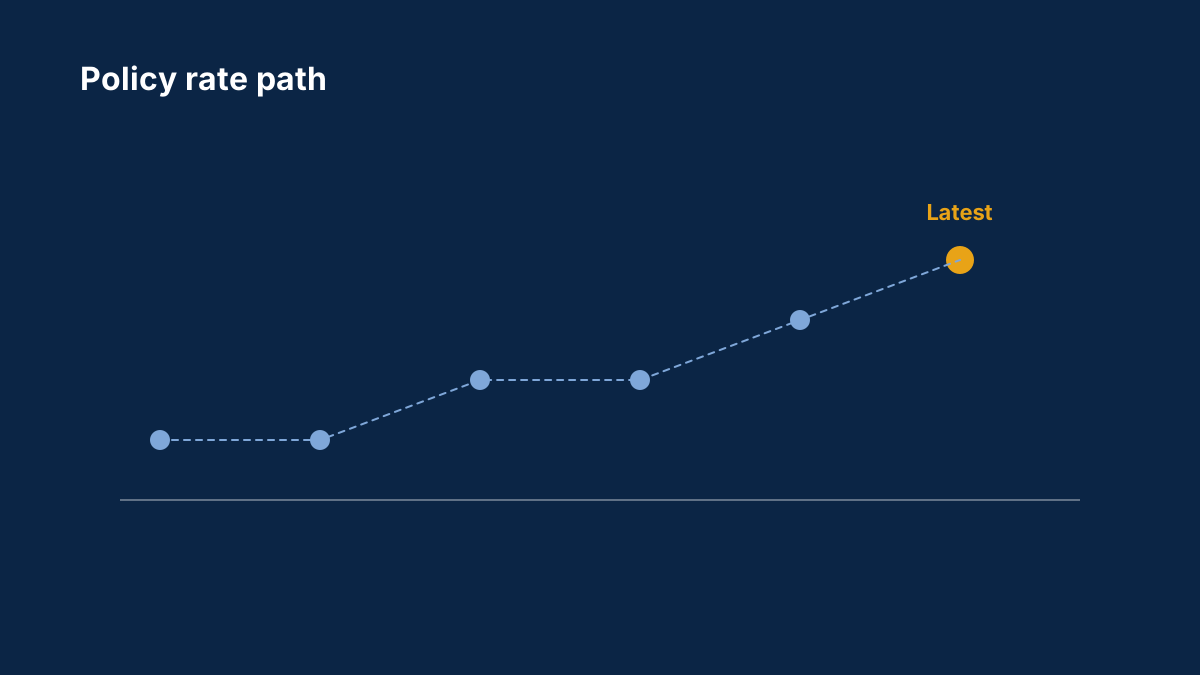
The position's strangeness is its contrast with the rest of the world: while the Fed sits near 4% (report) and the ECB at 2.50% (report), the SNB's 0% makes the franc the European carry trade's funding currency — borrowed at zero, sold for yield elsewhere — which feeds the appreciation pressure the zero rate is meant to fight. The policy is a loop: the low rate creates the carry, the carry's unwind strengthens the franc, and the strength justifies the low rate. The carry unwind explainer covers the loop's mechanics.
The inflation wrinkle
The September decision's context adds a wrinkle: Swiss inflation has risen to 0.8% (report) — still far below the SNB's target range's midpoint, but the highest in the cycle, with rents and fuel among the drivers. The question for the September meeting (preview): does the inflation rise change the SNB's calculus?
The honest answer is that 0.8% is nowhere near forcing the SNB's hand — the bank's fight against franc strength dominates its priorities, and inflation at 0.8% is not the constraint. But the direction matters: if the energy shock feeds Swiss inflation higher, the SNB's zero-rate policy gets its first genuine domestic argument against it, and the franc's story gains a hawkish tail. The inflation transmission explainer covers the chain.
What the position means for the franc
The SNB's zero rate shapes the franc in three ways:
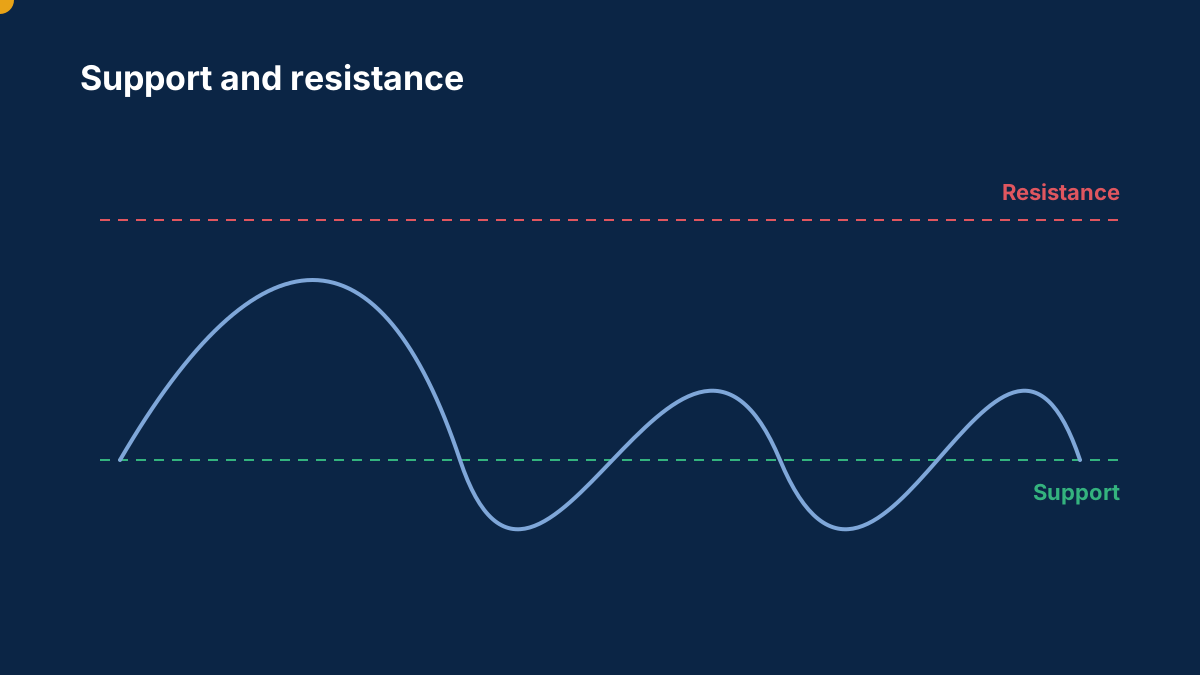
The funding currency role. At 0%, the franc is the European carry trade's cheapest funding — the role that makes its risk-off rallies so violent, as the borrowed francs are bought back. The franc explainer covers the unwind's mechanics, and the 2015 shock (guide) is the extreme case.
The capped strength. The zero rate and the intervention threat cap the franc's appreciation — the market knows the SNB will push back, and the expectation itself slows the haven rallies. The intervention explainer covers when the cap holds.
The two-speed behaviour. The franc drifts on the rate story in calm markets and spikes on the haven and unwind channels in fear — the pair's dual character, covered in the USD/CHF guide.
The September decision's read
The September decision (preview) is read for three signals:
The rate. A hold at 0% is the base case; any move would be the cycle's shock. The hold's communication is the signal, not the rate.
The inflation language. The bank's read of the 0.8% print — transitory energy or something stickier — signals whether the zero-rate policy has a domestic challenge forming. The central bank language explainer covers the vocabulary.
The franc language. The SNB's comments on the franc's strength — and any renewed intervention warnings — signal how active the cap will be. The intervention explainer covers the warning ladder.
How to trade the franc
The practical read:
- Read the SNB's franc language first — the cap's activity is the franc's daily driver, and the warnings are the early signal. The intervention explainer has the ladder.
- Track the inflation direction — 0.8% is not a constraint yet, but its path is the zero-rate policy's future challenge. The inflation transmission explainer covers the chain.
- Trade the two speeds separately — the drift on calm days, the haven spikes on fear days, and never the same size for both. The USD/CHF guide has the framework.
- Watch EUR/CHF as the SNB's screen — the bank's own watchlist, and the intervention warning's first place to look. The franc explainer covers the read.
The SNB's 0% is the market's most deliberate policy position — a permanent fight against the franc's strength, conducted with the world's lowest rate. Read the bank's language, the inflation direction and the two speeds, and the franc's strange position becomes its most readable feature.
Sources
Common questions
Why is the SNB's rate at 0%?
As a weapon against the franc's strength: the zero rate makes holding francs unattractive and borrowing them cheap, countering the haven flows that push the currency up.
Does Swiss inflation change the SNB's calculus?
Not yet — 0.8% is far below any level that would force the bank's hand. But its direction matters: if the energy shock feeds Swiss inflation higher, the zero-rate policy gains its first domestic challenge.
Why is the franc the European carry trade's funding currency?
Because the SNB's 0% makes it the cheapest borrowing currency in Europe. The role feeds the franc's risk-off rallies, as the borrowed francs are bought back when the carry unwinds.
What does the SNB's franc language signal?
How active the intervention cap will be. Renewed warnings about franc strength signal the bank is preparing to push back, and the warnings move the currency themselves.
How should I trade USD/CHF with the SNB at 0%?
Trade the two speeds separately — the calm-day drift and the fear-day spikes — watch EUR/CHF as the SNB's screen, and read the bank's language for the cap's activity.
This article is for information only and is not financial advice. Trading forex and CFDs carries a high risk of losing money. Read the risk warning. Spotted an error? Tell the editors.


Comments
Log in to join the discussion. Comments follow the community guidelines.
Log in to commentLoading comments…