Norges Bank and the Riksbank: what their decisions mean
Norges Bank and the Riksbank decide on 24 September — two smaller central banks whose moves reach the krone and krona, and echo through the European rate complex. Here is what to watch.
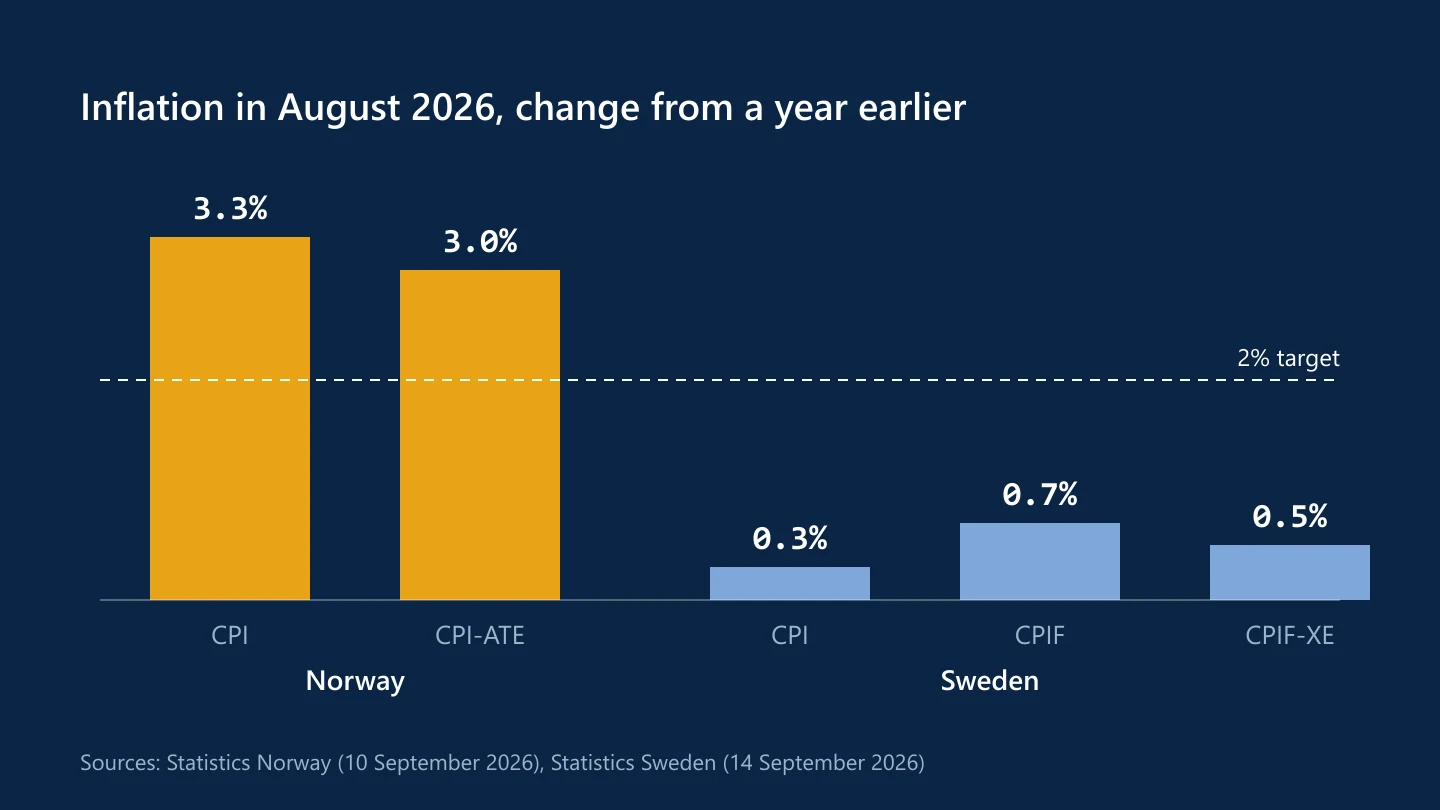
On 24 September, two of Europe's smaller central banks announce on the same day: Norges Bank, with its policy rate at 4.25%, and the Riksbank, at 1.75% (preview). The decisions move the krone and the krona — thin, specialist currencies — and they carry a wider read: the Scandinavian banks' paths are a window on how Europe's smaller economies are handling the energy shock, and their choices echo through the European rate complex.
This analysis explains the two banks' positions and what the decisions mean. The pair frameworks are in the Scandinavian currencies discussion and the transmission in how interest rate decisions move currencies.
The two banks' positions
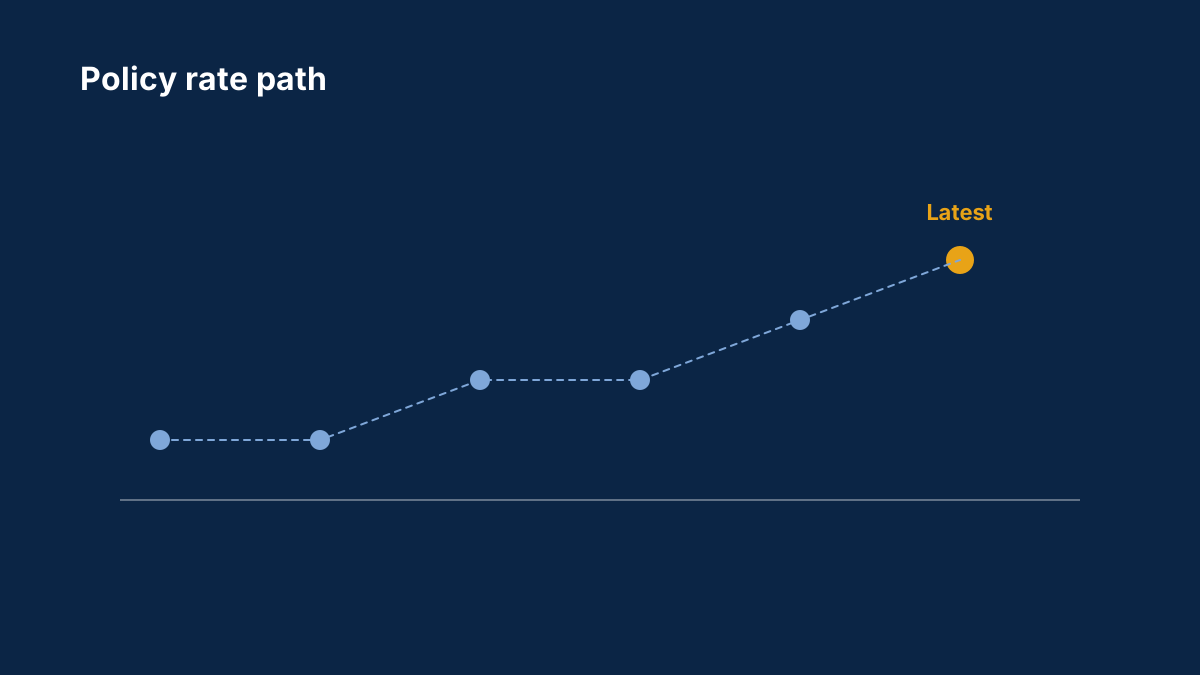
Norges Bank at 4.25%. The higher of the two, and the one with oil behind it: Norway's energy exports mean the krone gets the terms-of-trade support from Brent above $100 (report) while the same energy prices feed the inflation the bank must manage. The bank's August message kept the door open to further hikes (preview) — a hawkish posture the September decision confirms or softens. The oil and inflation explainer covers the two-sided energy channel the bank faces.
The Riksbank at 1.75%. The lower of the two, and the one with the softer economy: Sweden's inflation picture is less energy-dominated than Norway's, and the bank's path has been the more cautious. The September decision is read for whether the Riksbank follows the region's tightening or holds its own, slower line. The divergence between the two Scandinavian banks' paths is the cross's story — EUR/NOK and EUR/SEK trade the difference.
Why the decisions matter beyond Scandinavia
The two banks' decisions carry a wider read for three reasons:
The European rate complex's signal. The Scandinavian banks sit at the edges of the European rate map, and their choices reveal how the region's smaller economies weigh the energy shock — the same transitory-versus-persistent question the ECB answered with its hike (report) and the BoE is debating in public (preview). The inflation transmission explainer covers the shared debate.
The energy channel's test. Norges Bank is the clearest test of the energy shock's two-sided effect: oil supports the krone and feeds Norwegian inflation at once. The bank's decision shows which side it weights — and the answer is a template for how other energy-adjacent central banks will read the same shock. The oil and inflation explainer has the channel's map.
The NOK and SEK trades themselves. The krone and krona are thin, specialist instruments whose moves are outsized relative to their economies — and the decisions are their biggest scheduled events. The commodity currencies guide covers the two currencies' characters.
What the decisions mean for NOK and SEK
The decisions' implications for the two currencies:
The krone. Norges Bank's posture is the krone's rate story: a hawkish hold or a hike supports the currency, on top of the oil channel's terms-of-trade support. The krone's risk is the reverse — a dovish turn that removes the rate support while oil's inflation channel pressures the economy. The two channels' net is the krone's direction, and the USD/CAD explainer's tug-of-war logic is the parallel for the oil-versus-rates read.
The krona. The Riksbank's path is the krona's story, with less oil and more European demand in the mix. A bank that holds its cautious line leaves the krona's rate story flat; a bank that signals tightening gives the currency its first rate support in the cycle. The EUR/SEK cross is the expression — the cross trading guide covers the relative read.
The crosses. EUR/NOK and EUR/SEK trade the Scandinavian banks against the ECB, and the 24 September decisions reset both crosses' relative stories. The commodity currencies guide maps the relationships.
How to trade the day
The 24 September read:
- Read Norges Bank's language for the hike door — the bank's August posture kept further hikes possible, and the September language confirms or closes the door. The central bank language explainer has the vocabulary.
- Read the Riksbank for the divergence — whether Sweden follows the region's tightening or holds its own line decides the krona's relative story. The cross trading guide covers the expression.
- Watch oil alongside — Brent's moves feed the krone's terms-of-trade channel and Norges Bank's inflation read simultaneously. The oil and inflation explainer has the chain.
- Respect the thinness — NOK and SEK are specialist markets with wide spreads and sharp reactions, and the sizing must reflect it. The position sizing guide has the method.
The krone's oil arithmetic
The krone's oil arithmetic deserves its own section, because Norway's position is the energy channel's purest test. Brent above $100 (report) supports the krone through the terms-of-trade channel — export revenues rise directly with the price — while the same barrels feed the inflation Norges Bank must manage. The two effects' net is the krone's daily story, and the net's direction depends on the market's focus: on oil-supply days, the terms-of-trade support leads and the krone strengthens; on inflation days, the bank's dilemma leads and the currency's rate story takes over. The oil and inflation explainer covers the two-sided channel's mechanics; the krone is the channel's cleanest case because Norway's oil exposure is the majors' largest relative to its economy.
The arithmetic's practical form is the krone's correlation with oil, which is not constant: it strengthens when the supply story dominates and weakens when the rate story does. The oil and CAD guide documents the correlation's variability for the loonie, and the krone's version runs the same pattern with a larger oil share. The trader's read is the channel diagnostic: which side of the krone's oil story is in charge today?
The krona's European demand channel
The krona's side of the story is the one the krone lacks: European demand. Sweden's exports run through the European industrial cycle, and the krona trades the euro-area's growth story through the trade channel — the commodity currencies guide covers the krona's place in the European complex. The channel's current read: the euro area's growth pick-up (report) is the krona's demand-side support, and the energy shock's pressure on European industry is the counterweight. The krona's story is therefore the region's growth-inflation tension, Swedish edition — and the Riksbank's September decision is the bank's answer to the same question the ECB answered with its hike (report) and the BoE is debating in public (preview).
The channel's practical form is the EUR/SEK cross's read: the krona against the euro trades the two economies' relative stories, and the cross's behaviour around the Riksbank's decisions is the market's verdict on whether Sweden follows the region's tightening or holds its own line. The cross trading guide covers the relative read's mechanics.
The same-day mechanics
The 24 September double decision has its own event mechanics, because the two announcements interact. The day's sequence: Norges Bank and the Riksbank announce, the market reprices each against the other's news, and the Scandinavian crosses trade the net — EUR/NOK and EUR/SEK moving on the difference between the two banks' signals as much as on either alone. The same-day structure is the collision-day pattern the economic calendar guide describes, run on two smaller markets: the moves are proportionally larger, the liquidity is thinner, and the spreads are wider than a major's event day.
The mechanics' practical rule is the sizing: the same-day double event's two-tailed ranges argue for smaller positions than either decision alone would justify, with the risk-first arithmetic from position sizing applied to the event's wider range. The news trading playbook covers the event-day framework; the Scandinavian version adds the thinness that amplifies every repricing.
The scenarios for the two currencies
The 24 September decisions resolve into three scenarios for the pair of currencies:
The divergence persists. Norges Bank stays hawkish and the Riksbank cautious — the current pattern holds, the krone keeps its oil-and-rates support, and the krona's rate story stays flat. The scenario is the baseline, and the crosses trade the gap's persistence.
The convergence up. Both banks signal tightening — the Riksbank follows the region, and the Scandinavian complex reprices together. The krona gains its first rate support of the cycle, and EUR/SEK's story changes.
The convergence down. Both banks turn cautious — the growth side wins the energy debate, and the krone's hawkish tail fades with the krona's. The scenario is the energy shock's transitory vindication, and both currencies' rate stories soften together.
The three scenarios' weights are the krone's and krona's prices, and every Scandinavian release shifts them. The Norges Bank and Riksbank analysis supplies the framework; the market's pricing of the three is the crosses' event-day range.
The Scandinavian decisions are the market's smaller events with outsized lessons: two banks, one energy shock, and two different answers. Read the language, the divergence and the oil channel, and the krone and krona's stories become the European debate's clearest test.
Sources
Common questions
When do Norges Bank and the Riksbank decide?
Both on 24 September — Norges Bank with its policy rate at 4.25% and the Riksbank at 1.75%. The same-day decisions reset the krone's and krona's rate stories together.
Why does Norges Bank matter beyond Norway?
It is the clearest test of the energy shock's two-sided effect — oil supports the krone and feeds Norwegian inflation at once. The bank's weighting is a template for other energy-adjacent central banks.
How does oil affect Norges Bank's decision?
On both sides: Brent above $100 supports the krone through exports while feeding the inflation the bank manages. The September language shows which side the bank weights.
What is the Riksbank-Norges Bank divergence?
The two Scandinavian banks sit at different points: Norges Bank at 4.25% with hikes possible, the Riksbank at 1.75% on a more cautious path. EUR/NOK and EUR/SEK trade the difference.
How should I trade NOK and SEK decisions?
Read both banks' language, watch oil for the krone's two channels, express the divergence in the crosses, and size for the currencies' thinness — the reactions are sharp.
This article is for information only and is not financial advice. Trading forex and CFDs carries a high risk of losing money. Read the risk warning. Spotted an error? Tell the editors.

Comments
Log in to join the discussion. Comments follow the community guidelines.
Log in to commentLoading comments…