Drawdown and recovery: why a 50% loss needs a 100% gain
Losses and gains aren't symmetrical. See how much you need to recover from a drawdown, what losing streaks do at different risk levels and how to set limits.
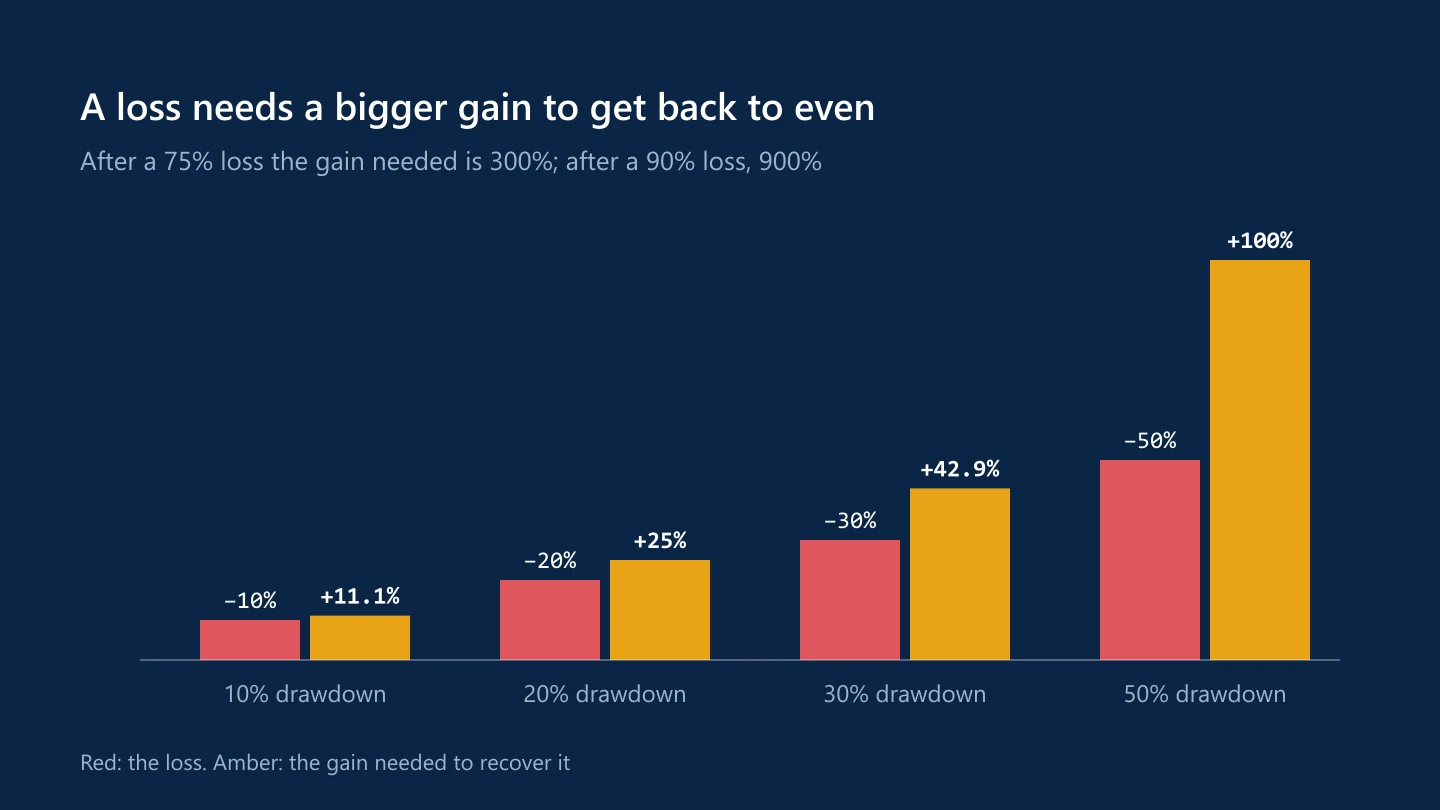
A drawdown is the fall in an account from its peak to its lowest point before a new peak. It decides whether a trader survives long enough for an edge to show, and it behaves in a way many people underestimate.
Losses need bigger gains to recover
After a loss, the gain needed to get back to the peak is the loss divided by one minus the loss:
- a 10% drawdown needs an 11.1% gain
- 20% needs 25%
- 30% needs 42.9%
- 50% needs 100%
- 75% needs 300%
- 90% needs 900%
Small drawdowns are easy to recover from. Beyond about 30%, the required gain climbs quickly, and traders under pressure to get back to even often raise their risk, which makes the next loss bigger.
Losing streaks at different risk levels
Every method has losing streaks. Here is what ten losses in a row do to an account when each trade risks a fixed percentage of the current balance:
- 1% per trade: the account falls about 9.6%
- 2% per trade: about 18.3%
- 5% per trade: about 40.1%
- 10% per trade: about 65.1%
Ten straight losses sound rare, but not for a method that wins 40% of the time. The chance that any particular ten trades all lose is about 0.6%, and across the hundreds of trades an active trader places in a year, a streak that long becomes likely. Risk per trade decides whether that streak is a setback or the end of the account. To turn a percentage into a lot size, see position sizing.
Rules that keep drawdowns manageable
- Fix risk per trade as a percentage of the account, and don't raise it to win back losses.
- Set a daily or weekly loss limit, such as three losing trades or 3% in a day, after which you stop.
- Reduce size in a drawdown. Some traders halve their risk after a 10% drawdown and restore it at a new account high.
- Know your method's normal drawdown from your journal or a backtest, so you can tell an ordinary losing run from a method that has stopped working.
Leverage and drawdowns
High leverage doesn't change the maths above, but it makes large losses possible in a single trade, and a margin close-out can lock in a loss before a planned stop is reached. Prop firm evaluations are built around drawdown rules for the same reason: breach the maximum drawdown and the account is gone. The behavioural side of losing runs is covered in revenge trading and overtrading.
Common questions
How much do you need to gain to recover from a 50% loss?
100%. The gain needed is the loss divided by one minus the loss, so larger drawdowns need disproportionately larger gains.
What is maximum drawdown?
The largest fall in account value from a peak to a later low, before a new peak is reached, usually expressed as a percentage.
What does a losing streak do at different risk levels?
Ten losses in a row reduce an account by about 9.6% when each trade risks 1% of the balance, about 18.3% at 2%, and about 40.1% at 5%.
This article is for information only and is not financial advice. Trading forex and CFDs carries a high risk of losing money. Read the risk warning. Spotted an error? Tell the editors.
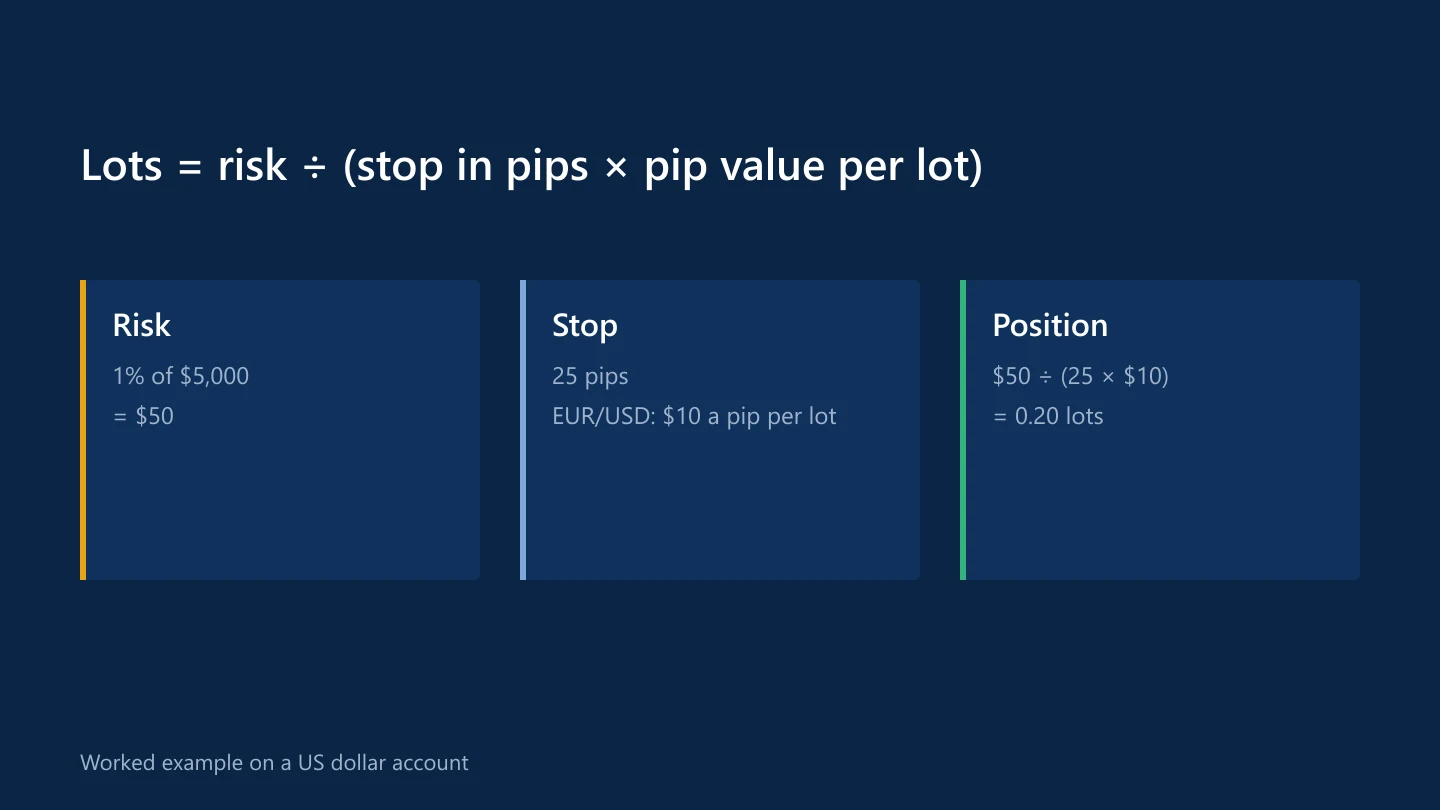
Comments
Log in to join the discussion. Comments follow the community guidelines.
Log in to commentLoading comments…