Do you scale into a trade or enter all at once? Which has worked for you?
Scaling in means adding to a position in steps, while scaling out means closing it in steps. Both spread the timing decision across several prices. Each also changes the average price and the total risk, and can make a loss look smaller or larger than it is. Leverage and margin explained explains how each added position changes the margin you are using, which is the number to check before you add.
Members who scale often find that the first entry is the easiest to defend and the last one the hardest. The question is which you prefer, and what results you have seen from each approach over a sample of real trades. Scaling can be a way to manage uncertainty about timing, but it also means that a losing trade grows before it is cut, unless the rule for adding is written down.

We would like to hear your approach:
- Do you enter in steps, or all at once? What did you learn from the choice?
- How do you set the size of each step so the total risk stays where you planned?
- Do you scale out at targets, or leave part of the position running?
- Have scaling decisions ever made a losing trade worse? How did you respond?
Please share your own approach and reasoning, not calls for others to copy. Posts that promise a direction or sell signals will be removed.
Background: Leverage and margin explained: margin calls, stop-outs and how losses grow
Leverage lets you control a large position with a small deposit. It magnifies losses exactly as much as gains, and it is behind most blown trading accounts.
What does 30:1 leverage mean?
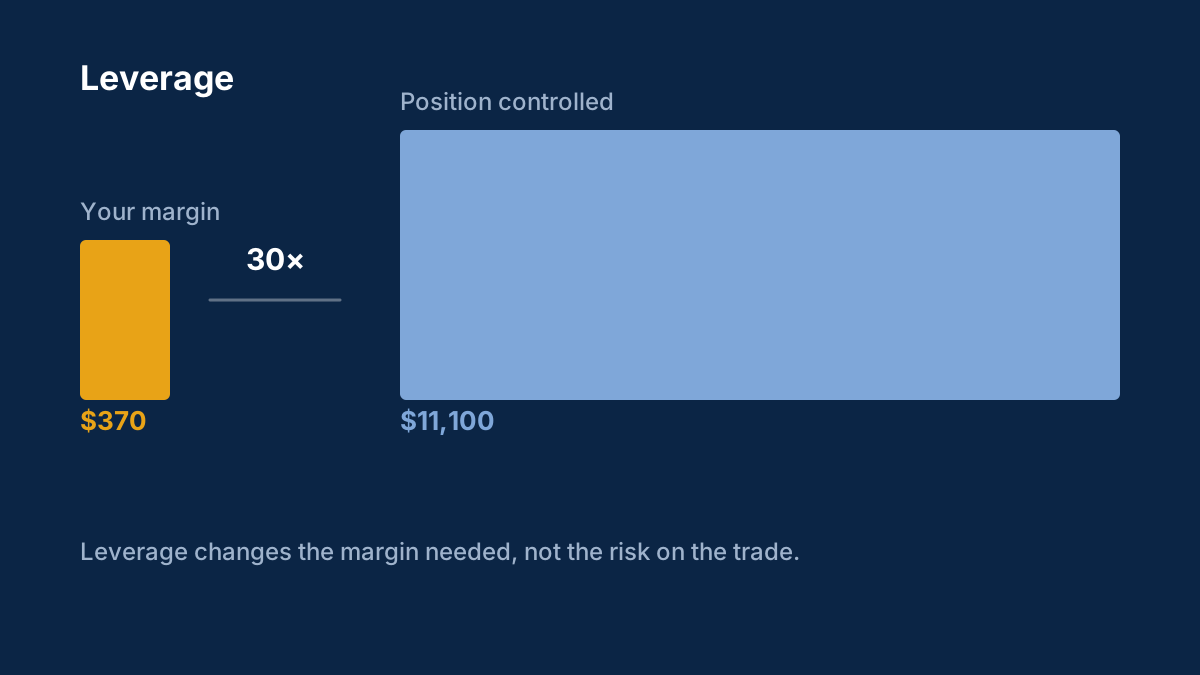
You can control a position 30 times larger than your margin deposit. $1,000 of margin opens a $30,000 position, and gains and losses are calculated on the full $30,000.
What is a margin call?
A warning from your broker that losses have reduced your margin level to a set threshold. If it keeps falling, the broker starts closing positions automatically, which is called a stop-out.
Comments
Log in to join the discussion. Comments follow the community guidelines.
Log in to commentLoading comments…