Which moving average period do you trust, and why that one?
Moving averages smooth price over a set number of periods, and the most common settings were chosen by convention rather than by any law of the market. A period that works on one pair can lag badly on another, and a setting that suited a calm quarter can look too slow in a fast one. The choice is therefore less about the number itself than about how the average behaves on the instrument and timeframe you trade.

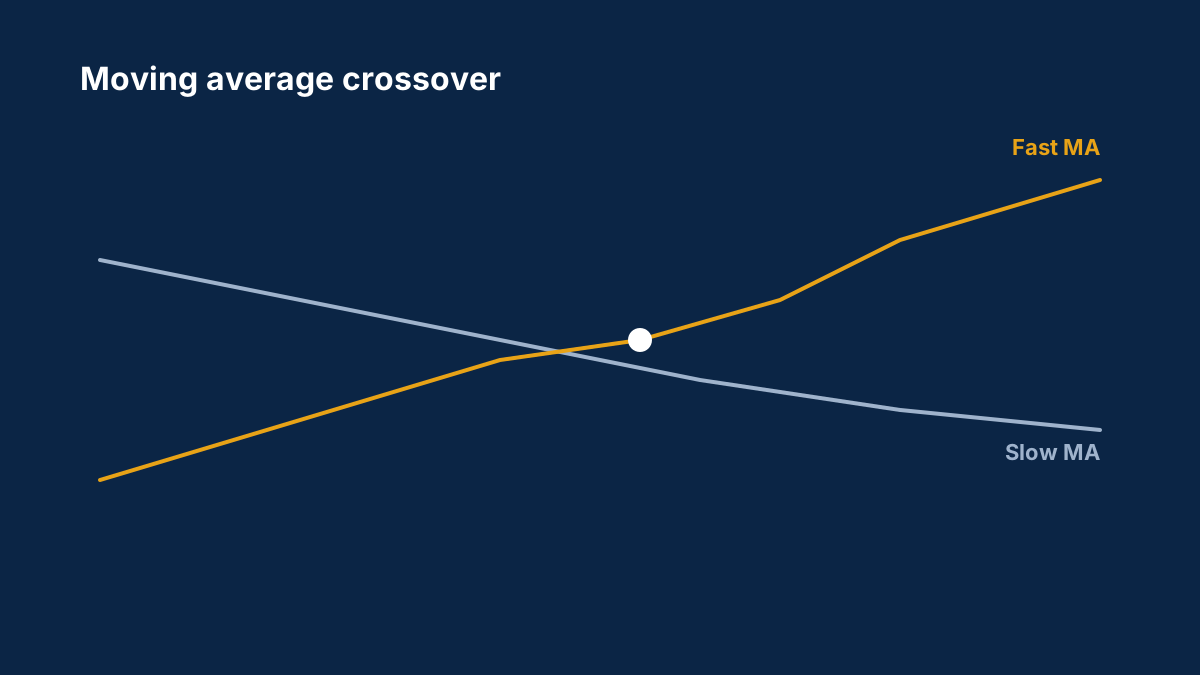
Members often disagree on whether to use one average or several, and how to combine them. Some watch the crossing of two averages, others use an average as a zone to judge pullbacks. The question is how you chose your period, and how you check whether it still fits the market you trade. How to trade with RSI covers another tool that members use to judge momentum alongside a trend measure, which is a useful comparison when you test a moving average.
We would like to hear your setting:
- Which period do you use, and did you pick it by testing or by habit?
- How do you tell if a moving average is lagging too far behind price?
- Do you use one average or several, and how do you combine them?
- Have you changed your period after a losing stretch? What happened next?
Please share your own approach and reasoning, not calls for others to copy. Posts that promise a direction or sell signals will be removed.
Background: How to trade with RSI: overbought, oversold and divergence
RSI is the most popular oscillator in trading and the most misread. Here is what it actually measures, where its signals work, where they fail, and how professionals use it as a filter rather than a trigger.
What does RSI overbought actually mean?
That the recent move has been one-sided — up closes dominating the last 14 periods — not that the market is expensive. In a range, overbought suggests exhaustion; in a trend, it is normal and can persist.
Does RSI divergence work?
Divergence is real but overrated alone: it can print repeatedly through an entire trend. It becomes tradeable only with context — a level, a reversal structure and a mature trend.
Comments
Log in to join the discussion. Comments follow the community guidelines.
Log in to commentLoading comments…