Euro area growth picks up after the ECB's rate rise: does it change your view on the euro?
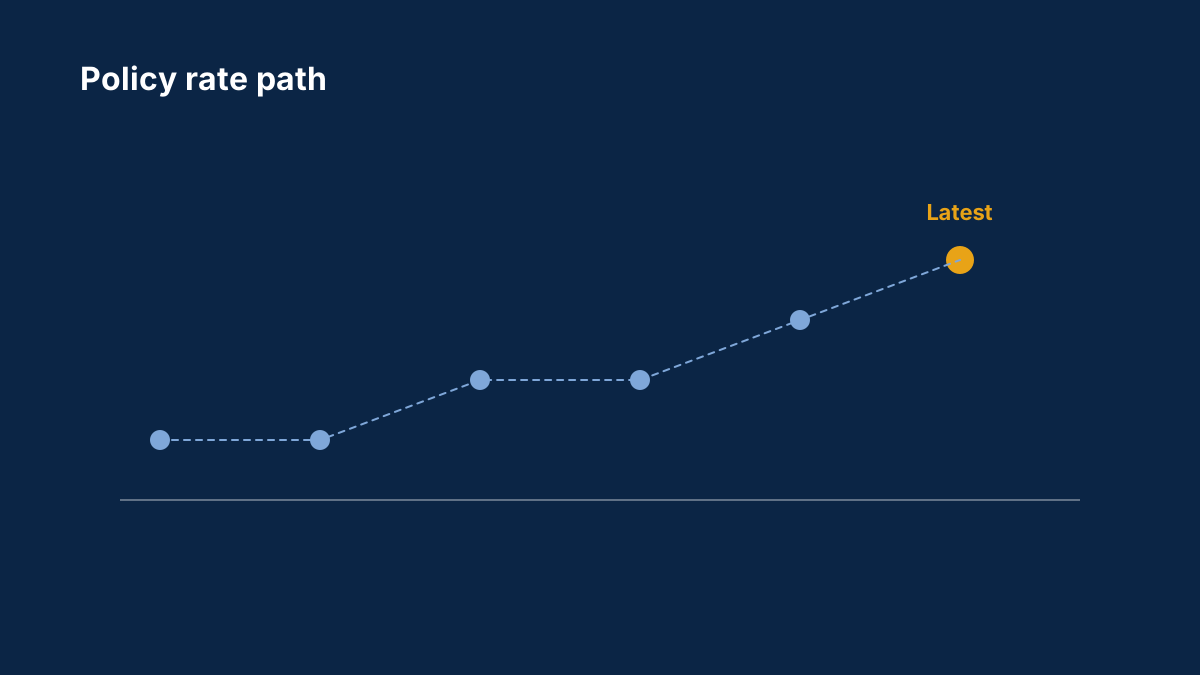
Eurostat's latest estimate shows euro area GDP grew 0.6% in the second quarter after no growth in the first. Three days later, on 10 September, the European Central Bank raised its deposit rate to 2.50%.
Worth discussing:
- Does stronger growth make further ECB increases more likely, in your view?
- How are you weighing the ECB against the Fed, which decides on 16 September?
- Is EUR/USD, EUR/GBP or EUR/JPY the better way to express a view on the euro right now?
Relevant reading: euro area GDP and the ECB decision.
Comments
Log in to join the discussion. Comments follow the community guidelines.
Log in to commentLoading comments…
One way to frame the EUR/USD side of this question after the Fed's decision.
Both central banks have now raised rates this month: the ECB lifted its deposit rate to 2.50% on 10 September (report), and the Fed raised its target range to 3.75%–4.00% on 16 September (report). Currency moves tend to follow changes in the expected gap between rates, not the level of either one.
So the questions that matter are:
- Is the ECB more or less likely to raise again than the Fed, based on growth and inflation?
- Euro area GDP grew 0.6% in the second quarter (report). Does that make another ECB move more likely?
Using a cross such as EUR/GBP or EUR/JPY removes the US dollar from the trade, which some traders prefer when the view is about Europe specifically. Background: bond yields and exchange rates.
0