Safe-haven currencies: why the yen and Swiss franc rise in a crisis
When markets panic, money flows into a few currencies seen as safe. Why the yen, franc and dollar play that role, and when it breaks down.
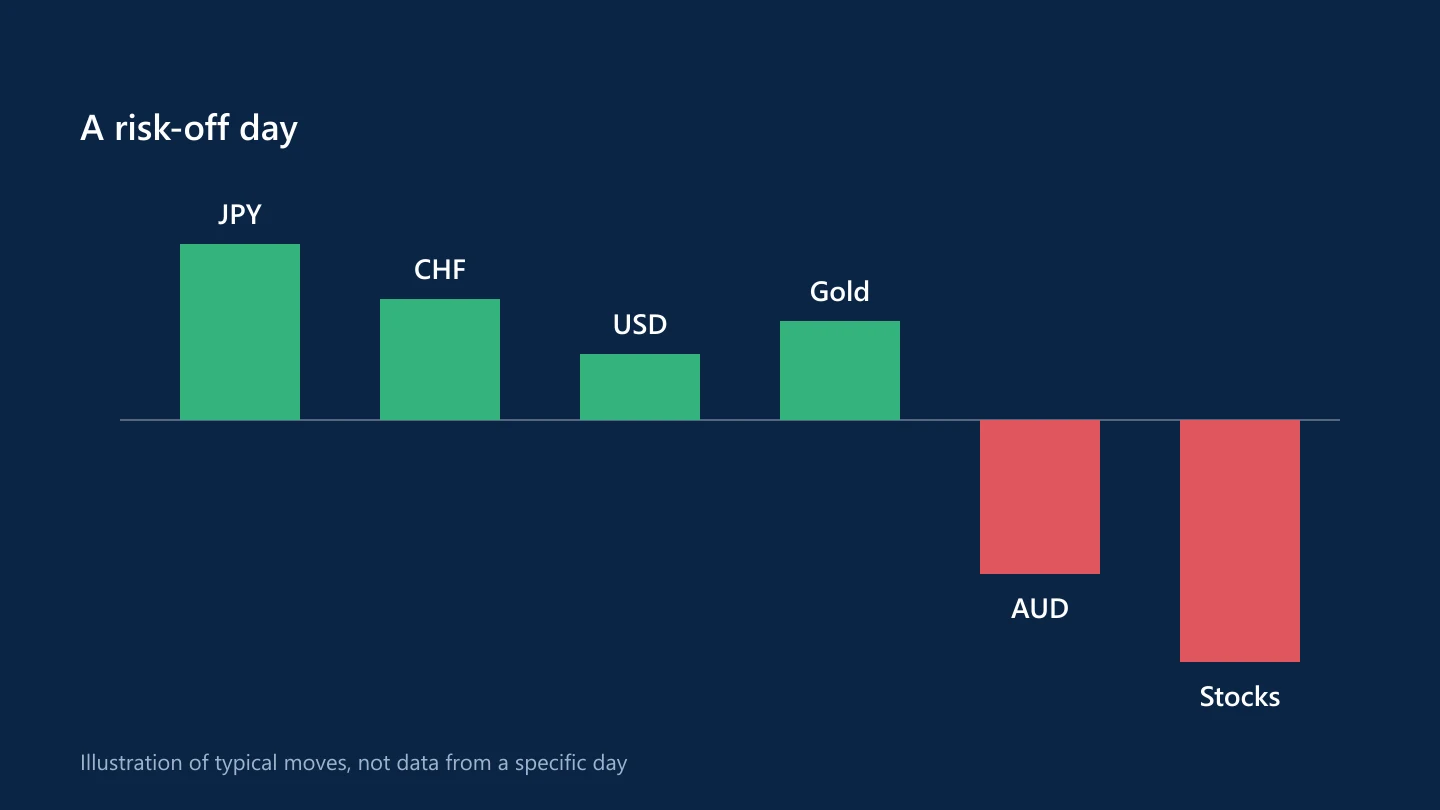
In calm markets, investors reach for yield. In a crisis, they reach for safety. A small group of currencies tends to strengthen when fear rises, and knowing which ones helps explain moves that seem to go against the economic data.
The Japanese yen
The yen's safe-haven role comes from two features:
- Japan is one of the world's largest net creditors. Japanese investors hold large amounts of foreign assets. In a crisis, some of that money comes home, and bringing it home means buying yen.
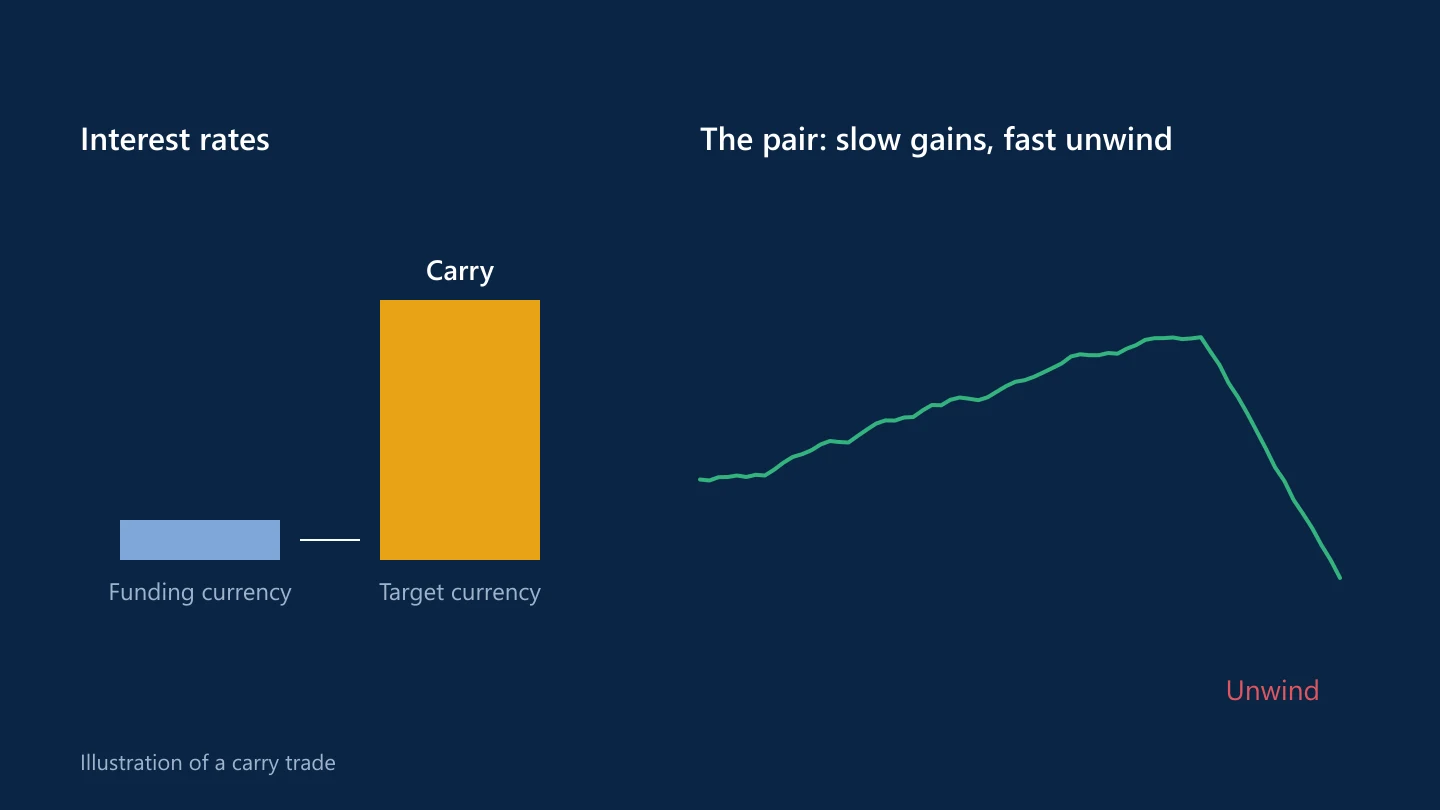
- The yen funds carry trades. Because Japanese interest rates have long been low, traders borrow in yen to buy higher-yielding assets. When markets fall, those positions are closed, which again requires buying yen.
A vivid example came on 5 August 2024, when a rapid unwinding of yen carry trades coincided with a 12.4% fall in Japan's Nikkei 225 index, its worst day since 1987, and a sharp rise in the yen.
The Swiss franc
The franc is backed by Switzerland's political stability, low inflation, strong public finances and a long-running current account surplus. Money flows into it during European and global stress.
That popularity is a problem for the Swiss National Bank, because a strong franc lowers import prices and pushes inflation towards zero. In 2011 the SNB set a minimum exchange rate of 1.20 francs per euro, and on 15 January 2015 it abruptly removed it, sending the franc sharply higher within minutes. In June 2026 the SNB said it had an increased willingness to intervene to counter a rapid and excessive appreciation of the franc.
The US dollar
The dollar is the world's main reserve currency and the currency most global borrowing is done in. During severe stress, companies and banks around the world scramble for dollars to meet obligations, which pushes the dollar up even when the crisis starts in the United States.
Gold
Gold is the oldest safe haven and often rises alongside the yen and franc, although high interest rates can blunt that.
When the pattern breaks
Safe-haven behaviour is a tendency, not a law:
- A crisis centred on Japan or Switzerland can weaken their own currencies.
- Large interest rate gaps can keep the yen weak for long periods, prompting intervention, as in July 2026.
- Central banks can push back against strength, as the SNB has.
Risk-on and risk-off
Traders sum this up with two labels. Risk-on: stocks rise, and higher-yielding currencies such as the Australian dollar gain. Risk-off: stocks fall, and the yen, franc and often the dollar gain. Watching USD/JPY alongside a stock index is one of the quickest ways to read the mood.
Sources
Common questions
Why is the yen a safe-haven currency?
Japan holds large foreign assets that tend to be brought home in a crisis, and the yen is widely borrowed to fund carry trades. Both lead to yen buying when markets fall.
What is a risk-off move?
A shift away from risky assets such as stocks and higher-yielding currencies, towards perceived safe havens such as the yen, Swiss franc, dollar and gold.
This article is for information only and is not financial advice. Trading forex and CFDs carries a high risk of losing money. Read the risk warning. Spotted an error? Tell the editors.


Comments
Log in to join the discussion. Comments follow the community guidelines.
Log in to commentLoading comments…