Which session do you trade from your time zone?
Forex trades around the clock on weekdays, but most people can only watch one or two sessions. Where you live decides a lot about how you trade.
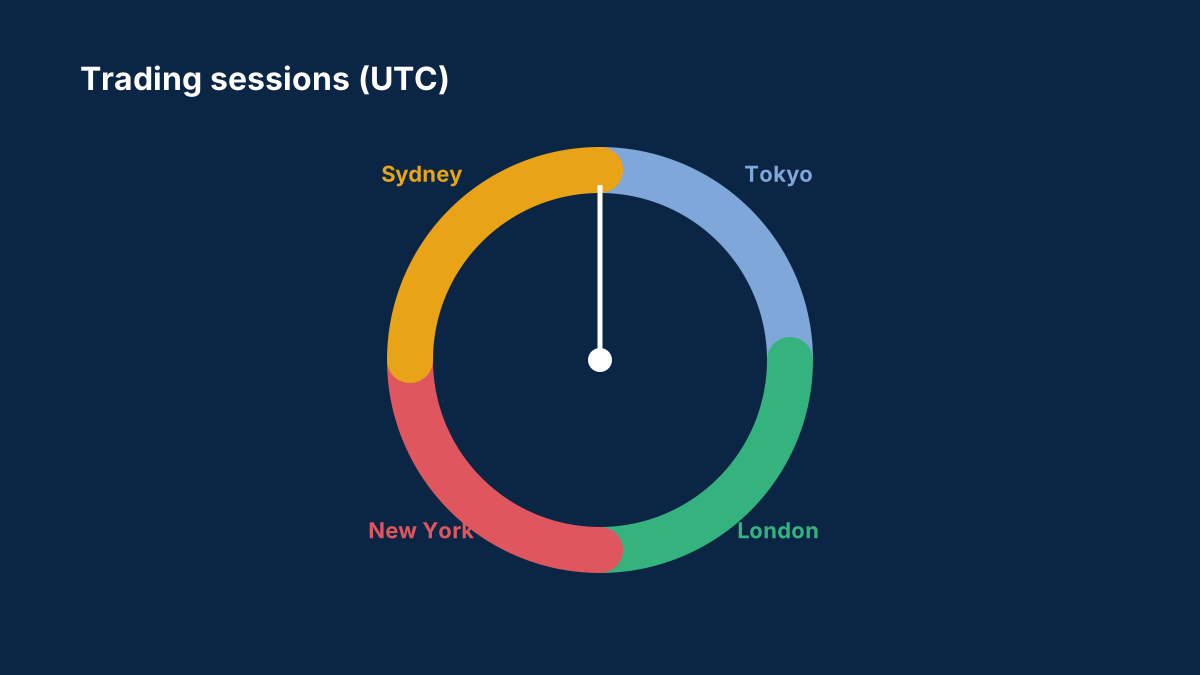
Share your region (no need to be more specific) and:
- which session you trade: Sydney, Tokyo, London or New York
- the pairs that move enough in those hours to be worth trading
- how you handle big releases at awkward times, such as US data at 8:30 a.m. New York time
Traders in South Asia, the Middle East and Africa get the London open in their afternoon, while traders in the Americas get it before dawn. The trading sessions guide lists the hours in UTC.
Background: Forex market hours: the Sydney, Tokyo, London and New York sessions
Currencies trade around the clock on weekdays, but not with the same liquidity. Session times in UTC, the overlaps that matter and the daylight-saving trap.
What time does the forex market open on Sunday?
Most brokers open at 5 p.m. New York time on Sunday, which is 21:00 UTC in summer and 22:00 UTC in winter.
What is the best time to trade forex?
Liquidity is usually highest during the London–New York overlap, roughly 12:00 to 16:00 UTC in the northern summer, when spreads on major pairs tend to be tightest. Whether that suits you depends on the pairs you trade and your strategy.
Comments
Log in to join the discussion. Comments follow the community guidelines.
Log in to commentLoading comments…
A quick reference to help members compare, in UTC, with the usual caveat that session times shift when clocks change in each centre.
- Sydney: roughly 22:00 to 07:00 UTC in September, the quietest period for most pairs outside AUD and NZD.
- Tokyo: roughly 00:00 to 09:00 UTC, with JPY and AUD pairs most active.
- London: roughly 07:00 to 16:00 UTC in summer, the busiest session for EUR and GBP pairs.
- New York: roughly 12:00 to 21:00 UTC in summer, with most US data at 12:30 UTC while US clocks are on daylight time.
The London-New York overlap is usually the most liquid part of the day. The market sessions page shows the live timeline and adjusts automatically for clock changes, and the trading sessions guide explains why each session behaves as it does.
Members, which session fits around your day, and which pairs move enough in it?
0