Stop-loss first or position size first: in what order do you plan a trade?
There are two common ways to plan a trade. Some traders pick the stop-loss level from the chart first and then work out the position size that keeps the loss within their limit. Others start with a fixed lot size and place the stop wherever that size allows.
The first approach keeps the money at risk the same on every trade. The second means the risk changes whenever the stop distance does.
Tell us:
- Which order you plan in, and whether that changed as you gained experience
- How you choose where the stop goes: a chart level, a multiple of average range, or a fixed number of pips
- What you do when the stop the chart suggests would need a position smaller than your broker allows
Worked examples are welcome. The position sizing guide and leverage and margin cover the arithmetic.
Background: Leverage and margin explained: margin calls, stop-outs and how losses grow
Leverage lets you control a large position with a small deposit. It magnifies losses exactly as much as gains, and it is behind most blown trading accounts.
What does 30:1 leverage mean?
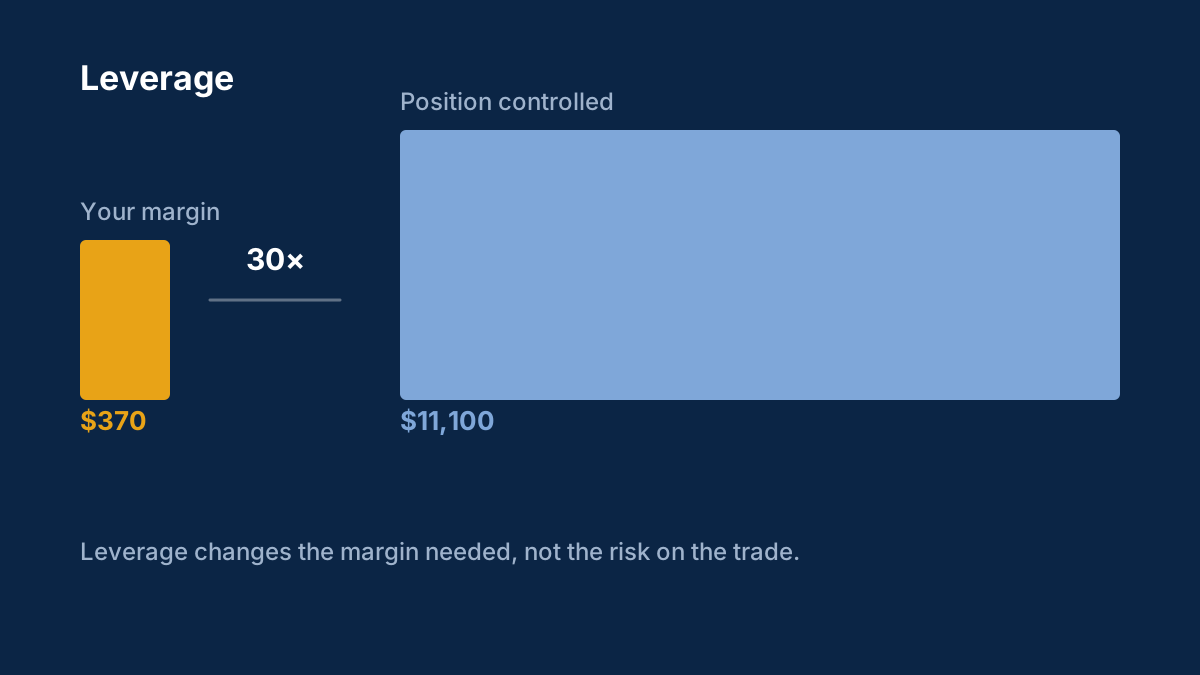
You can control a position 30 times larger than your margin deposit. $1,000 of margin opens a $30,000 position, and gains and losses are calculated on the full $30,000.
What is a margin call?
A warning from your broker that losses have reduced your margin level to a set threshold. If it keeps falling, the broker starts closing positions automatically, which is called a stop-out.
Comments
Log in to join the discussion. Comments follow the community guidelines.
Log in to commentLoading comments…
A worked example of the stop-first method, since that's the one that keeps risk steady.
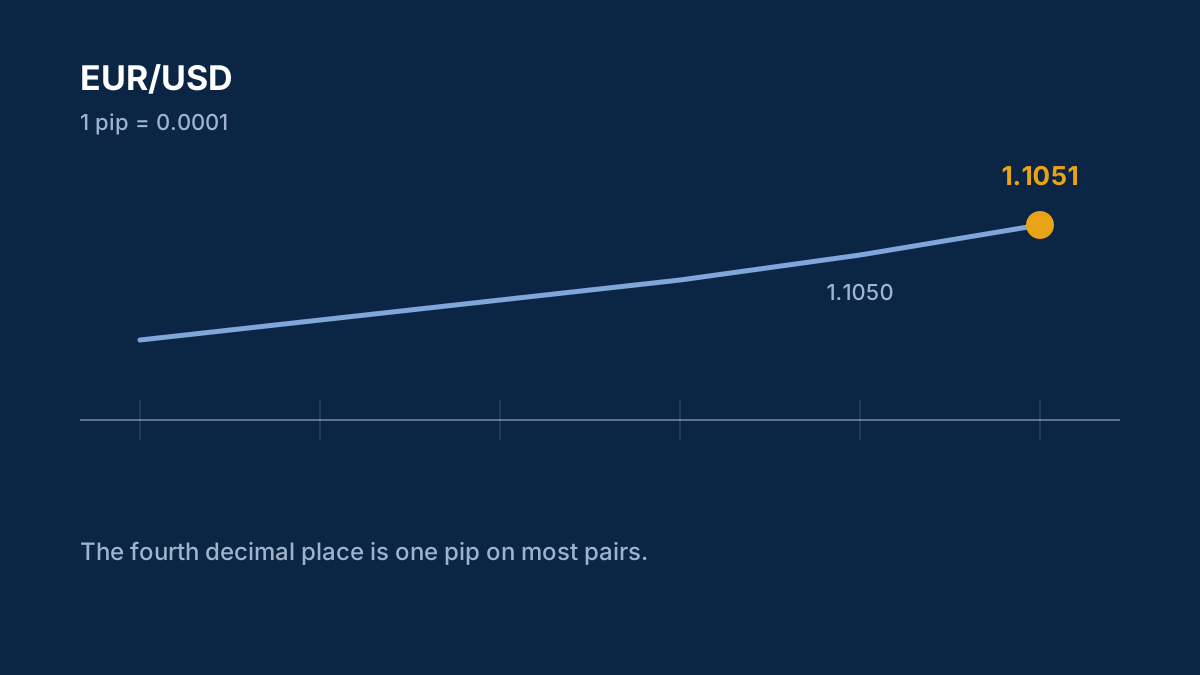
Account: $3,000, risking 1% ($30). Trade: EUR/USD, where a standard lot is worth about $10 a pip.
- Stop from the chart: the level that proves the idea wrong is 35 pips away.
- Size from the stop: $30 ÷ (35 pips × $10) = 0.086 lots, rounded down to 0.08.
- Check the result: 0.08 lots × 35 pips × $10 = $28 at risk, within the limit.
If the chart needs a 120-pip stop, the same method gives 0.025 lots, rounded down to 0.02. If your broker's minimum is higher than the size you need, the honest answer is to skip the trade, not to tighten the stop to fit.
With a fixed lot size, the same 0.08 lots risks $28 on a 35-pip stop but $96 on a 120-pip one, which is how risk creeps up without anyone noticing. Full method: position sizing and risk per trade.
0