The Fed held at 3.75%–4.00% with two votes for a hike. What do you read first?
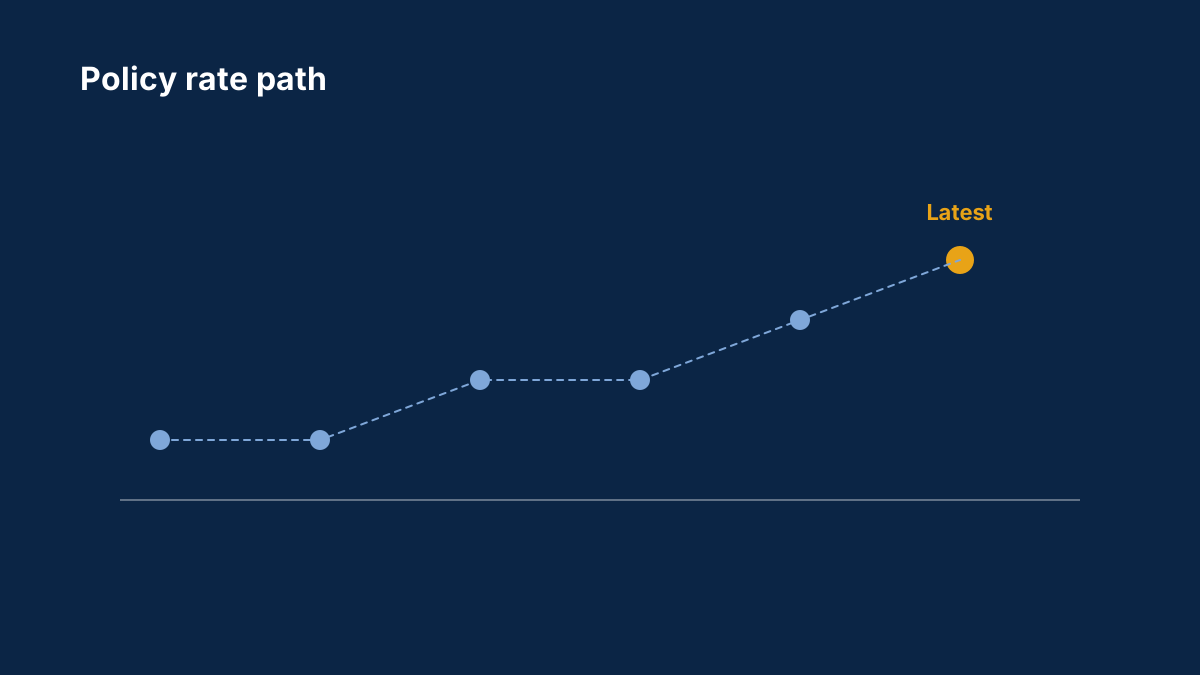
The Federal Open Market Committee kept its target range for the federal funds rate at 3.75% to 4.00% on 28 October 2026, by a 10–2 vote. Lisa D. Cook and Beth M. Hammack wanted a quarter-point increase instead, and the statement names them (FOMC statement, 28 October 2026). The range is still the one the committee set with its 16 September increase, so the decision left the current policy stance unchanged (the decision in detail).
A split vote tells you more than a unanimous one. Two members wanting a hike means the next move is not settled, and the wording of the statement is where that tension usually shows. The next meeting, 8–9 December, is the one the Federal Reserve's calendar marks with new economic projections (FOMC calendar). Between now and then, the written guidance is the statement, the dissents and whatever officials say in public.
We would like to hear how you read it:
- When a vote is 10–2, do you treat the two dissents as a signal, or as noise?
- Which line of the statement would you compare first with the September one?
- Do you change your view of the dollar on a hold, or only when rates actually move?
- Have you seen a dollar pair move on a Fed decision and then reverse before the close?
For how rate decisions reach currencies, see what happens when the Fed hikes. The wording itself is covered in why central bank language matters.
Please share your own approach and reasoning, not calls for others to copy. Posts that promise a direction or sell signals will be removed.
Background: Why one word from a central banker can move a currency
Central bank statements are written in a coded language, and the market hangs on every word change. Here is how the code works, which words carry weight, and how to read a statement like a trader.
Why do central bank words move currencies?
Because the words steer expectations about the next policy move, and currencies trade those expectations. A word change signals the path before any rate change happens — the language is the forward guidance.
Which words should I watch in a Fed statement?
The distribution words — some, many, most — the commitment ladder — will act versus prepared to act — and the inflation vocabulary — transitory versus persistent. Changes from the previous statement are the signal.
Comments
Log in to join the discussion. Comments follow the community guidelines.
Log in to commentLoading comments…