After a 25-basis-point hike, how far do you expect the loonie to move?
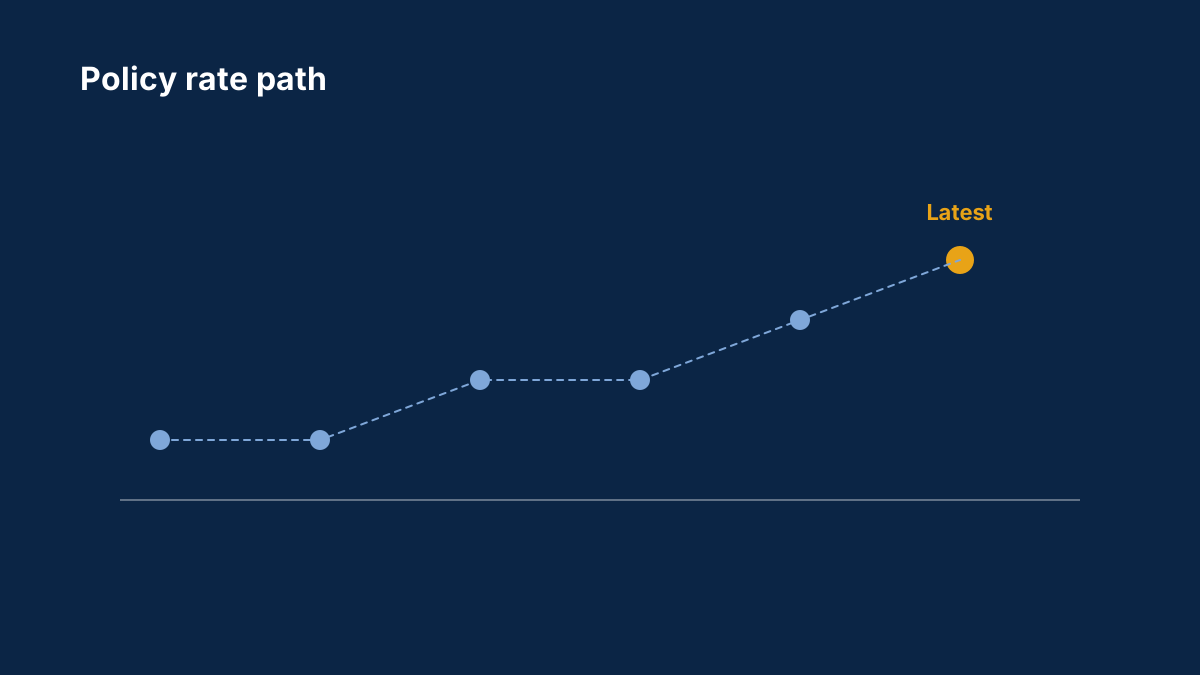
The Bank of Canada's 28 October decision moved its overnight rate target from 2.25% to 2.50% (Bank of Canada: key interest rate). Whether a currency moves much on a change of that size depends less on the number itself than on how much traders had already expected it, and on the words that come with the decision.
Before you set a target for the loonie, check three things: what the market had priced in beforehand, what the bank said about its next steps, and how the September inflation reading of 3.1% on the year compares with the bank's view (Canada's September CPI). Interest rate gaps between countries are one of the main ways rate moves reach a currency pair, and carry trade explained shows how that gap is used in a position.
We would like to hear how you size the expectation:
- What do you use to judge whether a move was priced in before the decision?
- How far do you expect a currency to move on a small rate change, and what would surprise you?
- Do you size the trade to the move you expect, or to the stop you can accept?
- Have you traded a rate change that the currency ignored? What did you change afterwards?
If you want the wider picture on how the bank's rate reaches the economy, see the BoC trade-off analysis.
Please share your own approach and reasoning, not calls for others to copy. Posts that promise a direction or sell signals will be removed.
Background: Why carry trades unwind so violently
Carry trades earn steady yield for months and then collapse in days — and the collapse is structural, not accidental. Here is the mechanics of the unwind and why it hits every market at once.
What is a carry trade unwind?
The forced reversal of carry positions: traders sell the investment currency and buy back the funding currency, usually under margin pressure. The buying pushes the funding currency up and feeds further exits.
Why do carry trades collapse so fast?
Because the trade is crowded, and the exits feed themselves: each round of forced buying strengthens the funding currency, deepening losses and triggering the next round. The loop is self-reinforcing.
Comments
Log in to join the discussion. Comments follow the community guidelines.
Log in to commentLoading comments…