The Bank of Canada raised its rate to 2.50%. What would make you trade the loonie?
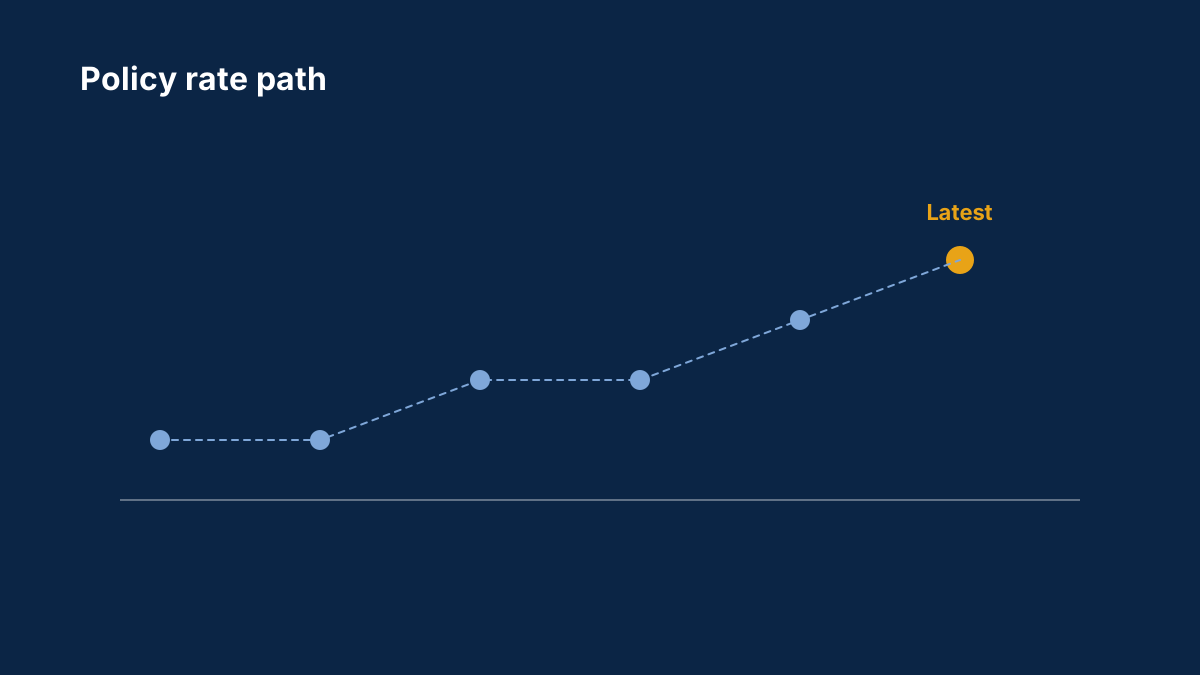
The Bank of Canada raised its target for the overnight rate by 25 basis points, from 2.25% to 2.50%, with the announcement dated 28 October 2026. The bank's key interest rate page shows the new target and that date (Bank of Canada: key interest rate). Our write-up of the decision lists the same figures (the decision).
Canada's September consumer prices rose 3.1% on the year, and that is the reading to set against the decision (Canada's September CPI). The bank's earlier reasoning on the 2.25% rate is in the BoC trade-off analysis. Both matter for how far the loonie moves: the size of the move, and whether the bank signals more to come. The bank's own statement is the place to check which of those drove the decision.
We would like to hear your view:
- Do you trade the Canadian dollar on the rate change itself, or on what the bank says next?
- Which Canadian release do you check before the next decision?
- When the Fed holds and the Bank of Canada hikes, which pair do you watch first?
- Have you seen the loonie move on a rate decision and give it back the same day?
For how inflation feeds into currencies in general, see how inflation moves currencies.
Please share your own approach and reasoning, not calls for others to copy. Posts that promise a direction or sell signals will be removed.
Background: How inflation moves currency pairs: the CPI transmission
Inflation is the input central banks watch most closely, which makes CPI the release that moves currencies most. Here is the transmission chain — from print to policy to price — and why the details beat the headline.
How does inflation affect currency prices?
Through central bank policy: higher inflation raises the odds of tighter policy, which attracts money and strengthens the currency. The chain runs from the print to the policy read to yields to the pair.
Why does the market react to the core CPI number?
Core CPI strips out food and energy, giving the cleanest read on underlying inflation. Central banks treat energy shocks as transitory, so the market's policy read focuses on the core measure.
Comments
Log in to join the discussion. Comments follow the community guidelines.
Log in to commentLoading comments…