Forex scams: the warning signs, and how recovery scams work
Fake brokers, signal sellers, account managers and romance-investment schemes all target forex traders. The patterns they share and what to do if you have been caught.
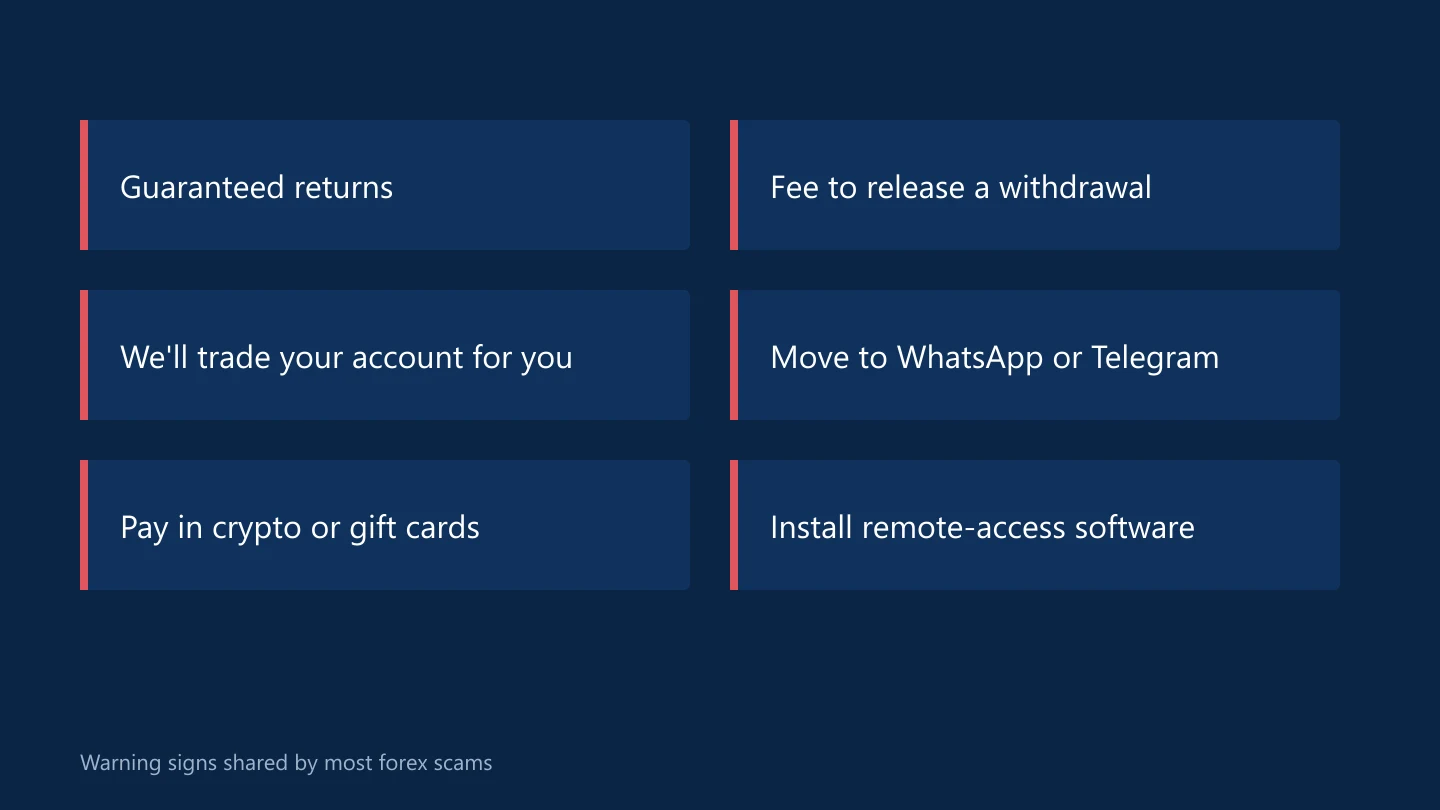
Fraud is a constant risk around currency trading, because the promise of fast returns is easy to sell and hard for newcomers to check. Most scams follow a small number of patterns.
Common schemes
Account managers. Someone offers to trade your account for you, often for a share of profits. The account shows early gains, you deposit more, and the money becomes impossible to withdraw.
Fake brokers and apps. A professional-looking website or app shows balances and trades, but no real trading takes place. Some copy the details of genuine firms; see clone firms.
Signal and course sellers. Groups on messaging apps sell "guaranteed" signals, often with cherry-picked or invented results, then push members towards a particular "broker".
Romance and friendship schemes. A contact built up over weeks, on social media or a dating app, introduces an investment platform. US authorities have warned about these long-con schemes, sometimes called "pig butchering".
Warning signs
- Guaranteed or unusually high returns
- Pressure to deposit more to "unlock" profits or withdrawals
- Requests for a fee, tax or insurance payment before a withdrawal
- Contact that moves quickly to WhatsApp or Telegram
- Payments requested in crypto, gift cards or to personal bank accounts
- Offers to access your computer remotely "to help set up the platform"
Recovery scams
After losing money, victims are often contacted by someone offering to recover it for an upfront fee, sometimes posing as a lawyer, a regulator or a law enforcement agency. Genuine regulators don't charge fees to recover money. A recovery offer that asks for payment first is almost always a second scam, often run by the same people.
If you think you have been scammed
- Stop sending money, including any "fees" to withdraw.
- Contact your bank or card provider straight away; some payments can be disputed.
- Report it to your national financial regulator and the police.
- Keep records: messages, websites, transaction details.
- Warn others without sharing personal details, for example in FTC's community.
Protecting yourself
- Check any firm on the regulator's register and on warning lists such as IOSCO's I-SCAN before you pay.
- Never give anyone remote access to your devices or trading accounts.
- Remember that FTC staff will never ask for money, passwords or access to your account.
Sources
Common questions
Why do scam brokers ask for a fee before withdrawal?
To extract more money. Genuine brokers deduct any fees from your balance and don't demand separate tax or unlock payments before releasing a withdrawal.
Can someone recover money lost to a forex scam for a fee?
Be very careful. Upfront-fee recovery offers are a common second scam. Contact your bank, your regulator and the police directly instead.
This article is for information only and is not financial advice. Trading forex and CFDs carries a high risk of losing money. Read the risk warning. Spotted an error? Tell the editors.
Comments
Log in to join the discussion. Comments follow the community guidelines.
Log in to commentLoading comments…