What do you write in your trading journal, and what do you review each week?
A trading journal records each decision, the reason for it and the outcome. Its value comes from reviewing it regularly, looking for patterns you would miss from memory alone. Members keep journals in many forms, from spreadsheets to notebooks. Leverage and margin explained covers the basic terms a new trader should be sure of before a journal is useful, because the entries only make sense when the terms do.
The most useful entries are the ones written before the trade, with the plan and the reason, so the review can compare what you intended with what happened. A journal with only results tells you the score but not why it changed. Keeping the record short enough to finish each day is more important than keeping it complete, because a journal that is abandoned in week two teaches nothing.
We would like to hear about your journal:
- Which fields do you record for every trade, and which do you skip?
- How long do you spend on a weekly review, and what do you look for?
- Which pattern did your journal reveal that you had not noticed?
- Do you record the emotion you felt at entry, exit or both?
Please share your own approach and reasoning, not calls for others to copy. Posts that promise a direction or sell signals will be removed.
Background: Leverage and margin explained: margin calls, stop-outs and how losses grow
Leverage lets you control a large position with a small deposit. It magnifies losses exactly as much as gains, and it is behind most blown trading accounts.
What does 30:1 leverage mean?
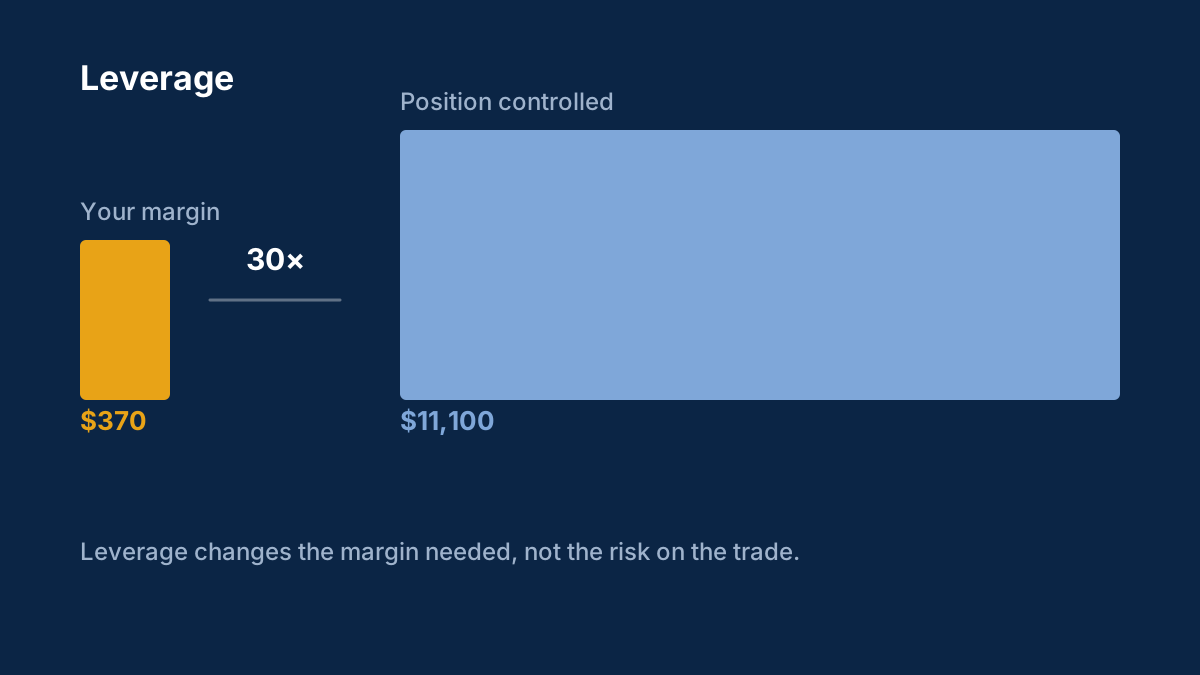
You can control a position 30 times larger than your margin deposit. $1,000 of margin opens a $30,000 position, and gains and losses are calculated on the full $30,000.
What is a margin call?
A warning from your broker that losses have reduced your margin level to a set threshold. If it keeps falling, the broker starts closing positions automatically, which is called a stop-out.
Comments
Log in to join the discussion. Comments follow the community guidelines.
Log in to commentLoading comments…