How do you decide which currency pairs to drop from your watchlist? Trimming twenty pairs down to a few
Most traders start with a long list: the majors, a few crosses, gold, perhaps oil. Then comes the realisation that watching twenty charts means twenty sets of news, twenty spreads to compare and a lot of trades that share the same currency underneath. Many end up trimming the list to a handful of pairs they know well.
The cuts can be made on very different grounds, and we would like to hear yours.
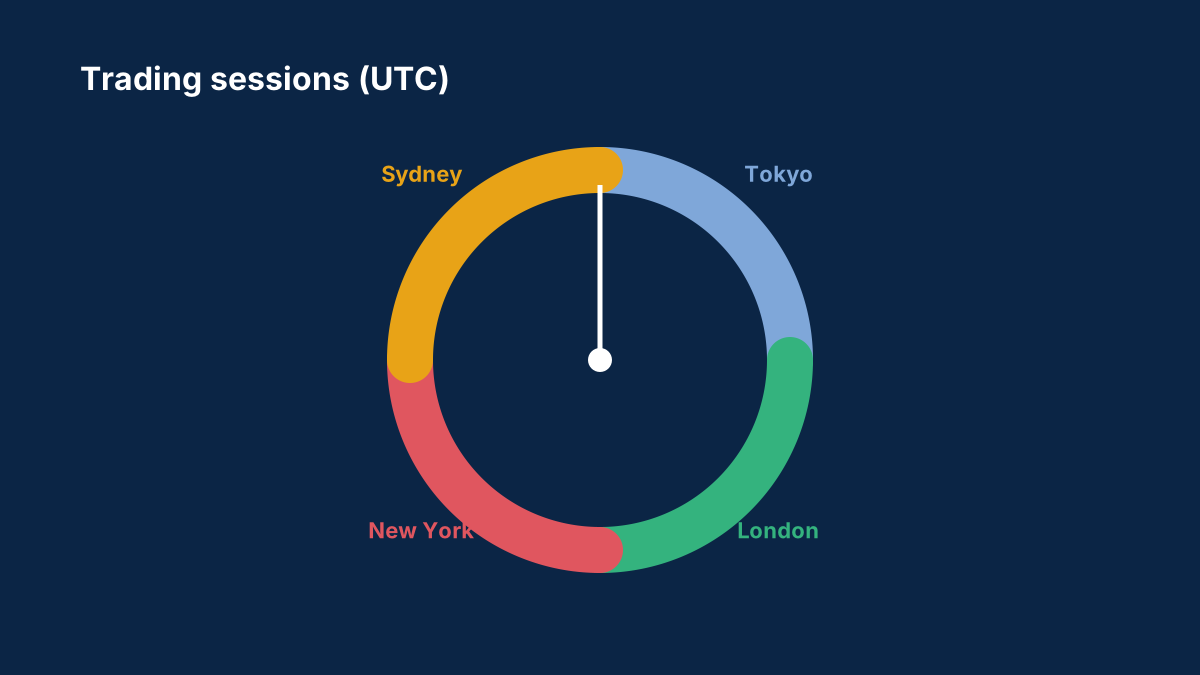
- Schedule: some pairs are only lively during sessions you can't watch. The forex market hours guide shows when each session and overlap falls in UTC, which you can convert to your own time zone
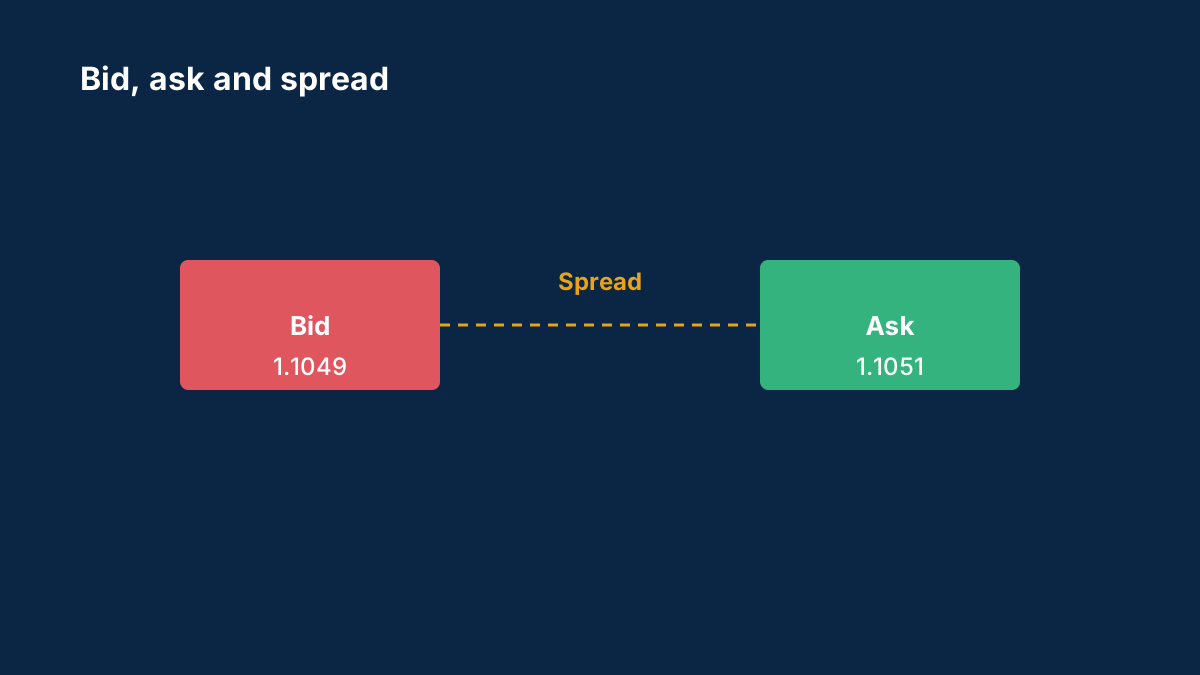
- Costs: a wider spread eats more of a short-term trade than a long-term one (the real cost of a forex trade)
- Overlap: two pairs that move together are close to one position, which currency correlation explained shows for pairs like EUR/USD and GBP/USD
- Knowledge: you may understand what drives the yen or the Australian dollar far better than what drives the Swiss franc
- Results: your journal may show that you lose more on some pairs than on others (how to keep a trading journal)
Questions for members:
- How many pairs do you trade or watch now, and how did you get to that number?
- What was the first pair you dropped, and why?
- Is there one you dropped and regret, or one you kept even though you kept losing on it?
- How often do you review the list: every month, every quarter, or only after a bad run?
If you're just starting out and still building your list, tell us how you're choosing. Please share your own approach, not calls for others to copy. Posts that promise a direction or sell signals will be removed.
Background: Forex market hours: the Sydney, Tokyo, London and New York sessions
Currencies trade around the clock on weekdays, but not with the same liquidity. Session times in UTC, the overlaps that matter and the daylight-saving trap.
What time does the forex market open on Sunday?
Most brokers open at 5 p.m. New York time on Sunday, which is 21:00 UTC in summer and 22:00 UTC in winter.
What is the best time to trade forex?
Liquidity is usually highest during the London–New York overlap, roughly 12:00 to 16:00 UTC in the northern summer, when spreads on major pairs tend to be tightest. Whether that suits you depends on the pairs you trade and your strategy.
Comments
Log in to join the discussion. Comments follow the community guidelines.
Log in to commentLoading comments…