Carry trades after the Fed's hike: is earning the rate difference still worth the risk?
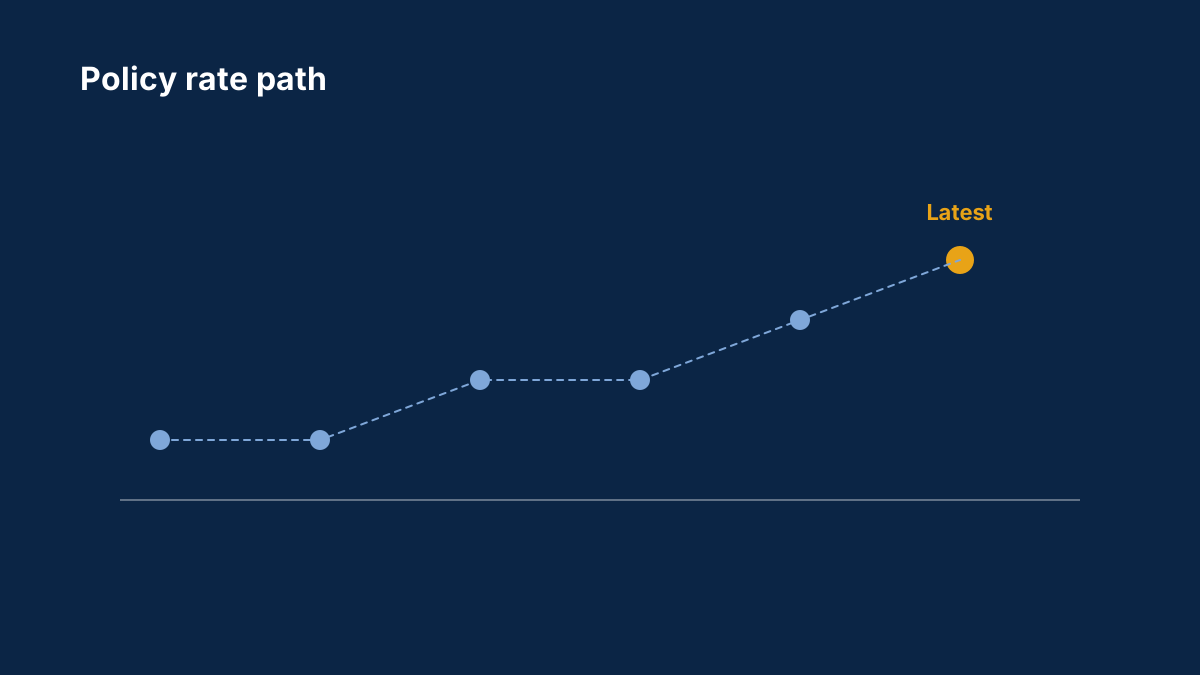
A carry trade earns the difference between two interest rates, usually by holding a higher-yielding currency against a lower-yielding one (carry trade explained). With US rates now at 3.75%–4.00% and the Bank of Japan at 1.25% after its 18 September increase, the gap is still wide.
Carry works until volatility spikes, and yen pairs have seen intervention this year.
For members who hold positions for days or weeks:
- Do you include swap income in your trade plan, or treat it as a bonus?
- What would make you close a carry position early: a volatility level, a central bank meeting, or a price level?
- Do you hedge the currency risk in any way?
Please describe your own reasoning. Posts that sell strategies or promise returns will be removed.
Background: Why carry trades unwind so violently
Carry trades earn steady yield for months and then collapse in days — and the collapse is structural, not accidental. Here is the mechanics of the unwind and why it hits every market at once.
What is a carry trade unwind?
The forced reversal of carry positions: traders sell the investment currency and buy back the funding currency, usually under margin pressure. The buying pushes the funding currency up and feeds further exits.
Why do carry trades collapse so fast?
Because the trade is crowded, and the exits feed themselves: each round of forced buying strengthens the funding currency, deepening losses and triggering the next round. The loop is self-reinforcing.
Comments
Log in to join the discussion. Comments follow the community guidelines.
Log in to commentLoading comments…
A rough way to put numbers on the question, using round figures rather than any broker's actual swaps.
With US rates at 3.75%–4.00% and the Bank of Japan at 1.25%, the gap is between 2.5 and 2.75 percentage points. On a position of $100,000, that's about $3,000 a year before the broker's markup, or roughly $8 a day. After the markup, the swap received is lower.
Now compare that with price risk. On USD/JPY around 148, a 1-yen move on $100,000 is about $675. A single day's move of 2 yen, which intervention or a surprise decision can easily cause, would cost several months of carry income.
That's why traders who hold for carry often:
- keep position sizes much smaller than for a short-term trade
- close or reduce before events like BoJ meetings (the next is on 29–30 October)
- treat swap as a bonus on a trade that stands up on price alone
Background: carry trade explained and currency intervention explained.
0