Correlated positions: how do you keep several trades from becoming one big bet?
Buying EUR/USD, GBP/USD and gold at the same time can feel like three trades. If the dollar strengthens, it often behaves like one position three times the size.
If you manage this, tell us how:
- Do you cap total risk across positions that share a currency, and at what level?
- Do you check correlation numbers, or go by which currency appears in each pair?
- Have you been caught by a move that hit several positions at once? What did you change afterwards?
The currency correlation guide explains how correlation is measured and why it changes over time, and position sizing covers risk per trade.
Background: Position sizing: how to risk a fixed percentage per trade
How much you trade matters more than where you enter. A step-by-step method for sizing positions from your stop-loss and the amount you are willing to lose.
How do I calculate lot size from risk?
Divide the amount you are willing to lose by the stop distance in pips multiplied by the pip value per lot. For $50 risk, a 25-pip stop and $10 per pip per lot, that is 0.20 lots.
What is the 1% rule in trading?
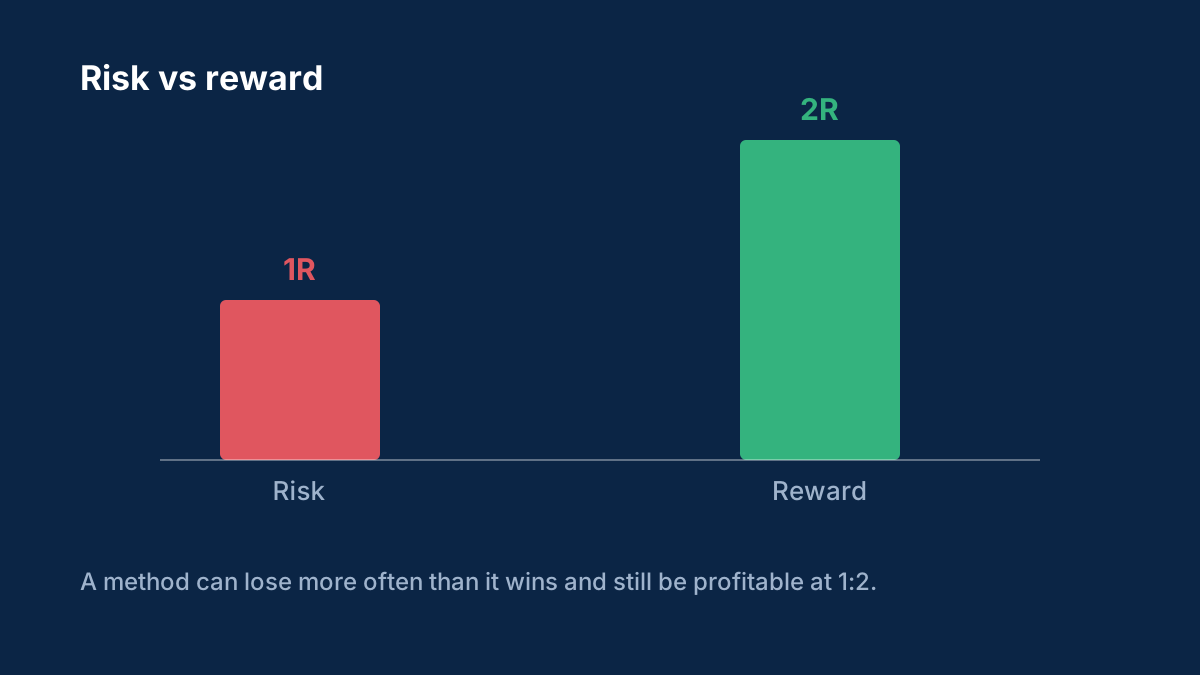
A guideline to risk no more than 1% of the account on any single trade, so a losing streak doesn't cause a drawdown you can't recover from. It is a starting point, not a guarantee.
Comments
Log in to join the discussion. Comments follow the community guidelines.
Log in to commentLoading comments…
A simple way to see the problem in numbers, before anyone gets into correlation coefficients.
Say you risk 1% each on long EUR/USD, long GBP/USD and long gold. All three are, in part, short US dollar trades. If the dollar rallies hard after a strong US release, the three can lose together, so your real risk on that one event is closer to 3%.
Two rules traders often use:
- Count currency exposure, not positions. Write down how much you're long or short each currency across all open trades. If one currency carries more than, say, 2% of risk, cut size.
- Treat very similar pairs as one trade. EUR/USD and GBP/USD have tended to move in the same direction over long periods, though the relationship can weaken for weeks at a time.
The currency correlation guide explains how correlation is measured and why it shifts. Members, do you cap risk per currency, or per theme, like "short dollar"?
0