Do you act before a candle closes, or after? Which trade-off do you keep?
A candle shows the open, high, low and close of a period, and the candle is still moving until the period ends. A trader can act on the live candle, or wait for it to close and then decide. Each choice has a cost. Acting on the live candle lets you enter earlier, but a candle can reverse before it closes, and many signals seen mid-candle disappear by the end of the period. Learn gathers the beginner lessons, which is a sensible place to check the basics before choosing a rule.
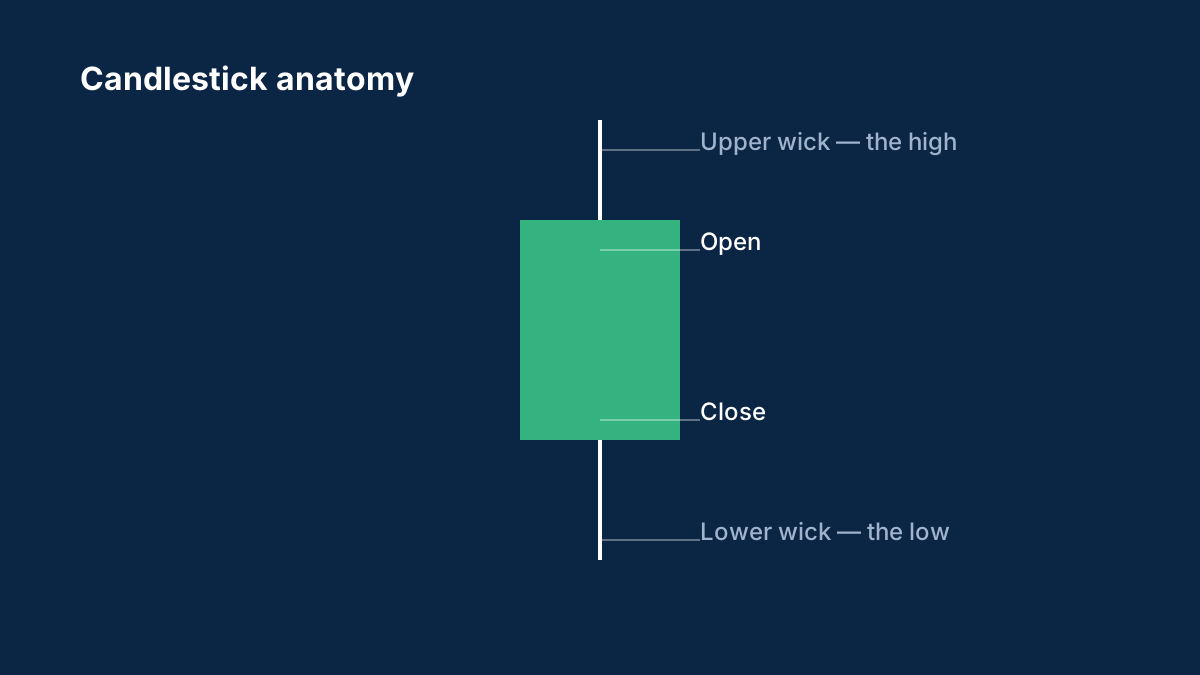
Members who wait for the close usually accept a worse entry in exchange for a signal that has held. Members who act on the live candle usually set a tighter stop and accept more false signals. The question is which trade-off suits your plan, and whether you have tested it on past charts or only on a few trades.
We would like to hear your rule:
- Do you wait for a candle to close, or act on the live candle?
- Has a signal you acted on mid-candle reversed before the close? What did you do?
- Does your choice change on a news day?
- Which timeframe do you use for the close rule, and why that one?
Please share your own approach and reasoning, not calls for others to copy. Posts that promise a direction or sell signals will be removed.
Comments
Log in to join the discussion. Comments follow the community guidelines.
Log in to commentLoading comments…