China's consumer inflation rises to 0.8% as producer prices climb 3.8%
China's CPI rose 0.8% from a year earlier in August 2026 and core inflation reached 1.0%, while factory-gate prices rose 3.8% on coal, metals and oil.
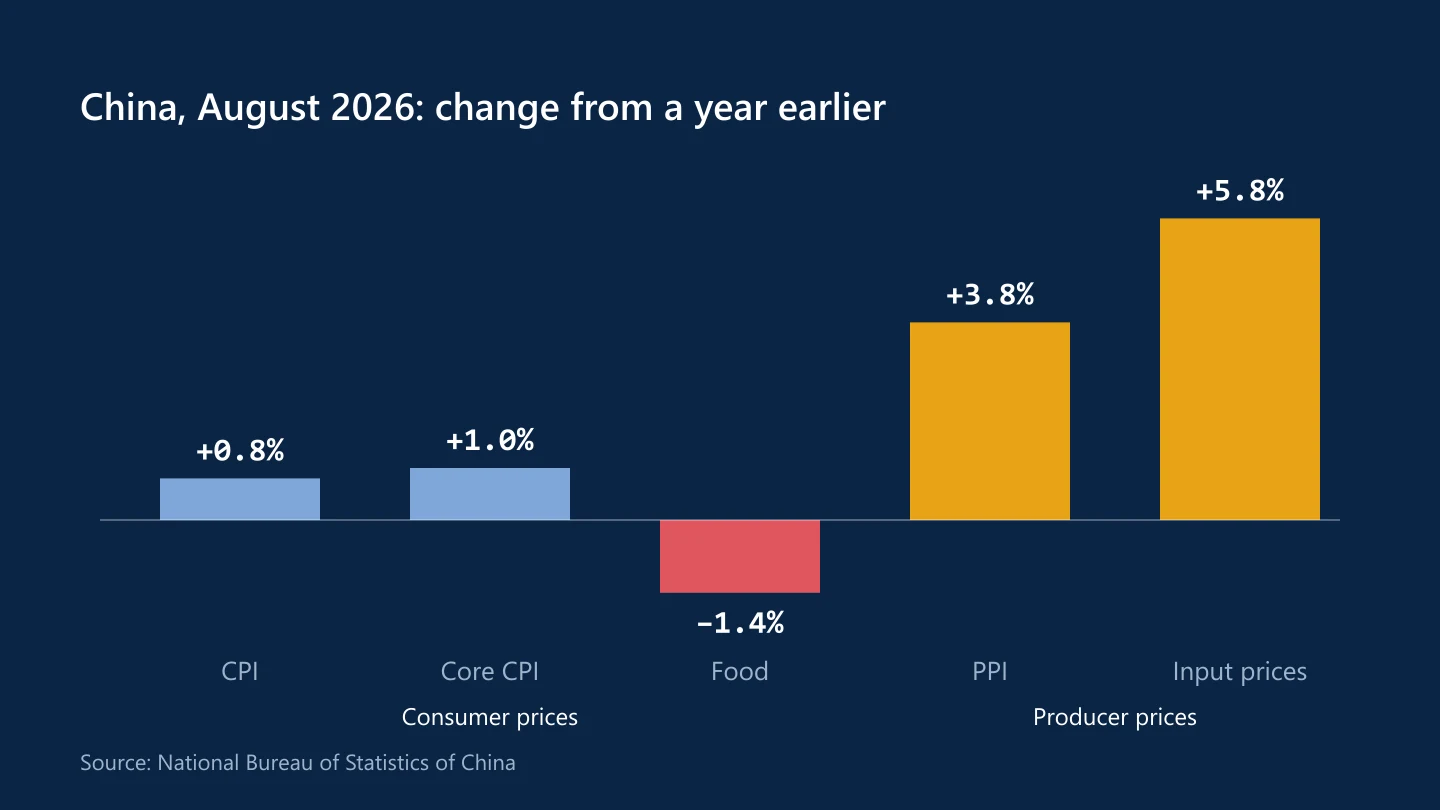
Consumer prices in China rose 0.8% in August 2026 from a year earlier, the National Bureau of Statistics (NBS) said on 10 September. Prices were 0.4% higher than in July. Over the first eight months of the year, consumer prices averaged 0.9% above the same period of 2025.
Consumer prices: fuel up, food down
- Food prices fell 1.4% from a year earlier, with pork down 11.8% and fresh vegetables down 2.8%.
- Non-food prices rose 1.2%.
- Energy for transport was 8.3% more expensive than a year earlier.
- Services prices rose 0.8%.
- Core inflation, excluding food and energy, was 1.0%.
Since January 2026 the NBS has compiled the index with 2025 as its base period, a change it estimates had an effect of about 0.06 percentage points.
Producer prices rise fastest in mining
The producer price index for industrial goods rose 3.8% from a year earlier and 0.4% from July. The prices producers paid for their inputs rose faster, by 5.8%.
- Mining and quarrying: up 17.8%
- Raw materials: up 6.7%
- Processing industry: up 3.1%
Among individual industries, prices for coal mining and washing rose 26.6%, nonferrous metal smelting and pressing 20.8%, and oil and gas extraction 10.5%. Factory-gate prices of consumer goods, by contrast, fell 0.5%.
Why it matters beyond China
Rising factory-gate prices in the world's largest exporter feed into the cost of goods sold abroad, at a time when inflation is already high in the US and Europe. China's exports rose 25% from a year earlier in August (report).
For currency traders, Chinese data matters most for the yuan and for the Australian and New Zealand dollars, because China is the largest export market for both countries. See commodity currencies and live AUD/USD prices.
Sources
Common questions
What was China's inflation rate in August 2026?
Consumer prices rose 0.8% from a year earlier and core inflation, excluding food and energy, was 1.0%, according to the National Bureau of Statistics.
What was China's PPI in August 2026?
The producer price index rose 3.8% from a year earlier and 0.4% from July, led by mining and quarrying prices, which were up 17.8%.
Why does Chinese inflation matter for forex traders?
Chinese prices and demand affect the yuan, global goods prices and the currencies of countries that sell heavily to China, such as Australia and New Zealand.
This article is for information only and is not financial advice. Trading forex and CFDs carries a high risk of losing money. Read the risk warning. Spotted an error? Tell the editors.


Comments
Log in to join the discussion. Comments follow the community guidelines.
Log in to commentLoading comments…