China's 25% export jump: what it means for AUD and EM
China's exports jumped 25% in August and the surplus hit a record — while domestic demand softened. Here is the mixed picture's meaning for the aussie and the emerging-market complex.
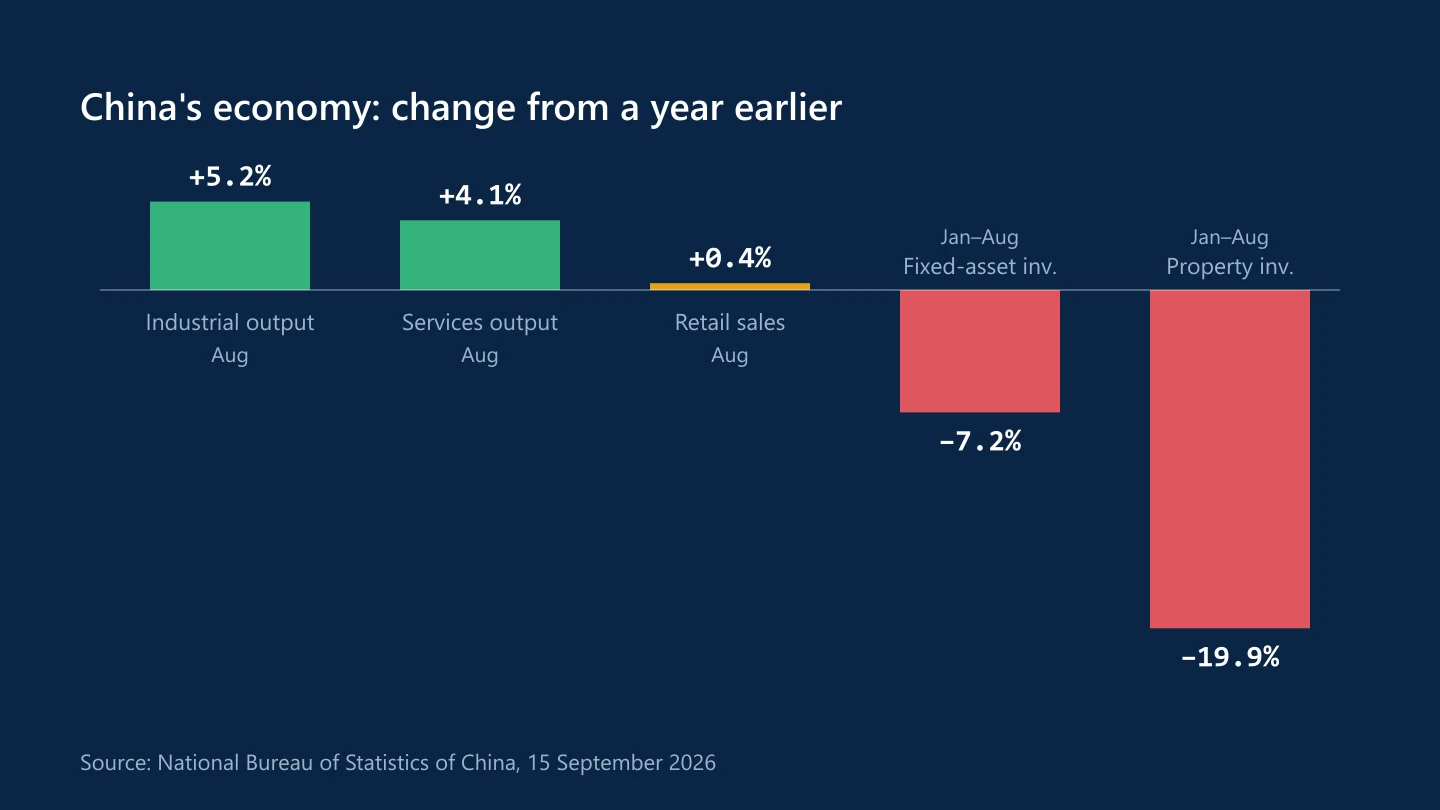
China's August trade data told a two-sided story: exports jumped 25% on the year and the trade surplus reached record territory (report) — while the same month's domestic data softened, with retail and industrial output disappointing (report). The combination is the market's current China puzzle: a booming external sector alongside a hesitant domestic one, and the currencies trade the balance between them.
This analysis explains the mixed picture's meaning for the China-linked currencies. The transmission is in the AUD/USD explainer; the policy side in the PBOC fix explainer.
The export boom's side
The 25% export jump is the external sector at full strength — the strongest reading of the cycle, with the surplus's record size showing the scale. The boom's drivers are the market's debate: front-loaded orders, competitive pricing, and the yuan's managed level all contribute, and the report documents the numbers.
The export boom's currency meaning is straightforward: export strength is demand for China's goods, and the demand supports the currencies of China's suppliers and trade partners — the aussie first among them, through the commodity channel, and the broader EM complex through the trade flows. The AUD/USD explainer maps the China channel's reach.
The domestic softness's side
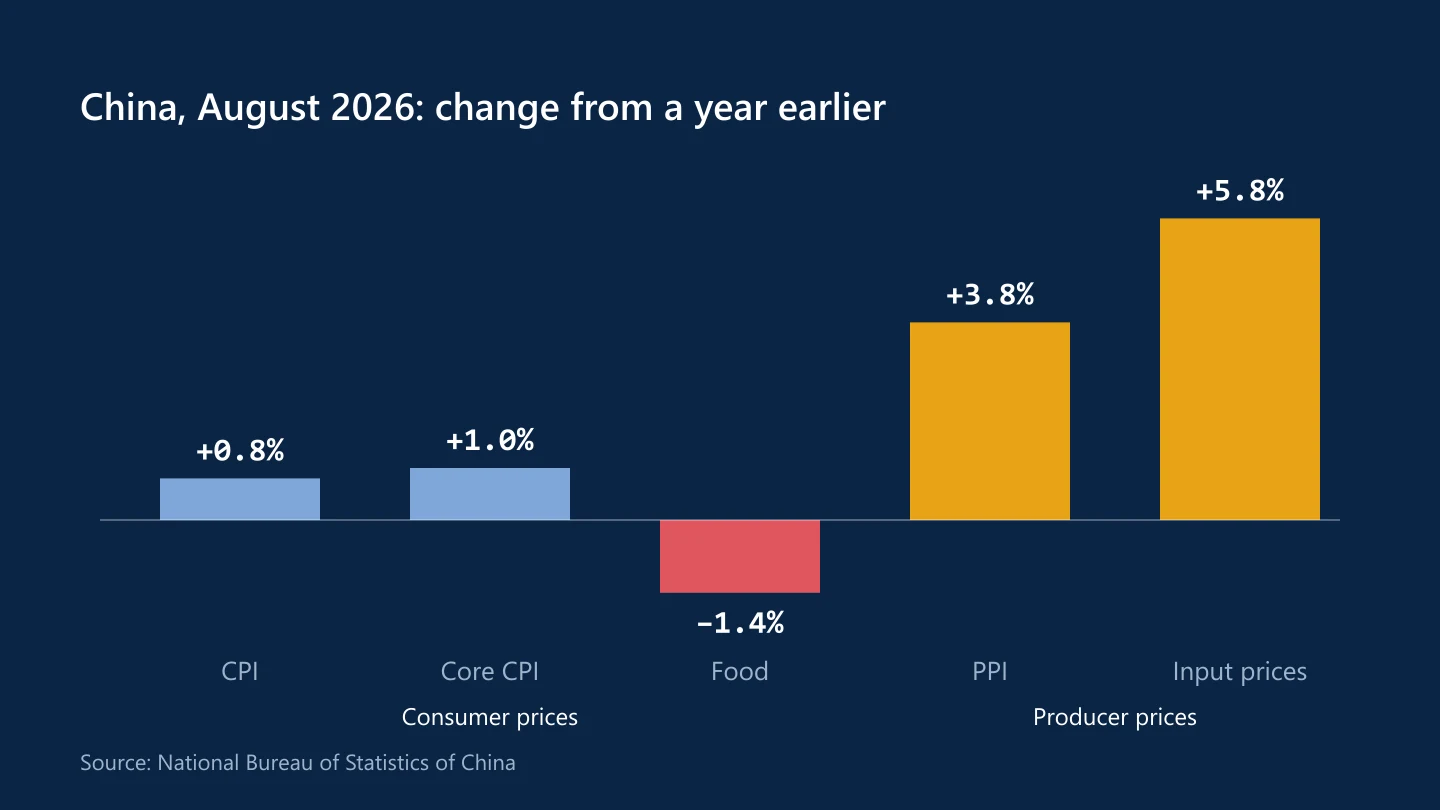
The domestic side tells the other half: retail sales and industrial output softened (report), while producer prices rose 3.8% (report) — the domestic demand picture is the mixed data's weak half. The softness matters because the aussie's China channel runs on two tracks: the export track supports it, and the demand track — China's appetite for iron ore and commodities — weakens it. The two tracks' balance is the aussie's China story, and August's data split the tracks.
The policy implication completes the picture: a soft domestic side raises the odds of policy support — which is why the PBOC's daily fix and the authorities' signals carry extra weight in this mix. The PBOC fix explainer covers reading the policy side.
The aussie's read
The aussie's read of the mixed data runs through its three roles, and the mix splits them:
The commodity role. The export boom's demand for raw materials supports the commodity channel; the domestic softness's weak appetite pressures it. The net is the iron ore price's verdict, and the commodity currencies guide covers the channel's mechanics.
The China-proxy role. The aussie trades the balance of China's data, and the August balance is genuinely mixed — which is why the currency's reaction was measured rather than directional. The AUD/USD explainer covers the balance's reading.
The risk role. The mixed data keeps the risk-mood channel live: an export boom without domestic demand is a growth story with a question mark, and the aussie's risk sensitivity stays on. The risk sentiment guide supplies the mood read.
The EM complex's read
The EM complex reads the same data through its own lens. The export boom is a demand story for the trade-linked EM currencies; the domestic softness is the growth-doubt that keeps the complex's risk premia alive; and the policy-support expectation is the stabiliser the complex prices. The EM explainer covers the complex's channels, and the yuan's own behaviour — the fix's direction, the onshore-offshore spread — is the complex's daily signal. The PBOC fix explainer has the read.
How to trade the mixed picture
The practical read:
- Trade the balance, not the single prints. China's story is the export boom against the domestic softness, and the currencies price the net. The AUD/USD explainer has the balance framework.
- Watch iron ore as the commodity verdict — the ore price settles which of the aussie's two China tracks is winning. The commodity currencies guide covers the channel.
- Read the policy side for the next move — the soft domestic data raises the odds of support, and the PBOC's signals are the early read. The PBOC fix explainer supplies the daily signal.
- Keep the risk gauge — the mixed data's growth doubt feeds the risk-mood channel, and the risk sentiment guide has the five-minute check.
The export boom's sustainability question
The 25% jump raises the market's sharpest question: how much of the boom is durable? The debate's sides: the front-loading argument — exporters shipping ahead of expected tariff or policy changes, pulling future demand into the current month — against the competitiveness argument — the yuan's managed level keeping Chinese goods cheap, and the boom a genuine share gain. The report documents the numbers; the composition's detail — which categories led, which destinations grew — is the market's evidence for each side. The sustainability question matters because the aussie's China channel trades the durable part of the demand story, not the month's spike: a front-loaded boom supports the currency briefly and reverses; a competitiveness-driven one supports it persistently. The AUD/USD explainer covers the channel's read.
The policy side adds the sustainability question's second layer: a boom the authorities judge fragile invites support measures, and a boom they judge durable invites restraint. The yuan's behaviour — the fix's direction, the band's defence — is the market's window into which judgement the authorities are making. The PBOC fix explainer supplies the daily read.
The policy toolkit's next steps
The mixed data — strong exports, soft domestic demand — frames the policy question: does the softness justify support, and what form would it take? The toolkit the market watches: the PBOC's rate and liquidity operations, the fiscal side's spending signals, and the yuan's managed level as the trade-policy instrument. Each tool's use carries a currency read: monetary support pressures the yuan and lifts the China-linked complex's growth hopes; a weaker fix signals the trade-policy channel activating; and fiscal signals move the commodity complex's demand expectations. The PBOC fix explainer covers the fix's daily signal; the trade balance guide the trade side's mechanics.
The policy read's practical form is the sequencing: the market prices the expectation of support before the measures land, which is why the authorities' language and the fix's direction move the China complex more than the measures themselves when they arrive. The central bank language explainer covers the vocabulary the market reads.
The commodity chain's detail
The export boom's commodity meaning runs through the chain the aussie watches: export strength means production ran hot, production means raw-material demand, and the demand reaches iron ore, coal and the metals the aussie exports. The chain's links are visible in the data's composition — the export categories' mix tells you which raw materials the boom pulled through — and the report documents the categories. The commodity currencies guide maps the chain's currency end; the iron ore and the aussie discussion covers the ore price's read of the same demand.
The chain's caveat is the mixed data's other half: the domestic softness — retail and industry weak (report) — means the commodity demand's domestic leg is not confirming the export leg. The ore price's behaviour is the market's verdict on which leg wins, and the aussie follows the verdict. The AUD/USD explainer has the two-track framework the verdict resolves.
The scenarios for the China complex
The mixed data resolves into three scenarios for the China-linked currencies:
The external-led scenario. The export boom proves durable, the domestic side stabilises, and the commodity chain runs hot — the aussie's commodity and China-proxy roles align, and the currency strengthens. The scenario's confirmation is the ore price's persistence.
The domestic-led scenario. The softness deepens, the policy support arrives, and the growth hopes shift toward the domestic recovery — the aussie trades the policy channel's support rather than the export leg's. The scenario's confirmation is the measures' arrival and the domestic data's turn.
The correction scenario. The boom proves front-loaded, the exports fade, and the domestic side stays soft — the China channel weakens across both tracks, and the aussie's China story turns negative. The scenario's confirmation is the next export print's direction.
The three scenarios' weights are the aussie's and the EM complex's prices, and every Chinese release shifts them. The AUD/USD explainer supplies the framework; the risk sentiment guide the mood channel that overlays all three.
China's August data is the market's cleanest mixed picture: exports at full strength, domestic demand hesitating, and the currencies trading the balance. Read the two tracks, the policy signals and the risk gauge, and the China story's next chapter becomes the aussie's and the EM complex's clearest input.
Sources
Common questions
How much did China's exports rise in August?
25% on the year, with the trade surplus reaching record territory — the external sector's strongest reading of the cycle.
Why is China's data mixed?
The external sector boomed — exports up 25% — while the domestic side softened, with retail and industrial output disappointing. The currencies trade the balance between the two tracks.
What does China's export boom mean for the aussie?
It supports the commodity channel — export strength means demand for raw materials. But the domestic softness weakens the demand track, and the net is the iron ore price's verdict.
Does the soft domestic data mean policy support?
It raises the odds — the market prices the expectation through the PBOC's signals. The daily fix and the authorities' language are the early read.
How does the mixed data affect emerging-market currencies?
The export boom supports the trade-linked EM currencies, the domestic softness keeps the growth-doubt premia alive, and the policy-support expectation is the stabiliser the complex prices.
This article is for information only and is not financial advice. Trading forex and CFDs carries a high risk of losing money. Read the risk warning. Spotted an error? Tell the editors.

Comments
Log in to join the discussion. Comments follow the community guidelines.
Log in to commentLoading comments…