How to trade forex safely as a beginner: the first 90 days
The first ninety days decide whether a beginner becomes a trader or a cautionary tale. Here is a month-by-month plan that keeps the account alive while the skills form.
The first ninety days of trading decide more about a beginner's future than any other period. The habits form, the expectations set, and the account either survives to fund the education or becomes the education. Most beginners approach the period backwards — maximum size, minimum preparation, live money before demo evidence — and the market charges them the difference.
This guide sets out a month-by-month plan for the first ninety days: what to learn, what to practise, and when — if at all — to go live. The plan's goal is not profit; it is arriving at day ninety with an intact account, a working routine and an honest read on whether trading fits.
The principles first
Three principles shape the whole plan:
Skill before money. The first ninety days are for building the skill, and the money's only job is to make the practice real. Any plan that skips the practice to chase the money has the order inverted, and the market enforces the correct order expensively.
Evidence over enthusiasm. Every decision in the ninety days — what to learn, when to go live, how much to risk — is driven by recorded evidence: demo results, journal numbers, rule adherence. The expectancy guide defines the evidence that matters.
Survival is the metric. The ninety days' success is measured in what the trader still has at the end: the account, the routine, the records, the honesty. Profit is the goal of year two, not day ninety.
Days 1–30: mechanics and demo
The first month is for the mechanics, and the mechanics live in the guides, the platform and the demo account.
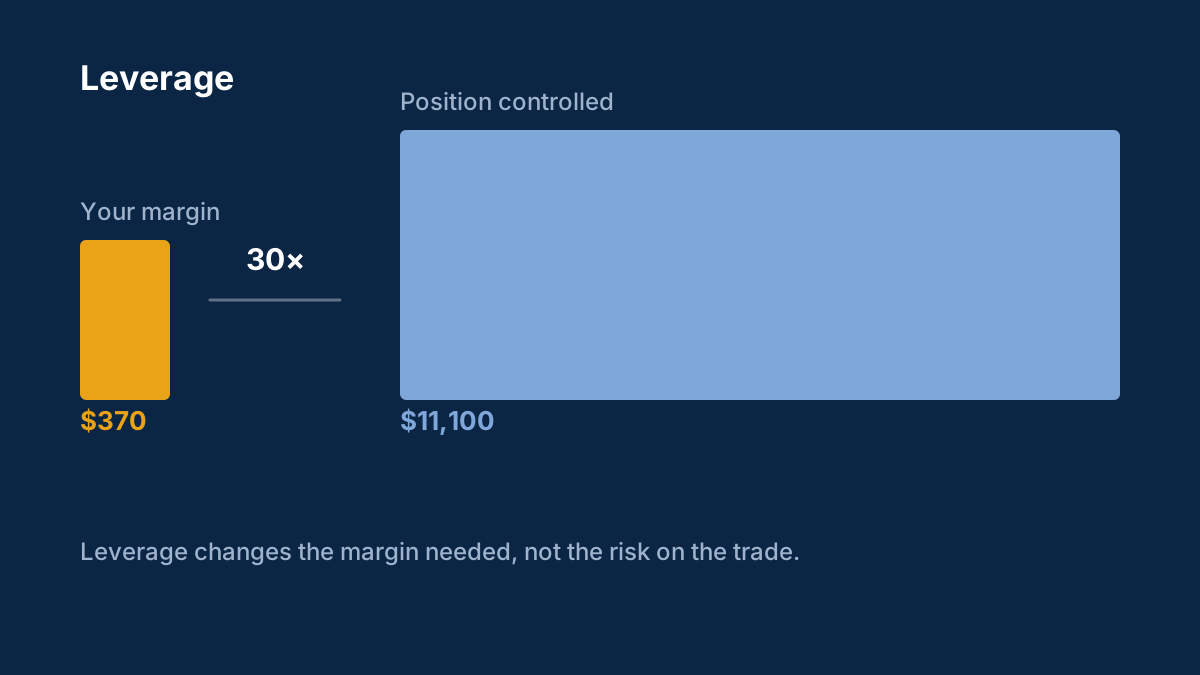
Learn the mechanics in order. Pips before patterns, risk before indicators: what a pip is worth (pip guide), how lots scale (lot sizes guide), how leverage and margin work (leverage guide), and what trading actually costs (trading costs guide). The Learn section on this site is sequenced for exactly this.
Learn the platform on demo. The demo account's job in month one is platform fluency: placing orders, attaching stops and targets, modifying positions, reading the terminal. Every mechanic gets practised until it is boring — the live market is no place to learn where the buttons are.
Start the journal now. The journal's first month records demo trades and the questions they raise. The habit forms while the stakes are zero, which is when habits are cheap. The journal guide has the fields.
Days 31–60: one method, tested
The second month narrows the focus to a single method.
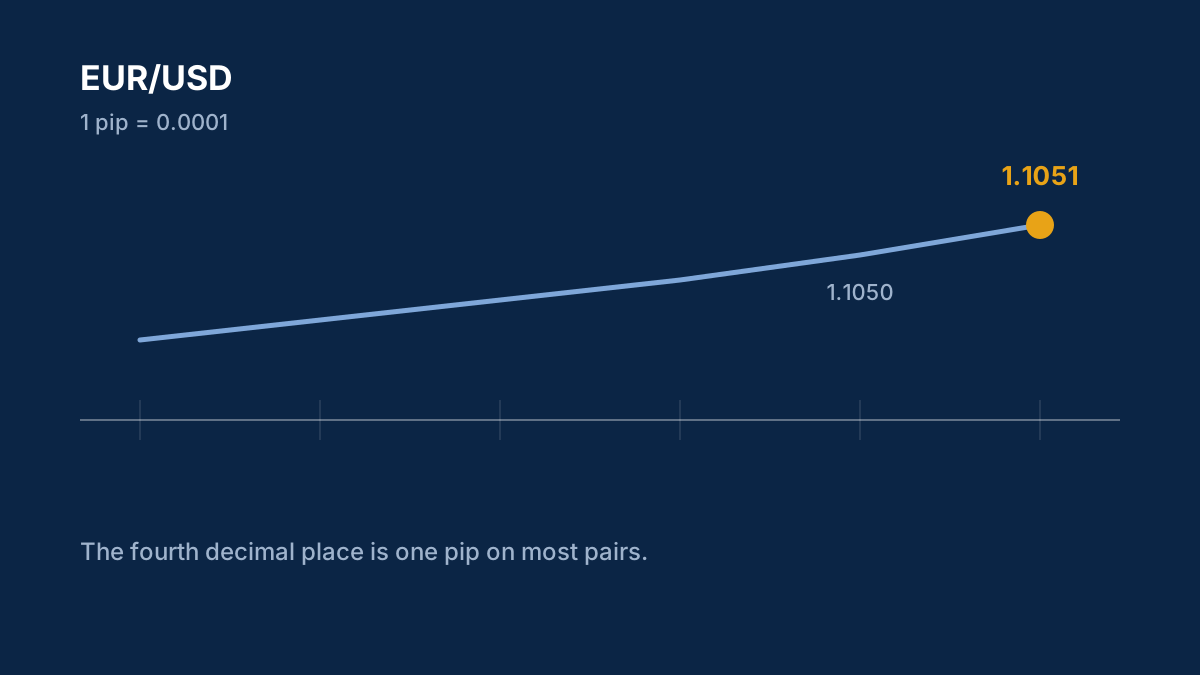
Pick one method and one pair. One setup, defined precisely enough to write down, on one pair whose behaviour can be learned deeply. The trading plan guide supplies the written format, and the EUR/USD guide is the standard first pair.
Test it on demo with the rules fixed. The method's rules stay frozen for the month — no changing the setup because one week went badly. The month's output is a demo track record: the win rate, the average R, the rule adherence. The expectancy guide tells you how to read it.
Practise the sizing arithmetic. Every demo trade is sized with the real calculation — risk percentage, stop distance, pip value, lot size — so the arithmetic is automatic before money is involved. The position sizing guide has the four-step method.
Days 61–90: the decision
The third month is the gate. The demo record decides what happens next:
If the record shows evidence — enough trades, positive expectancy in R, rule adherence high — the next step is the smallest possible live account, traded at minimum size, with the same frozen method. The demo-to-live guide has the staged ramp.
If the record is inconclusive — too few trades, mixed results, broken rules — the answer is another month of demo, not a smaller standard. The ninety days are a minimum, not a deadline, and the market does not reward punctuality.
If the record is negative — the method loses after costs, the rules keep breaking — the answer is diagnosis: is the method broken or the execution? The review guide supplies the diagnostic, and the fix is tested on demo, where it costs nothing.
The rules that protect the ninety days
Four rules run through all three months:
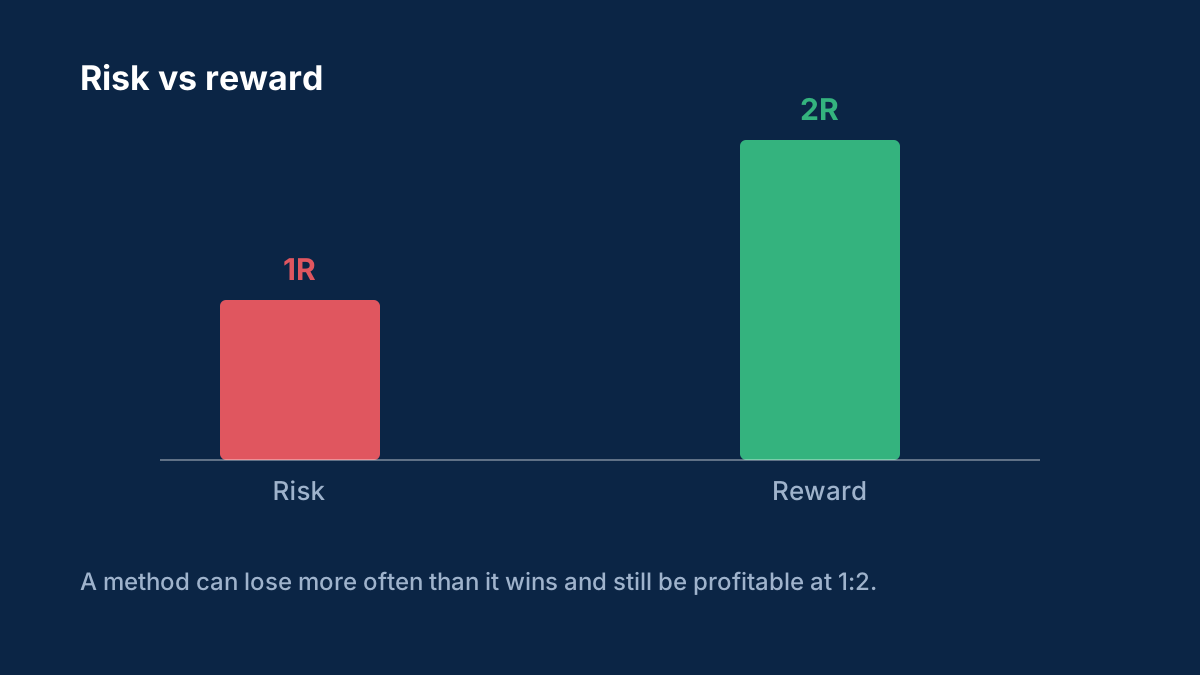
No live money before demo evidence. The gate is the demo record, not the calendar. Every day of live trading before the evidence is a day the market is being paid to teach what demo taught for free.
No borrowed or needed money, ever. The account that matters to the rent cannot trade honestly. The psychology threads cover the pressure, and the honest version is simple: only money whose loss changes nothing.
One method, frozen. The ninety days' most common failure is the method that changes weekly. The frozen method is how the demo record means anything.
The journal is non-negotiable. The ninety days' records are the entire asset the period produces. Without them, day ninety arrives with nothing learned and nothing measured.
The first ninety days are a training program with a syllabus, not a gambling holiday. Follow the plan — mechanics, then method, then the evidence-based decision — and the beginner arrives at day ninety with what most traders never have: an intact account, a working routine and a record that tells the truth.
Sources
Common questions
How much money should a beginner start with?
The smallest live amount the broker allows, and only after demo evidence. The first ninety days' point is skill-building; the money's job is to make practice real, not to fund a career.
When is a beginner ready to go live?
When the demo record shows evidence: enough trades, positive expectancy in R, and high rule adherence with a frozen method. The gate is the record, not the calendar.
What should a beginner learn first?
The mechanics in order: pips and pip value, lot sizes, leverage and margin, and trading costs. Then one method on one pair, tested on demo with the rules frozen.
Why does the method have to stay frozen?
Because a method that changes weekly produces no measurable record. The frozen method is what makes the demo results meaningful — and the evidence is what the go-live decision requires.
What if my demo results are negative after ninety days?
Diagnose: is the method broken or the execution? The review process separates the two, and the fix is tested on demo where it costs nothing. The ninety days are a minimum, not a deadline.
This article is for information only and is not financial advice. Trading forex and CFDs carries a high risk of losing money. Read the risk warning. Spotted an error? Tell the editors.
Comments
Log in to join the discussion. Comments follow the community guidelines.
Log in to commentLoading comments…