Demo vs live trading: what changes when real money is on the line
A strategy that works on a demo account can fall apart in a live one. The differences in execution and psychology, and a sensible way to make the switch.
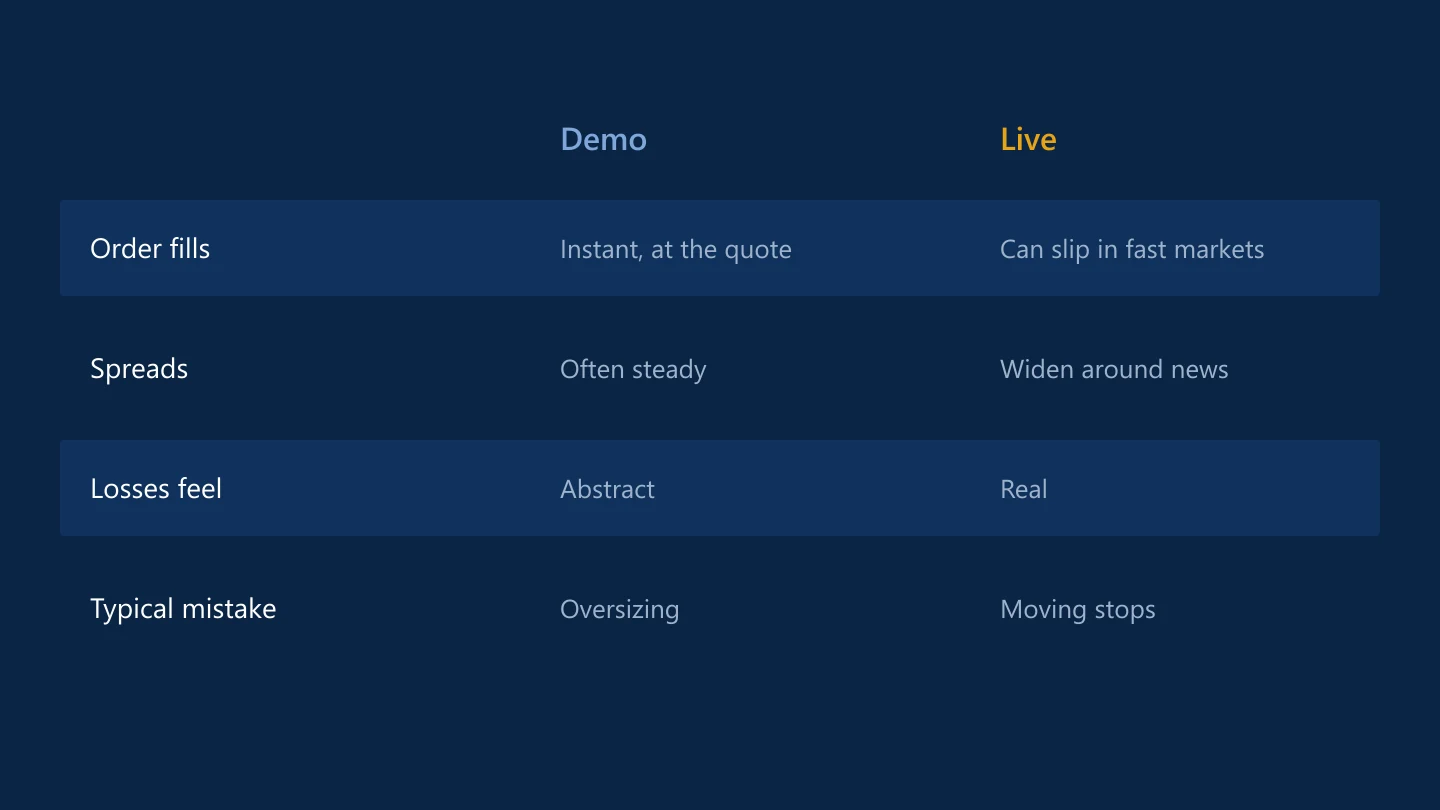
A demo account is the right place to learn a platform and test an idea. It is a poor guide to how you will trade once real money is involved, and the gap catches almost everyone.
Execution differences
- Fills: demo orders often fill instantly at the quoted price. Live orders are exposed to real liquidity, so they can slip, especially around news.
- Spreads: some demo accounts show tighter or steadier spreads than the live account.
- Stops in fast markets: a stop that fills neatly on demo may fill several pips worse on a live account during a data release.
- Size: very large demo positions fill without effort; the same size live can move the price or be rejected.
Ask your broker whether its demo uses the same price feed and execution model as live accounts.
Psychological differences
Losing virtual money is easy. Losing a week's wages is not. Traders commonly notice that on a live account they:
- Close winning trades too early to lock in a profit
- Move stops or refuse to close losing trades
- Skip valid setups after a loss
- Increase size to win back losses quickly
None of this shows up on demo, which is why demo results tend to look better than live results.
Signs you are ready to go live
- You have followed a written plan for at least a few dozen demo trades
- Your trading journal shows positive expectancy over that sample, after costs; see how to keep a trading journal
- You know exactly how much you will risk per trade and can calculate position size without thinking
- The money you plan to deposit is money you can afford to lose
A sensible way to switch
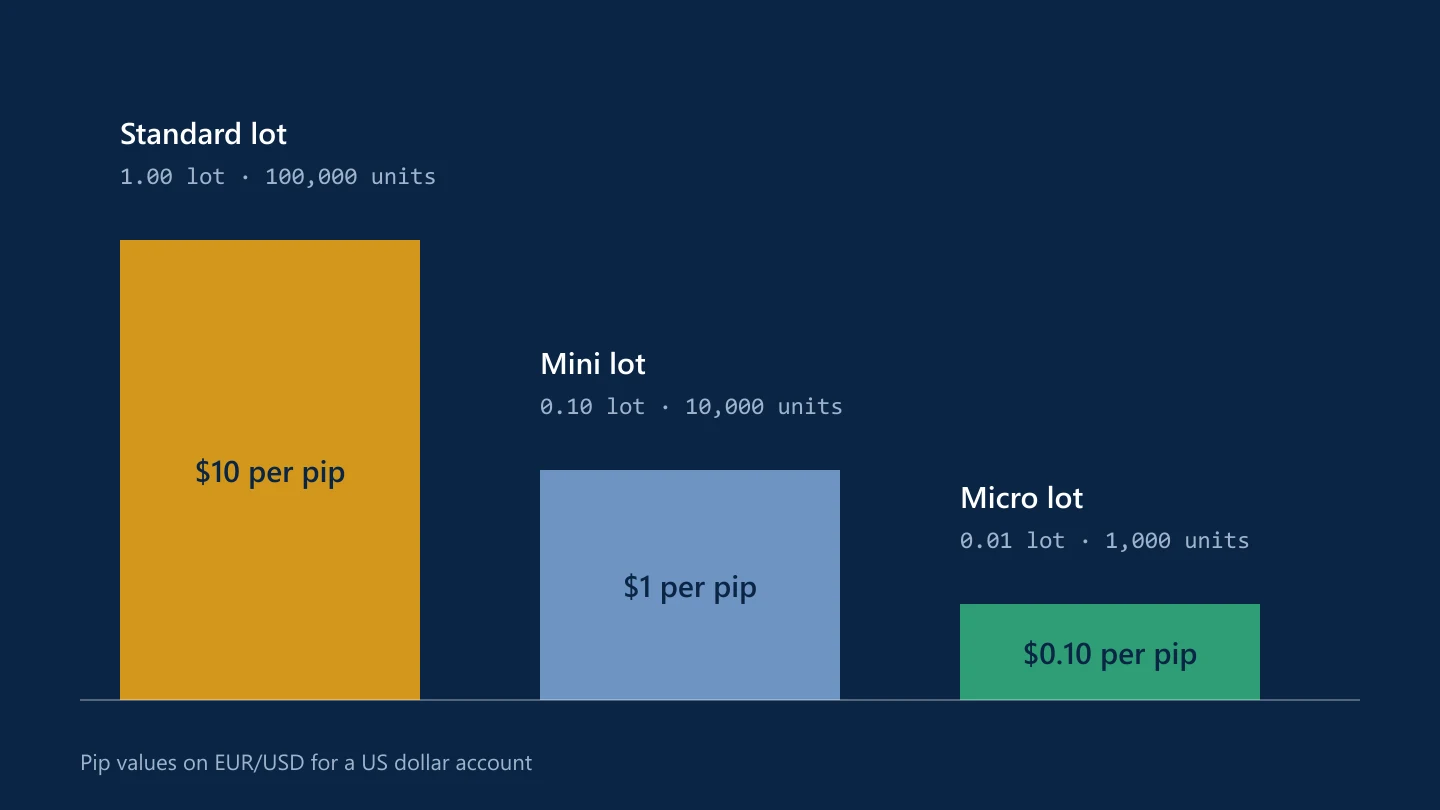
- Start with the smallest size your broker allows, such as micro lots.
- Keep every rule from the demo plan exactly the same.
- Journal each trade, including how you felt.
- Increase size gradually, only after a set number of trades in which you followed the plan.
Some brokers' demo accounts expire after a period of inactivity, so keep one running for testing new ideas even after you trade live.
Common questions
Is demo trading the same as live trading?
No. Demo accounts can fill orders more smoothly than live markets, and losing virtual money doesn't create the same pressure as real losses, so live results are usually worse.
How long should I trade on a demo account?
There's no fixed period. A common approach is to follow a written plan for at least a few dozen trades, record them in a journal and move to live trading only with the smallest position sizes.
This article is for information only and is not financial advice. Trading forex and CFDs carries a high risk of losing money. Read the risk warning. Spotted an error? Tell the editors.
Comments
Log in to join the discussion. Comments follow the community guidelines.
Log in to commentLoading comments…