Trend following or range trading: which do you use more, and why?
Trend following tries to ride a sustained move, while range trading tries to profit from price bouncing between levels. Each suits different conditions, and each loses money when it is used in the wrong one. How to trade with RSI covers one indicator members use to tell momentum from drift, which is one of the tests that separate a trend from a range.
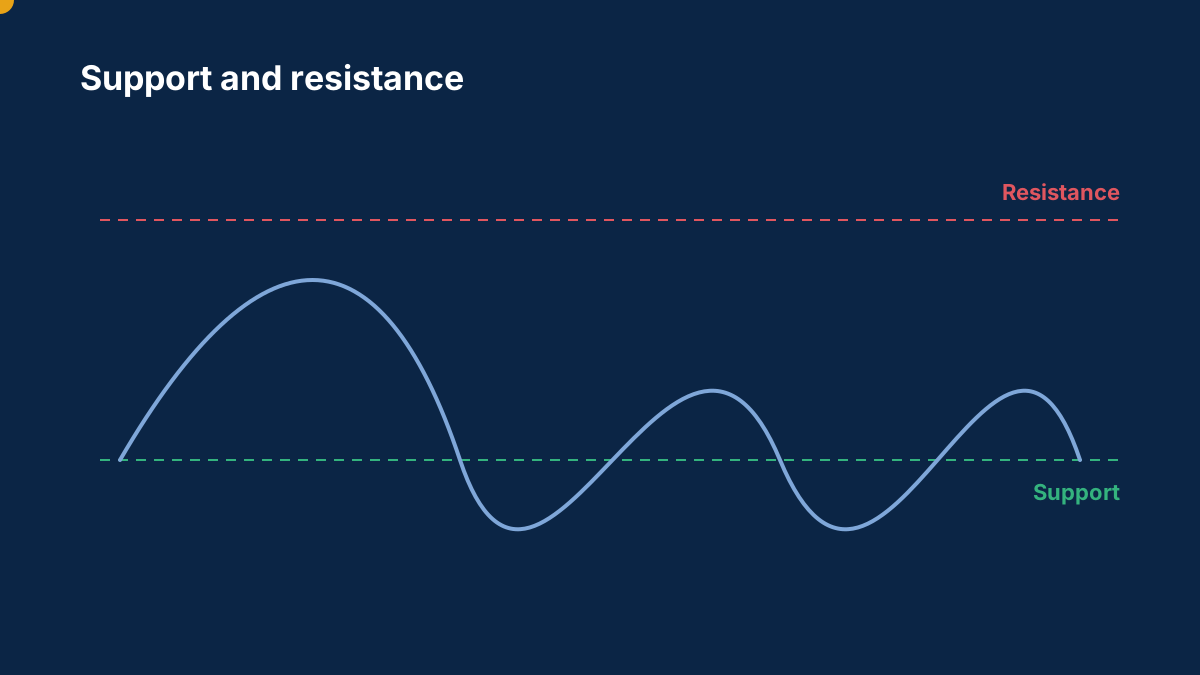
Members often pick one style because it suits their temperament, then find that the market changes around them. A trend that stalls turns into a range, and a range that breaks becomes a trend. The question is how you tell which conditions you are in, and what you do when they change. Carry trade explained shows another style that depends more on the rate gap than on the chart, and it can be held through conditions that would end a short-term trend trade.

We would like to hear how you choose:
- Which style do you use most, and what made you choose it?
- How do you decide the market has moved from a trend to a range, or back?
- What do you do with an open trade when the conditions change?
- Have you switched styles mid-trade? What did it cost or earn you?
Please share your own approach and reasoning, not calls for others to copy. Posts that promise a direction or sell signals will be removed.
Background: How to trade with RSI: overbought, oversold and divergence
RSI is the most popular oscillator in trading and the most misread. Here is what it actually measures, where its signals work, where they fail, and how professionals use it as a filter rather than a trigger.
What does RSI overbought actually mean?
That the recent move has been one-sided — up closes dominating the last 14 periods — not that the market is expensive. In a range, overbought suggests exhaustion; in a trend, it is normal and can persist.
Does RSI divergence work?
Divergence is real but overrated alone: it can print repeatedly through an entire trend. It becomes tradeable only with context — a level, a reversal structure and a mature trend.
Comments
Log in to join the discussion. Comments follow the community guidelines.
Log in to commentLoading comments…