After a Fed hold, do you keep a dollar trade or cut it?
The Federal Reserve kept its target range at 3.75% to 4.00% on 28 October 2026, after a quarter-point increase on 16 September (FOMC statement, 28 October 2026; the September hike). A hold after a hike can look like the end of a move, or a pause inside one. The decision on its own does not settle which.
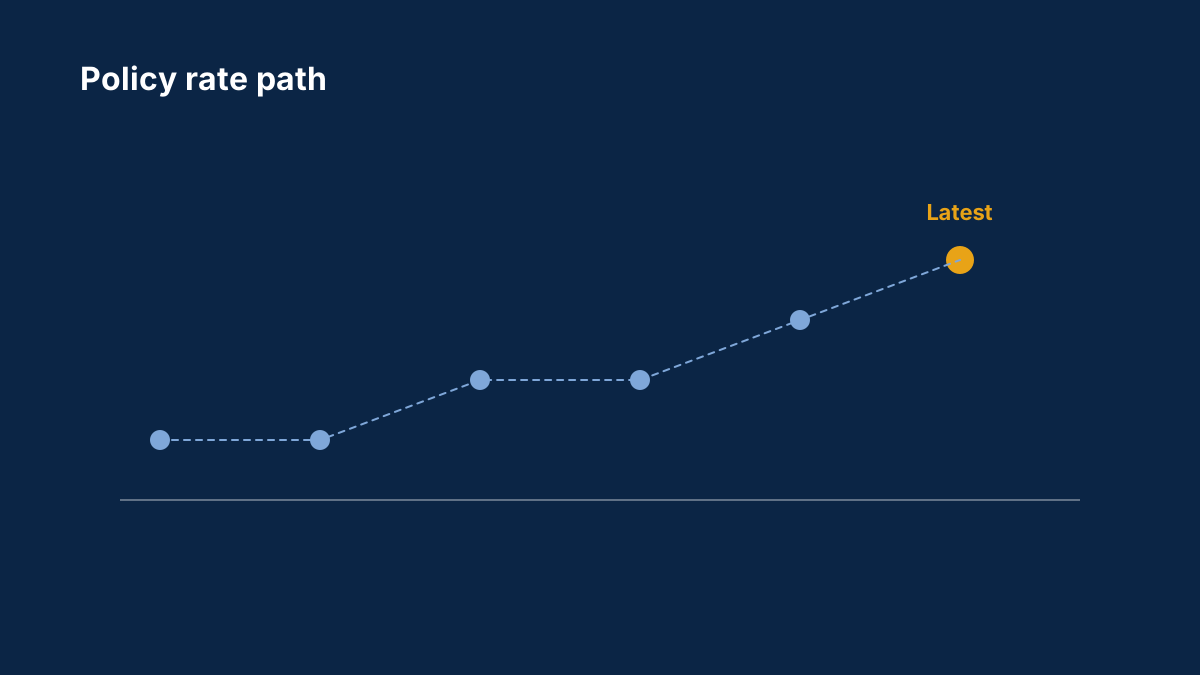
Holding a dollar trade through a hold means accepting that the next move is not yet known. Cutting it means accepting that the move may have been finished. Both can be reasonable, and the difference often comes down to how the position was built in the first place. What happens when the Fed hikes explains how the rate path reaches the currency, which is the context a hold should be read against.
We would like to hear how you decide:
- Did you plan the trade around a hold, or only around a move?
- Do you cut, hedge or hold when a central bank pauses after a hike?
- How much of the trade's risk came from the decision, and how much from the wider market?
- What would make you close a dollar position after a hold, even if the price still looks fine?
Please share your own approach and reasoning, not calls for others to copy. Posts that promise a direction or sell signals will be removed.
Background: What happens to currencies when the Fed raises rates?
A Fed rate hike reprices the dollar against everything, but the move isn't always what the textbook says. Here is the transmission chain — expectations, yields, carry and risk — and what the September 2026 hike showed.
Does the dollar always rise when the Fed hikes?
No. The hike is usually priced in before it happens, so the dollar moves on the surprise — the vote, statement, projections and press conference. A fully priced hike with a dovish surprise can weaken the dollar.
Why do US bond yields matter for currencies?
Yields are the dollar's engine: higher expected rates push yields up, and the higher yield attracts money into dollars. The move against each currency is proportional to the policy gap, not the yield alone.
Comments
Log in to join the discussion. Comments follow the community guidelines.
Log in to commentLoading comments…