How do you track the next Fed dissent before the December meeting?
Two members wanted a quarter-point increase at the 28 October meeting, and the committee held the range at 3.75% to 4.00% by a 10–2 vote. The statement names the dissenters, Lisa D. Cook and Beth M. Hammack (FOMC statement, 28 October 2026). Dissents are published with the statement, so they are one of the few written signals available between meetings.
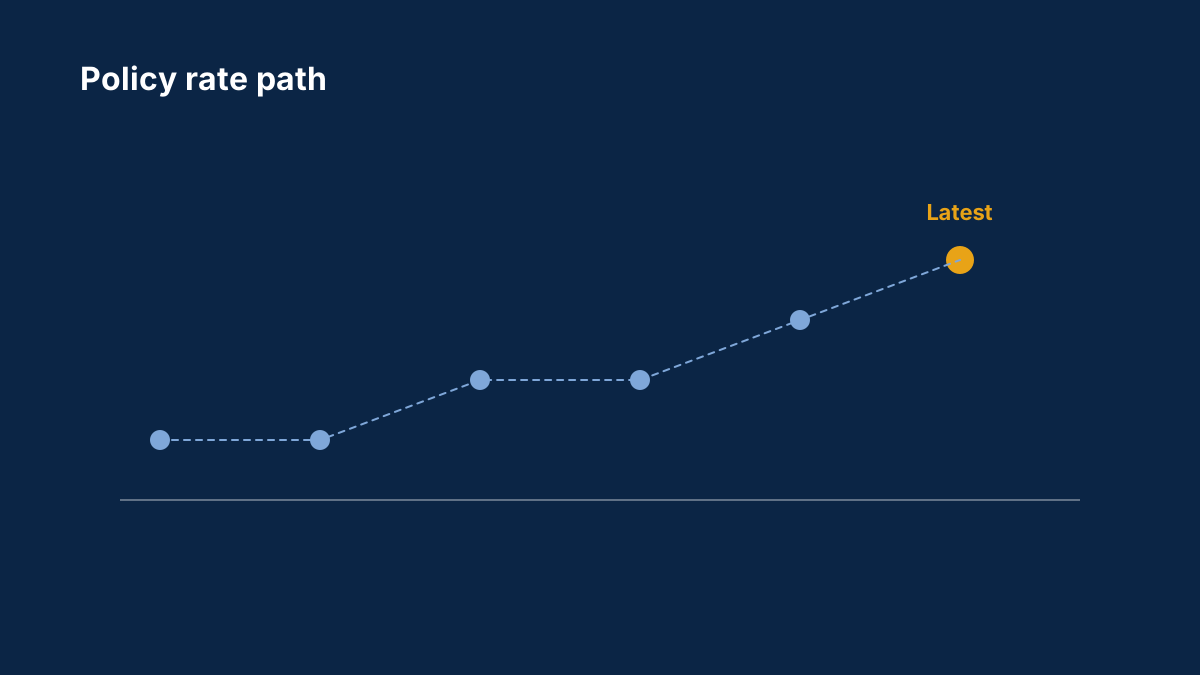
Tracking the next dissent means reading each statement against the last one, and against the minutes and speeches that follow. The next meeting is 8–9 December, when the Federal Reserve publishes new economic projections (FOMC calendar). The last change was the September increase (the September hike), so the record for comparison is short, and a single meeting can look like a trend when it is not.
We would like to hear how you track it:
- Do you keep a log of who dissents, and in which direction, meeting by meeting?
- What wording change in a statement would you treat as a real shift?
- How do you separate one voter's view from a change in the committee's position?
- Which speech or data release do you check before the December meeting?
For how rate decisions reach the dollar, see what happens when the Fed hikes.
Please share your own approach and reasoning, not calls for others to copy. Posts that promise a direction or sell signals will be removed.
Background: What happens to currencies when the Fed raises rates?
A Fed rate hike reprices the dollar against everything, but the move isn't always what the textbook says. Here is the transmission chain — expectations, yields, carry and risk — and what the September 2026 hike showed.
Does the dollar always rise when the Fed hikes?
No. The hike is usually priced in before it happens, so the dollar moves on the surprise — the vote, statement, projections and press conference. A fully priced hike with a dovish surprise can weaken the dollar.
Why do US bond yields matter for currencies?
Yields are the dollar's engine: higher expected rates push yields up, and the higher yield attracts money into dollars. The move against each currency is proportional to the policy gap, not the yield alone.
Comments
Log in to join the discussion. Comments follow the community guidelines.
Log in to commentLoading comments…