Which event on October's calendar do you plan to skip entirely, and why?
October's calendar has several events that many traders treat as can't-miss. US CPI comes on 14 October, with retail sales and producer prices on 15 October. The Fed decides on 28 October at 2:00 p.m. Eastern Time, along with the Bank of Canada and the RBNZ; the ECB follows on 29 October, together with US third-quarter GDP and September PCE inflation, and the Bank of Japan decides on 30 October. In between come flash PMIs on 23 October, UK and Canadian inflation, and the IMF and World Bank meetings in Bangkok from 12 to 18 October. The FTC economic calendar lists every release with its time.
No one trades all of it, and not trading an event is a decision as valid as trading it. The usual reasons for skipping are that the pairs you trade are not exposed, that spreads and slippage are too unpredictable, or that you have no edge in the release.
We would like to hear how members decide:
- Which event on this list do you plan to sit out entirely, and why?
- Is your reason about your pairs, your strategy, the risk of slippage or your own schedule?
- Do you close positions before an event you skip, or reduce size, or leave them with wider stops?
- Has skipping an event ever cost you a move you would have liked to catch, and how did you feel about it?
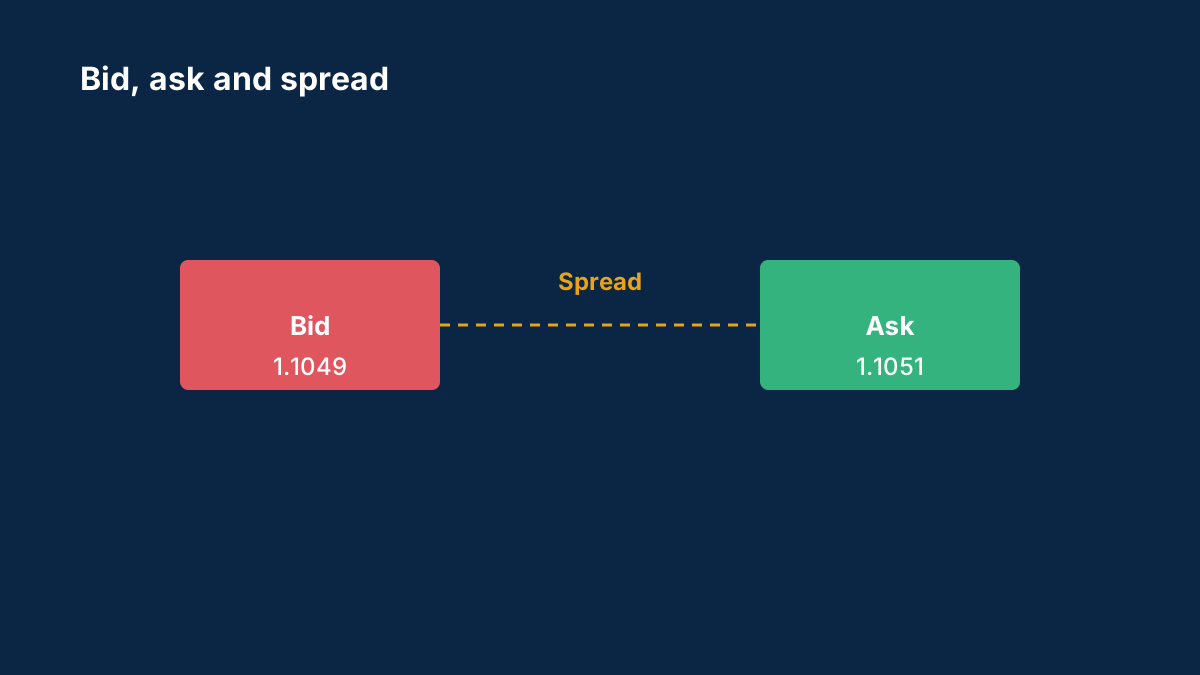
Bid, ask and slippage explained covers why execution can differ around releases.
Please share your own rules and reasoning, not calls for others to copy. Posts that promise a direction or sell signals will be removed.
Background: Bid, ask and slippage: why your order fills at a different price
Why buy trades open at one price and close at another, why a stop can trigger when the chart never touched it, and how slippage happens.
Why did my stop-loss trigger when the price on the chart didn't reach it?
Charts usually show the bid price, but a sell position's stop is triggered by the ask. If the spread widened, the ask could have touched your stop while the bid line stayed away from it.
What is slippage?
The difference between the price you expected and the price your order was filled at. It is most common in fast or thin markets, such as around news releases.
Comments
Log in to join the discussion. Comments follow the community guidelines.
Log in to commentLoading comments…