The Fed's preferred inflation gauge: PCE prices up 3.7% in the year to July
The PCE price index rose 0.2% in July 2026 and 3.7% from a year earlier, with core PCE up 3.3%, the Bureau of Economic Analysis said on 26 August.
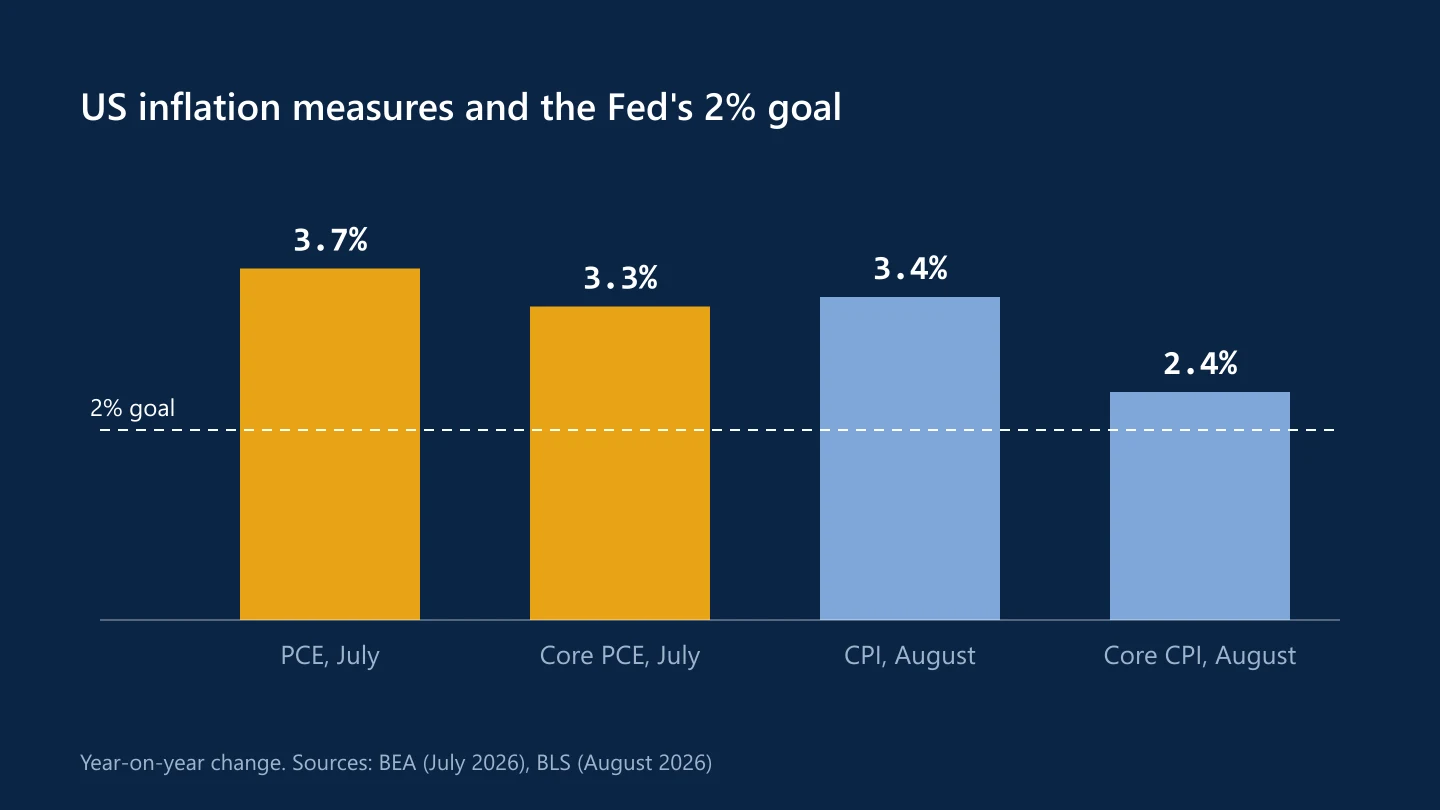
The personal consumption expenditures (PCE) price index, the inflation measure the Federal Reserve uses for its 2% goal, rose 0.2% in July 2026 and was 3.7% higher than a year earlier, the Bureau of Economic Analysis reported on 26 August. Excluding food and energy, core PCE prices also rose 0.2% on the month and were 3.3% higher than a year earlier.
Income, spending and saving
- Personal income: up $115.1 billion, or 0.4%
- Disposable personal income: up $125.9 billion, or 0.5%
- Consumer spending: up $36.3 billion, or 0.2%
- Real consumer spending, adjusted for prices: up less than 0.1%, after 0.4% in June
- Personal saving rate: 3.0%
Price increases absorbed almost all of the rise in consumer spending, so real spending barely grew.
Why PCE and CPI differ
Consumer price index inflation was 3.4% in August, with core CPI at 2.4% (CPI report). The two reports cover different months, but the measures also differ in design. The PCE index includes spending made on households' behalf, such as employer-provided health insurance, gives housing a much smaller weight than the CPI, and updates its weights as spending patterns change. That's why the two can tell different stories, and why the Fed's target refers specifically to PCE.
What it means for the Fed on 16 September
The Fed aims for 2% PCE inflation over the longer run. With headline PCE at 3.7% and core at 3.3%, inflation remains well above that goal going into the 15–16 September meeting (preview). The August PCE figures follow later in September.
For the dollar, the economic projections and dot plot published with the September decision will show how officials weigh inflation against a softer labour market (dot plot explained). Other central banks' targets are compared in inflation targets of the major central banks.
Sources
Common questions
What was PCE inflation in July 2026?
The PCE price index rose 3.7% from a year earlier and 0.2% from June, according to the Bureau of Economic Analysis.
What is core PCE inflation?
The PCE price index excluding food and energy. It rose 3.3% in the year to July 2026 and 0.2% on the month.
Why does the Fed use PCE instead of CPI?
The Federal Reserve defines its 2% inflation goal using the PCE price index, which covers a broader range of spending, including purchases made on households' behalf, and updates its weights as spending patterns change.
This article is for information only and is not financial advice. Trading forex and CFDs carries a high risk of losing money. Read the risk warning. Spotted an error? Tell the editors.


Comments
Log in to join the discussion. Comments follow the community guidelines.
Log in to commentLoading comments…