Beige Book and FOMC minutes: do you trade them, or are they too slow to matter?
Two Fed publications fall in the next ten days. The minutes of the 15–16 September meeting come out on 7 October at 2:00 p.m. Eastern Time, three weeks after the decision. The Beige Book, a summary of conditions across the Fed's districts, follows on 14 October at 2:00 p.m., the same day as September's consumer prices.
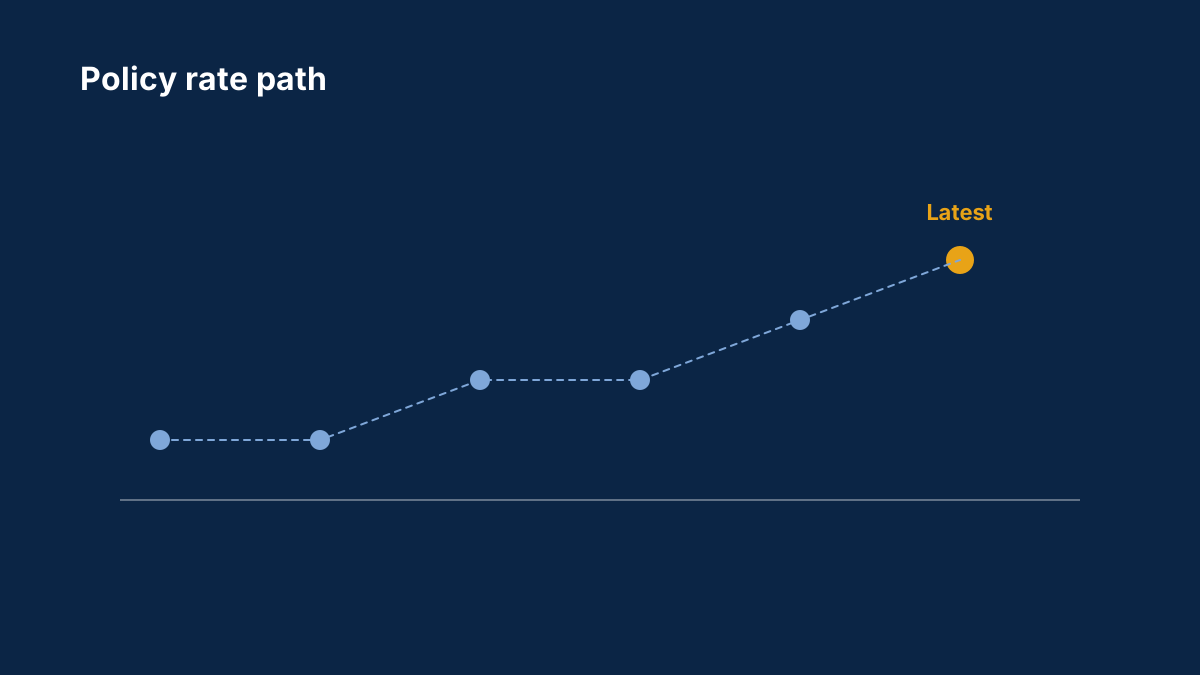
Both describe the past. The minutes record a meeting at which the committee raised rates to 3.75%–4.00% in a 12–0 vote (report), before payrolls rose only 29,000 (report) and before the 10-year yield passed 5% (report). The Beige Book summarises anecdotes from business contacts rather than hard figures. Some traders skip them entirely; others say the language can move yields when it shows more or less appetite for tightening than the decision implied.
We would like to hear from members who have an opinion:
- Do you trade minutes or the Beige Book, or do you treat them as background reading?
- If you trade them, what do you look for: the vote count, a changed phrase, the mention of a particular risk?
- Have you been caught out by a reaction that went the other way from what the text seemed to say?
- With data landing on the same afternoon, such as CPI and the Beige Book on 14 October, how do you separate the signals?
How to read an economic calendar explains how to rank events by impact.
Please share your own approach and reasoning, not calls for others to copy. Posts that promise a direction or sell signals will be removed.
Background: How to read an economic calendar: actual, forecast, previous and impact
The economic calendar tells you when markets are likely to move. Here is what each column means and how traders use it to plan the week.
What does forecast mean on an economic calendar?
The median expectation of economists surveyed before the release. Markets usually price in the forecast, so prices react to the gap between the actual figure and the forecast.
What is a high-impact event?
A release that has historically caused large price moves, such as central bank decisions, CPI inflation and the US jobs report. Spreads often widen around them.
Comments
Log in to join the discussion. Comments follow the community guidelines.
Log in to commentLoading comments…