What made you stop moving your stop-loss further away?
Moving a stop further away as price approaches it is one of the most common habits that turns small losses into large ones. It usually starts with a trade that came back after you moved the stop, which makes the habit feel justified.
If you used to do this and stopped:
- what the trade that changed your mind looked like
- what you do now when price nears your stop
- whether you changed how you place stops in the first place
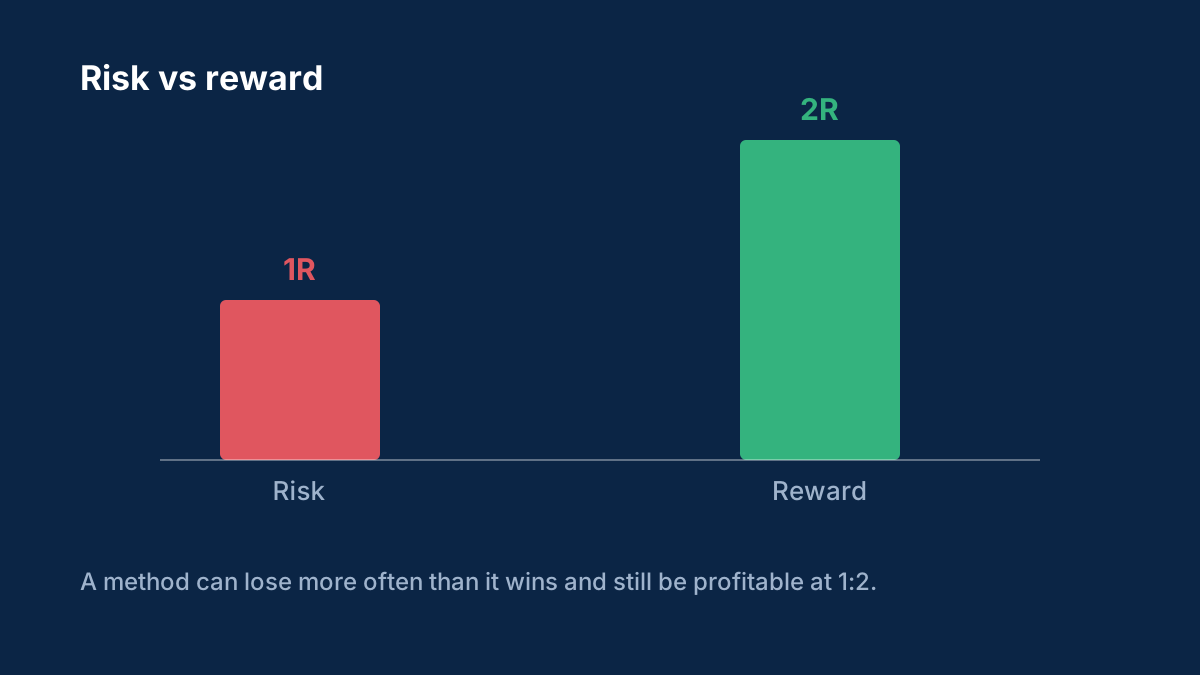
The stop-loss placement guide explains how to put stops where the trade idea is proven wrong, which makes moving them much harder to justify.
Comments
Log in to join the discussion. Comments follow the community guidelines.
Log in to commentLoading comments…
One idea that helps many traders break the habit: decide in advance what counts as a legitimate stop change, and write it into the plan.
For example:
- Allowed: moving a stop closer to lock in profit or reduce risk, at points defined before entry (after 1R, or after a new swing forms).
- Not allowed: moving a stop further from the entry, for any reason, once the trade is live.
It also helps to understand why widening feels right. The trades where it "worked" are memorable, while the ones where it turned a 1R loss into a 3R loss get explained away. A journal column recording every stop change, with the result compared to leaving the stop alone, usually settles the question after a few dozen trades.
Where the stop goes in the first place matters too. A stop placed where the trade idea is proven wrong is much easier to respect than one placed at a round number of pips. See where to place a stop-loss.
0