Two jobs reports gave two stories this week. How do you avoid changing your mind every time a new number lands?
ADP said on 30 September that private employers added 90,000 jobs. Two days later the BLS said payrolls rose 29,000, with July revised to a loss (ADP report, BLS report). Weekly jobless claims were 197,000, close to their recent lows (report). Each number suggests a different picture of the US labour market: strong hiring, weak hiring, few layoffs.
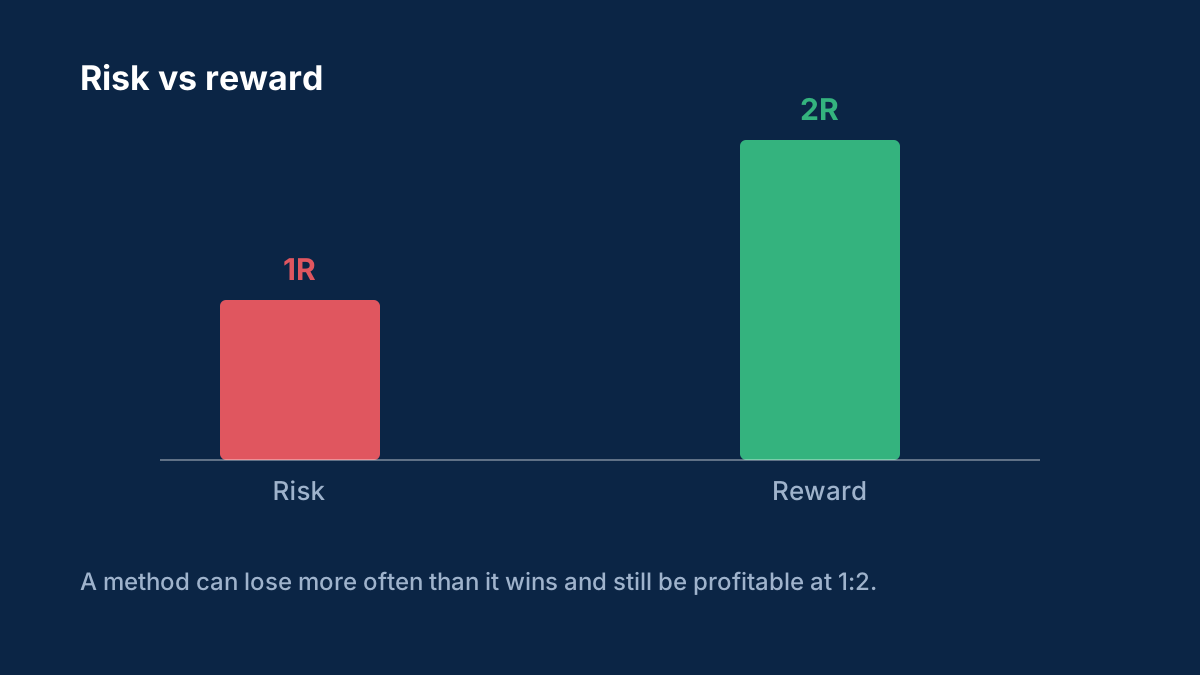
When data keep arriving, it is tempting to update your view with each release, and to flip from bullish to bearish within a day. Each release feels like the most important one when it lands, because it is the newest. That is recency bias: giving the latest information too much weight. The result is trades that follow the news cycle rather than a plan, with extra costs from entering and leaving.
Some traders write a view once, with the data that would change it, and review it on a schedule, not on every release. Others keep a short checklist of the numbers they care about and ignore the rest.
We would like to hear how you do it:
- How do you avoid flipping your view with each release? What do you do when two numbers disagree?
- Do you review your view at set times, or when something happens?
- Which numbers on your checklist can change your mind, and which cannot?
- Describe a time you changed your mind too quickly, or too slowly.
How to build a trading plan covers writing it down.
Please keep replies to your own experience. Posts that promise a direction or sell signals will be removed.
Background: How to build a forex trading plan that survives losing streaks
A trading plan is the difference between a system and a mood. Here is exactly what belongs in one, how to write it in an afternoon, and why the losing-streak test decides whether it is real.
What is the difference between a trading plan and a trading strategy?
A strategy is the setup — when to enter and exit. A plan contains the strategy plus risk rules, routines, no-trade conditions and review procedures. The plan decides how the strategy is executed.
How long should a trading plan be?
Long enough to be unambiguous, short enough to be read before every session. One to two pages is typical; every rule should be specific enough that a stranger could follow it.
Comments
Log in to join the discussion. Comments follow the community guidelines.
Log in to commentLoading comments…