A number beat forecast but the currency fell anyway: how do you explain that to yourself?
It happens to almost everyone eventually: a release comes in better than expected, you're positioned for the "obvious" reaction, and the currency moves the other way. The explanation is usually that the market had already priced in an even better outcome, or that a different part of the same release (guidance, a subcomponent, a revision to the prior month) mattered more than the headline number. That's easy to say afterwards and much harder to sit with in the moment.
This week's flash PMIs gave a version of that puzzle: UK growth slowed to a three-month low while cost pressures rose, a mixed signal that doesn't map neatly onto "good for the pound" or "bad for the pound" (full report). Reasonable traders could read it either way, and did.
We'd like to hear about the moments where this caught you out:
- Describe a specific time a "good" number moved a currency the "wrong" way. What was your first reaction, and what did you actually do?
- Did you close the trade, add to it, or wait it out? Which one turned out to be right, and did you know why at the time?
- How do you tell the difference, in the moment, between "the market knows something I don't" and "this is just noise that will pass"?
- Has this kind of surprise ever changed how much weight you give to a headline number versus the details underneath it?
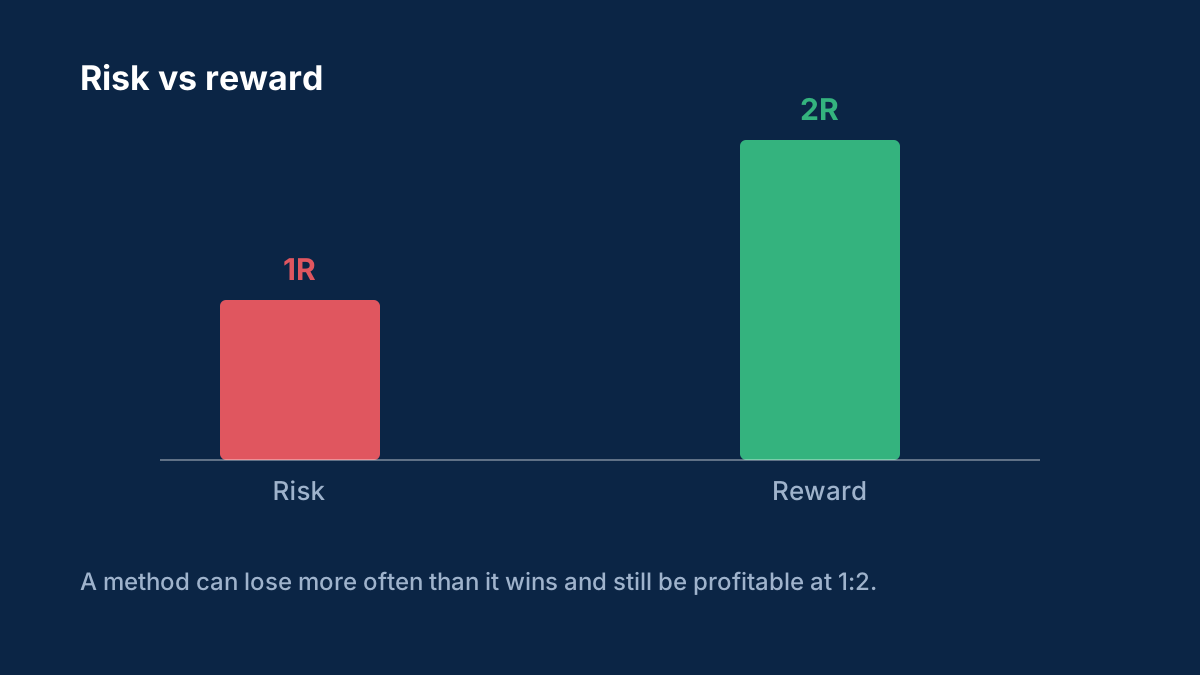
Risk-reward ratio, win rate and expectancy is useful background on why being wrong sometimes doesn't mean your process is wrong. Please share your own experience. Posts that promise a direction or sell signals will be removed.
Background: Risk-reward ratio, win rate and expectancy: the maths behind a trading edge
A high win rate can still lose money. See how win rate and risk-reward combine into expectancy, with break-even win rates and worked examples.
What is a good risk-reward ratio in forex?
There isn't one right ratio. What matters is expectancy, the win rate and ratio together. A 1:2 ratio breaks even at about 33% winners before costs, while a 1:1 ratio needs 50%.
How do you calculate trading expectancy?
Multiply the win rate by the average win and subtract the loss rate multiplied by the average loss. Measuring wins and losses in multiples of the amount risked (R) makes the result easy to compare.
Comments
Log in to join the discussion. Comments follow the community guidelines.
Log in to commentLoading comments…