Everyone says the euro has to bounce after four weekly declines. How do you handle the urge to buy because it looks cheap?
On ECB reference rates the euro has fallen against the dollar for four consecutive weeks and was at $1.1204 on 5 October, the lowest since May 2025 and 6.4% below its January high (full report). After a run like that, "it has to bounce" is one of the most common things people say.
The urge to buy something because it has fallen is strong. It can feel like good value, or like a chance to be right about the turn. But "cheap" compared with what? A price that has fallen is only cheap if the reasons it fell have gone away. In trading, the cost of this feeling is catching a falling move early, adding as it falls, and then turning a plan into a hope.
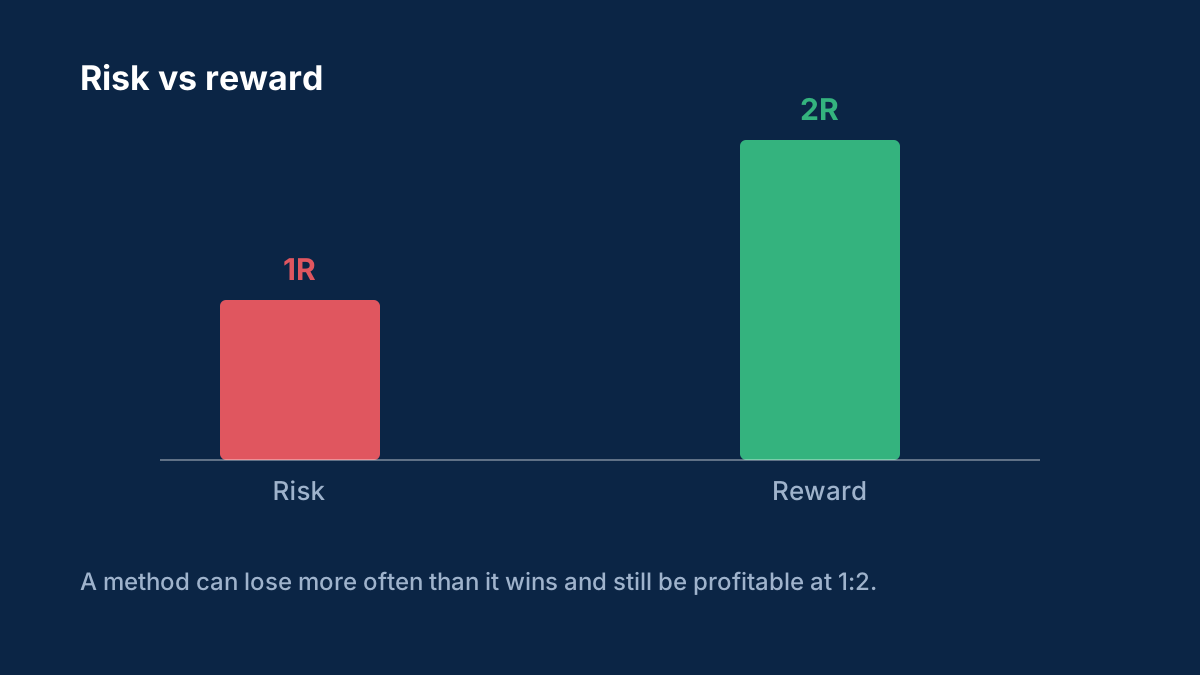
Many experienced traders deal with it by writing down in advance what would have to happen before they act, and what would prove them wrong. Others limit themselves to a fixed risk per trade so that being early costs little (position sizing and risk per trade).
We would like members to be candid:
- Describe a time you bought something because it looked cheap after a long fall. What happened, and what did you learn?
- What do you write down or check before acting on the urge?
- Do you have a rule, such as waiting for a close above a level or a fixed number of days?
- How do you deal with the feeling of missing the turn?
If you keep a journal, noting your reason for each trade shows how often "cheap" was the reason (how to keep a trading journal).
Please keep replies to your own experience. Posts that promise a direction or sell signals will be removed.
Background: Position sizing: how to risk a fixed percentage per trade
How much you trade matters more than where you enter. A step-by-step method for sizing positions from your stop-loss and the amount you are willing to lose.
How do I calculate lot size from risk?
Divide the amount you are willing to lose by the stop distance in pips multiplied by the pip value per lot. For $50 risk, a 25-pip stop and $10 per pip per lot, that is 0.20 lots.
What is the 1% rule in trading?
A guideline to risk no more than 1% of the account on any single trade, so a losing streak doesn't cause a drawdown you can't recover from. It is a starting point, not a guarantee.
Comments
Log in to join the discussion. Comments follow the community guidelines.
Log in to commentLoading comments…