Have you changed how you read financial news at weekends? What did you cut and why?
The market is closed from Friday evening to Sunday evening, but the news is not. A weekend can bring a central bank speech, a policy announcement or a geopolitical event, and the first price on Sunday evening can be some distance from Friday's close. Many traders respond by reading more, checking feeds constantly and rehearsing scenarios for Monday.
Others have gone the opposite way. Some turn off alerts, read the news once on Sunday and plan from that, and say they trade better for it. The news itself is not the problem; the habit of reacting to every headline with a view you cannot act on until the market opens can feed anxiety without improving decisions.
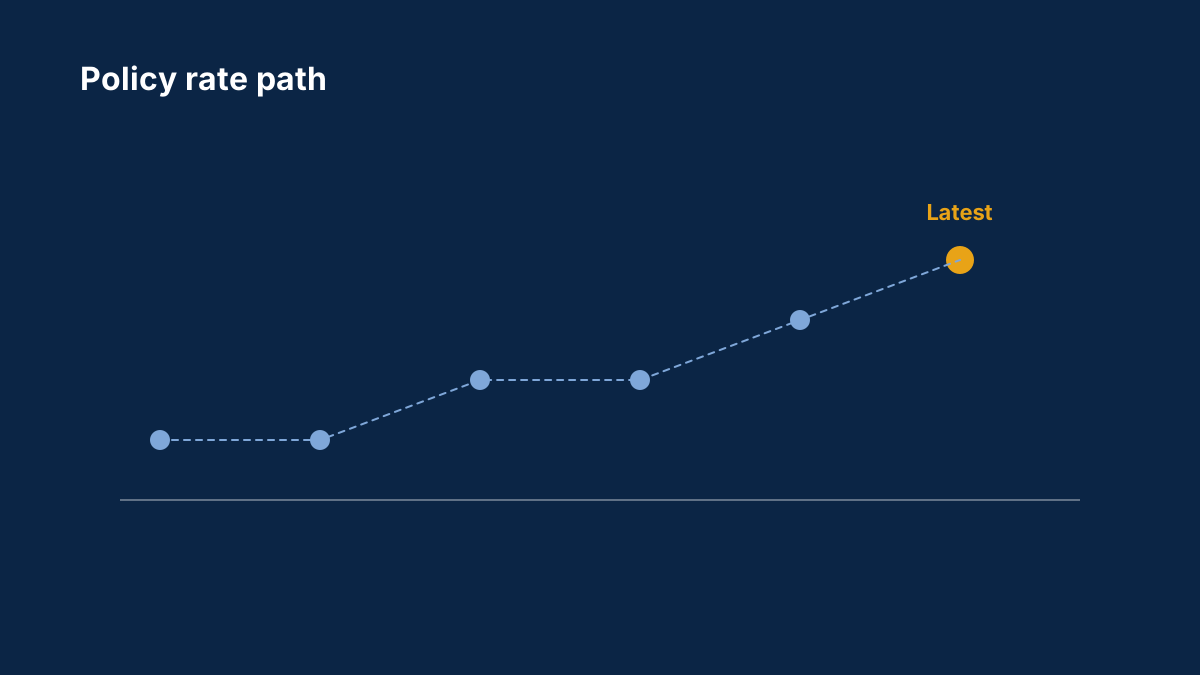
Weekends also set up the week. The calendar for the next days is usually known in advance: for example, September's CPI is due on 14 October and the Fed decides on 28 October. A planned reading of the calendar can be different from an anxious scroll through headlines (how to read an economic calendar).
We would like members to describe what they do:
- Have you changed how or when you read news at weekends? What did you cut, and how long ago?
- Do you have a fixed time to review the week ahead, or do you check throughout?
- Did cutting the weekend news change your trading, your stress or your sleep?
- What do you still read, and why?
If you keep a journal, a note on Monday about what you read over the weekend can show whether it helped (how to keep a trading journal).
Please keep replies to your own experience. Posts that promise a direction or sell signals will be removed.
Background: How to read an economic calendar: actual, forecast, previous and impact
The economic calendar tells you when markets are likely to move. Here is what each column means and how traders use it to plan the week.
What does forecast mean on an economic calendar?
The median expectation of economists surveyed before the release. Markets usually price in the forecast, so prices react to the gap between the actual figure and the forecast.
What is a high-impact event?
A release that has historically caused large price moves, such as central bank decisions, CPI inflation and the US jobs report. Spreads often widen around them.
Comments
Log in to join the discussion. Comments follow the community guidelines.
Log in to commentLoading comments…