Japan's core inflation slowed to 1.7% on the day the Bank of Japan hiked. Do you trade the data or the guidance?
On 18 September the Statistics Bureau reported that Japan's core CPI, which excludes fresh food, slowed to 1.7% in August from 1.8%, while inflation excluding both fresh food and energy held at 1.9% (full report). The same day the Bank of Japan raised its policy rate from 1.00% to 1.25% on a 7–2 vote and said underlying inflation had been "approaching 2 percent" (report). One of the two members who voted against argued that core CPI was still below 2%.
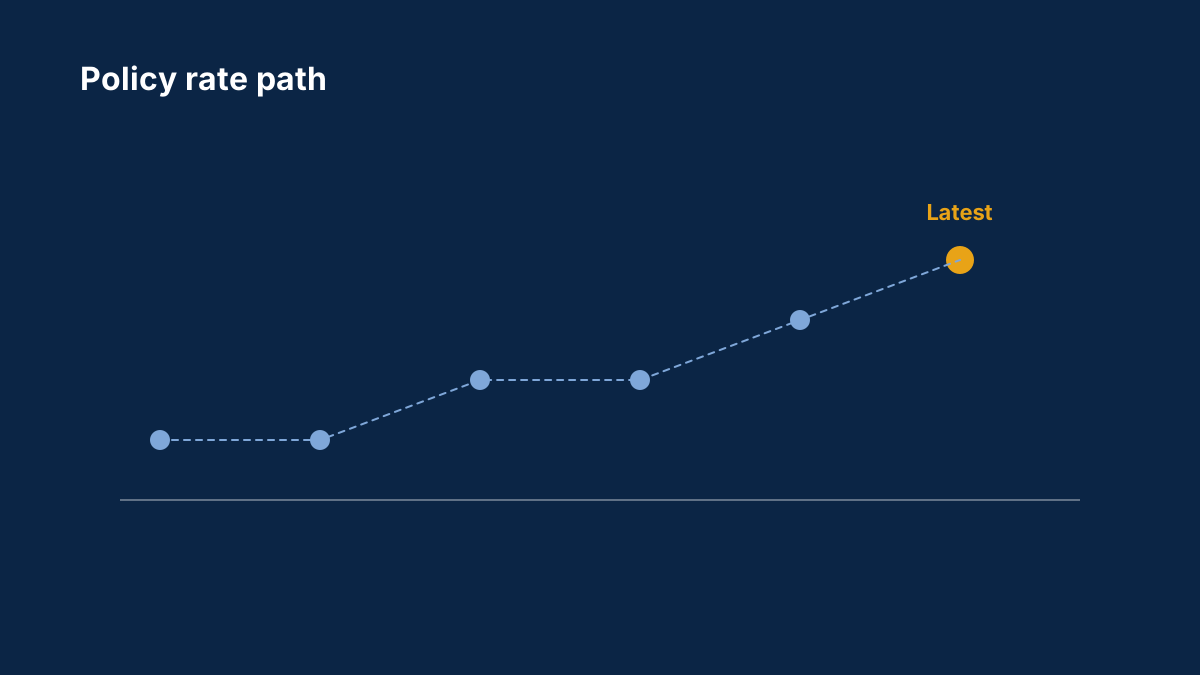
So there was a data point that argued for patience, and a central bank that moved anyway. The gap between the two core measures comes down to energy prices, which the Bureau estimates are being held down by government measures such as abolishing the provisional gasoline tax rate.
For members who trade USD/JPY, EUR/JPY or GBP/JPY, it would help to hear:
- whether you paid more attention to the CPI release, the decision or the press conference, and why
- whether a core reading below 2% changes how you read the Bank's guidance on further increases
- how you handle two big yen events landing on the same morning
- what you use to judge the Bank's next move: inflation, wages, the exchange rate, or something else
Carry trades explained covers why yen moves can be sharp when rate gaps change.
Please share your own approach and reasoning, not calls for others to copy. Posts that promise a direction or sell signals will be removed.
Background: The carry trade explained, and why it can unwind so quickly
Borrowing in a low-interest currency to hold a high-interest one can earn steady income, until the exchange rate turns. How carry works and where the risk hides.
What is a carry trade in forex?
Buying a higher-yielding currency against a lower-yielding one to earn the interest rate difference, usually received as a positive overnight swap.
Why do carry trades unwind suddenly?
They are often crowded. When markets turn fearful, many traders close the same positions at once, buying back the funding currency and pushing it sharply higher.
Comments
Log in to join the discussion. Comments follow the community guidelines.
Log in to commentLoading comments…