How to size a forex trade in four steps
Position sizing is the calculation that keeps one bad trade from becoming a bad month. Here is the four-step method, with worked examples for dollar pairs, yen pairs and crosses.
Every trade contains a hidden decision that matters more than the entry, the exit or the strategy: the position size. The entry decides whether the trade is right; the size decides what being wrong costs. Most losing streaks are not caused by bad entries — they are caused by sizes that made ordinary losses unaffordable.
This guide walks through the four-step sizing method that fixes the cost of being wrong in advance, with worked examples for the three situations that trip traders up: dollar-quoted pairs, yen pairs and crosses. The full reference version is in position sizing and risk per trade.
Step one: decide the risk in money
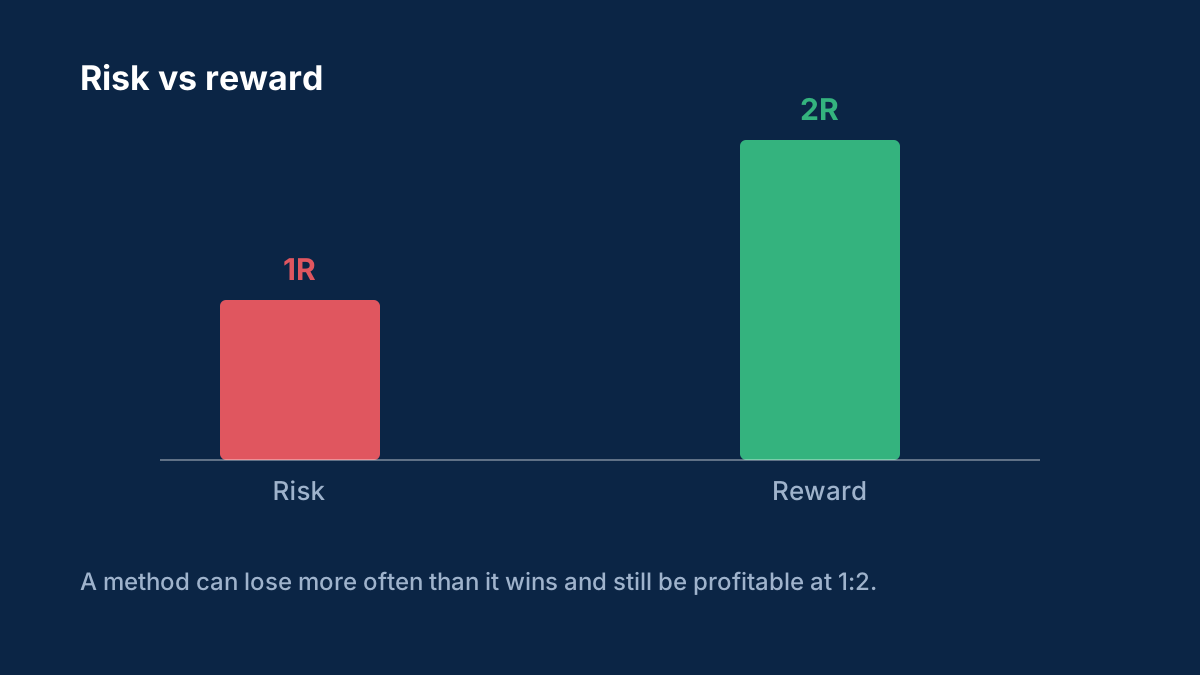
The first number is the amount you are willing to lose if the trade is wrong, expressed in money. The standard method fixes this as a percentage of the account: 1% is the common starting point, 2% is aggressive, anything above that is how accounts die.
On a $5,000 account, 1% is $50. That is the trade's budget: whatever the stop distance, whatever the pair, the loss if the stop hits is capped at $50. The percentage is the constant; everything else adapts to it.
Step two: set the stop distance
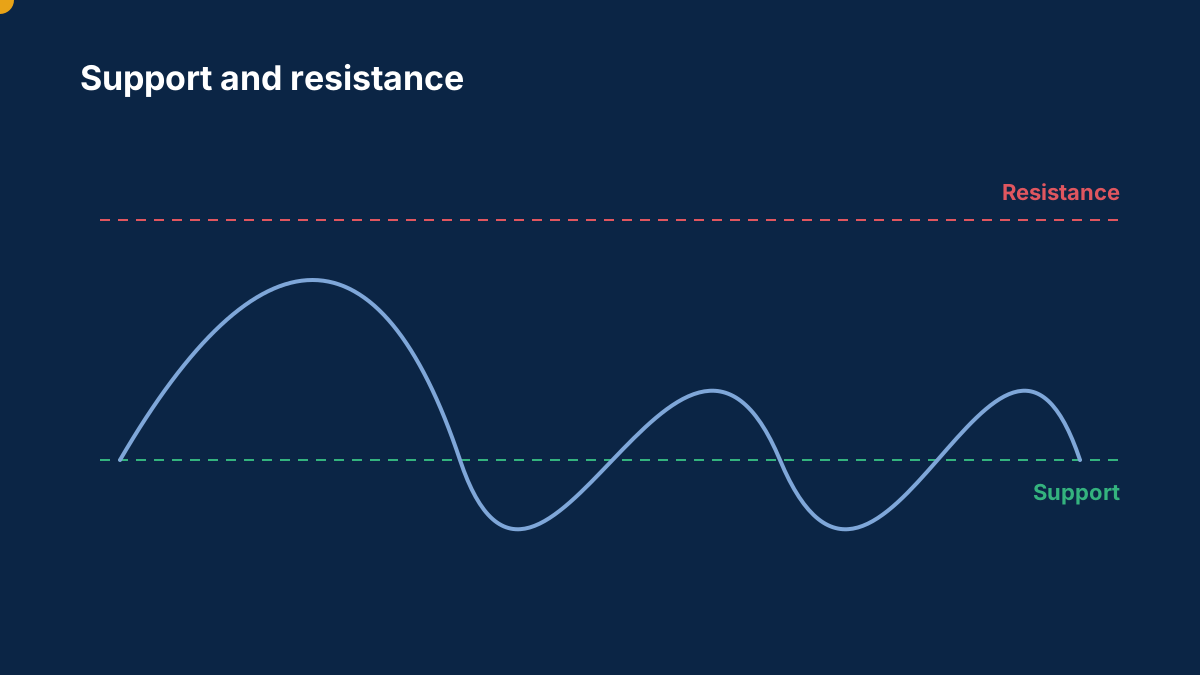
The second number comes from the chart, not the wallet. The stop goes where the trade idea is wrong — beyond the level, the swing, the structure the trade is built on. Where to place a stop-loss covers the anchoring logic.
The stop distance is whatever the chart requires: 20 pips on a tight intraday setup, 80 pips on a swing trade, $8 on gold. The sizing method does not care — it converts any distance into the right position.
Step three: work out the pip value
The third step connects pips to money: how much is one pip worth on one lot of this pair, in your account currency?
Dollar-quoted pairs (EUR/USD, GBP/USD, AUD/USD): on a dollar account, one standard lot is $10 per pip, a mini lot $1, and a micro lot $0.10. On other account currencies, multiply by the exchange rate.
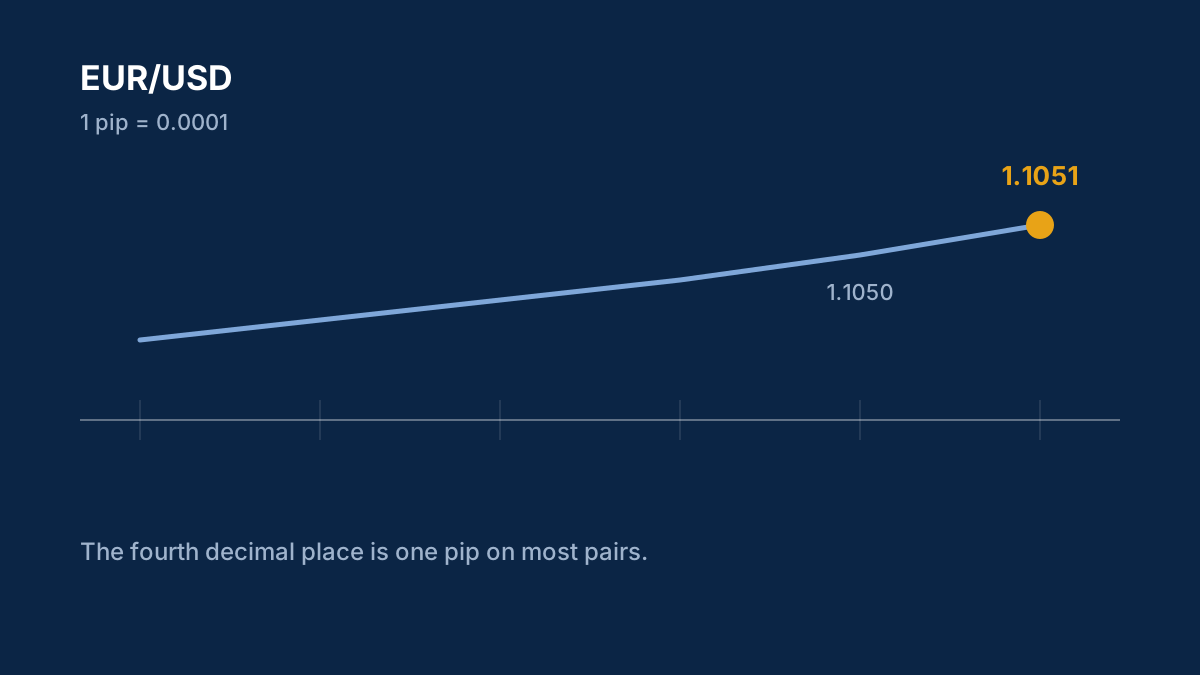
Yen pairs (USD/JPY, EUR/JPY): the pip is the second decimal place, and one standard lot is worth ¥1,000 per pip. To express that in dollars, divide by the USD/JPY rate: at 150.00, one pip on a standard lot is about $6.67.
Crosses (EUR/GBP, GBP/JPY): one standard lot is worth 10 units of the quote currency per pip — £10 on EUR/GBP — which then converts to your account currency at the relevant rate. The full treatment with all the conversion steps is in what is a pip and how to calculate pip value.
Step four: divide risk by stop distance
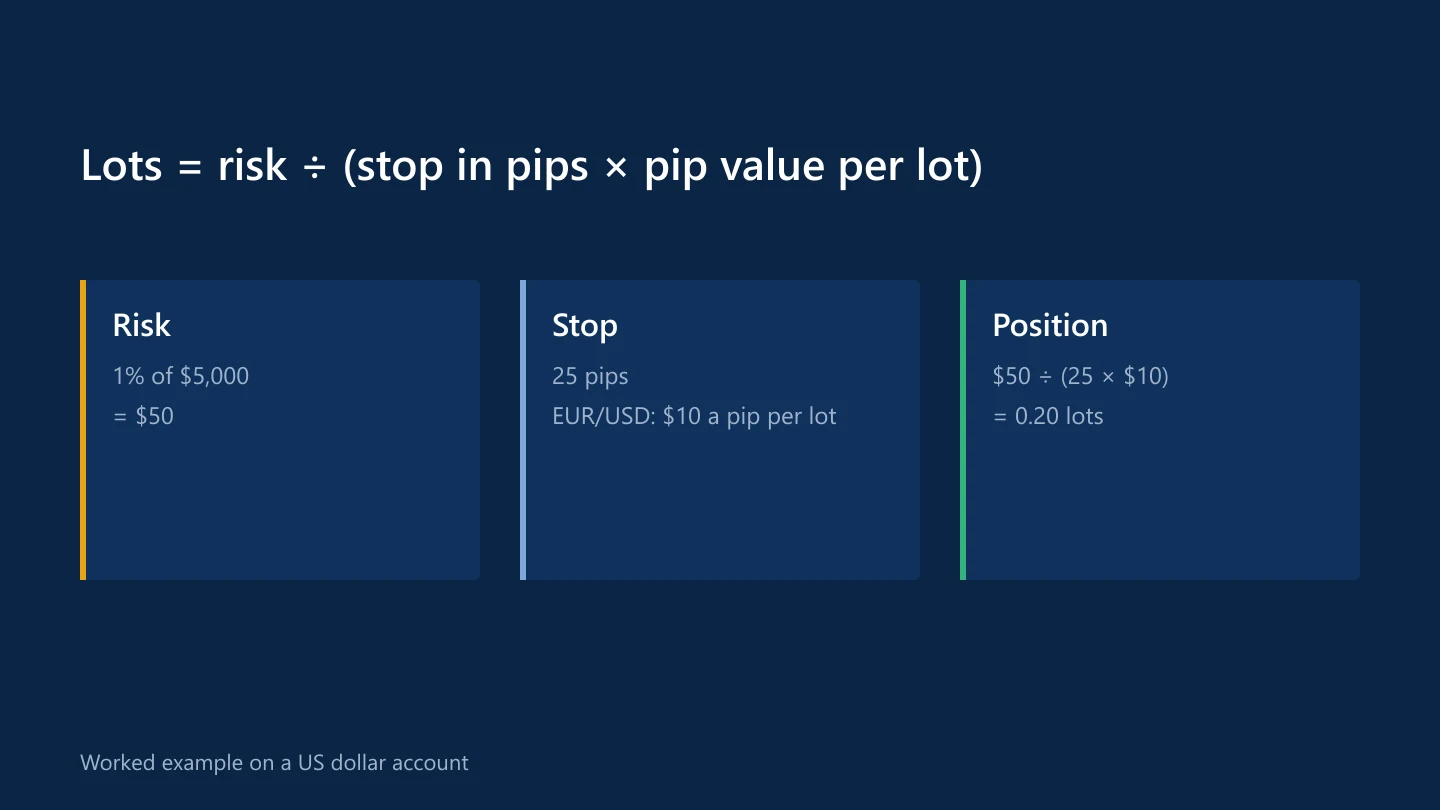
The final step is arithmetic: position size equals the risk amount divided by the stop distance in pips, divided by the value per pip per lot.
Worked example one — EUR/USD, dollar account. $5,000 account, 1% risk = $50. The chart requires a 40-pip stop. One standard lot is $10 per pip, so a standard lot would lose $400 over 40 pips. The position is $50 ÷ 40 ÷ $10 = 0.125 lots, which rounds to 0.12 or 0.13 lots.
Worked example two — USD/JPY, dollar account. Same $50 risk. The chart requires a 60-pip stop, and at USD/JPY 150.00 one pip on a standard lot is about $6.67. The position is $50 ÷ 60 ÷ $6.67 ≈ 0.125 lots again — but note the conversion step that the dollar pairs skip.
Worked example three — gold. Same $50 risk. The chart requires an $8 stop, and one lot of 100 ounces moves $100 per dollar. The position is $50 ÷ 8 ÷ $100 = 0.0625 lots. The same risk budget produces a much smaller position, because gold's range is wider — which is exactly the point of the method.
Why this order matters
The order of the four steps is the method. Risk first, then the stop from the chart, then the pip value, then the size. Reversing the order — choosing a lot size first, then placing the stop wherever that size allows — is how the most common sizing errors happen: the trade is sized by habit or confidence, and the stop becomes whatever the size can afford.
The two methods produce the same trades on good days and very different ones on bad days. Risk-first sizing makes the loss constant and the position variable; size-first trading makes the position constant and the loss whatever the market decides. The risk-reward and expectancy guide shows how the difference compounds across a month of trades.
The common errors to check
Three errors account for most sizing mistakes, and all three are worth checking before every trade:
The pip-value error on yen pairs and crosses. The conversion step — yen pips to dollars, quote currency to account currency — is where the arithmetic breaks. When in doubt, run the numbers with a pip calculator before the trade.
The account-currency error. Trading a EUR/GBP position from a dollar account, or a dollar pair from a pound account, adds a conversion layer to the pip value. Skipping it overstates or understates the true risk.
The per-trade risk creep. The percentage drifts with the mood — 1% on a careful Monday, 3% on a confident Friday. The journal guide makes the drift visible, and the daily limit in the trading plan makes it expensive.
Position sizing is the least glamorous skill in trading and the most protective. Four steps, run before every trade, convert any strategy into one where being wrong is affordable — and that is the precondition for every other skill to matter.
Sources
Common questions
What is the formula for position sizing?
Position size equals the risk amount divided by the stop distance in pips, divided by the pip value per lot. Risk amount is a fixed percentage of the account, usually 1%.
How much is one pip worth per lot?
On dollar-quoted pairs with a dollar account: $10 per pip on a standard lot. On yen pairs it is ¥1,000 per pip, converted at the USD/JPY rate. On crosses it is 10 units of the quote currency, converted to your account currency.
Why is 1% risk per trade recommended?
Because losing streaks are guaranteed, and 1% keeps ten losses at about a 10% drawdown — recoverable. Larger risk percentages make recovery exponentially harder after a streak.
Should position size depend on the stop distance?
Yes. The stop distance comes from the chart, and the position size is calculated from it. A wider stop means a smaller position, so the money at risk stays constant.
How do I size gold trades?
The same four steps, using gold's dollar-per-ounce move instead of pips. Gold's wider stops produce much smaller positions than currency pairs for the same risk budget.
This article is for information only and is not financial advice. Trading forex and CFDs carries a high risk of losing money. Read the risk warning. Spotted an error? Tell the editors.
Comments
Log in to join the discussion. Comments follow the community guidelines.
Log in to commentLoading comments…