Does your platform freeze or lag for a few seconds when a major number is released? What have you seen?
Many scheduled releases land at an exact second. The September US jobs report was published at 8:30 a.m. Eastern Time on 2 October (12:30 UTC), when payrolls rose 29,000 and the 2-year Treasury yield closed the day at 4.83% (report). At moments like that, a flood of orders and price updates reaches brokers and liquidity providers at once, and some traders report that their platforms freeze, show stale prices, or take a few seconds to confirm an order.
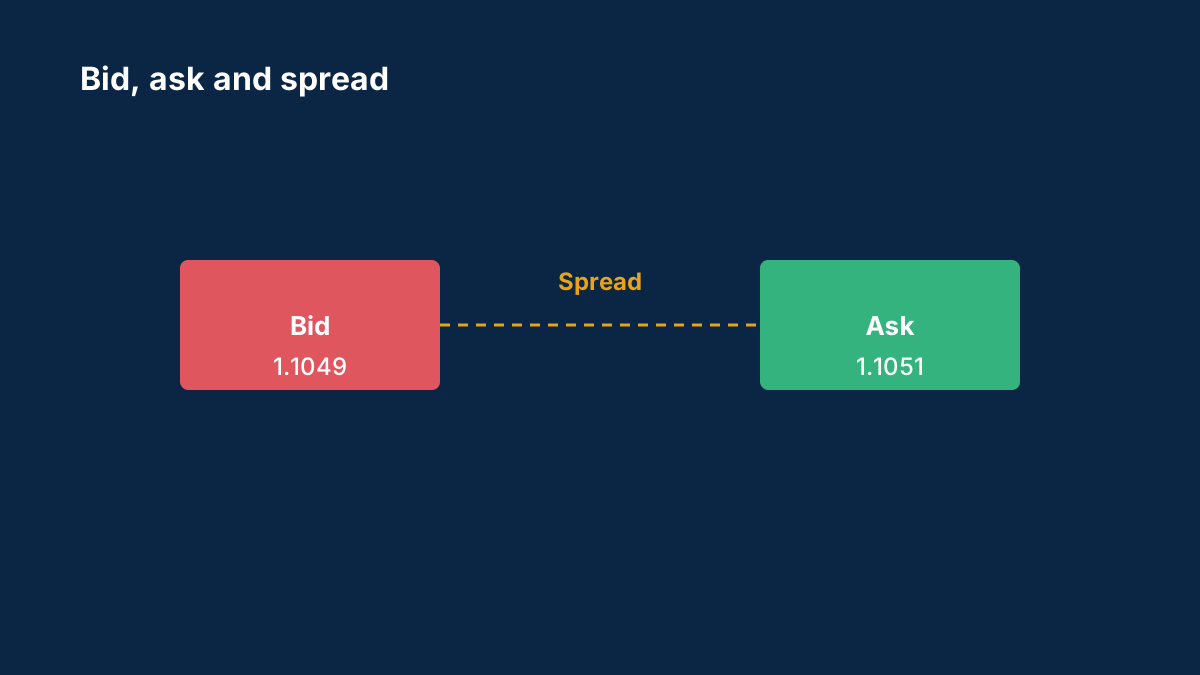
Whether it happens depends on the broker, the platform, the instrument and your own connection, and the effects can be different: a delayed fill, a requote, a wider spread or a price that does not update. Bid, ask and slippage explained covers why a fill can differ from the price you saw.
We would like to hear what members have actually observed:
- Have you seen your platform freeze, lag or show stale prices around a major release? On which instruments, and for how long?
- Did you place an order during the lag, and what happened to it?
- How do you check, afterwards, whether your fill matched the market? Do you save screenshots or timestamps?
- Does it make you avoid trading in the seconds around a release?
Please describe what you observed rather than posting verdicts on a broker, and leave out account numbers and other personal details. Posts that promise returns or sell signals will be removed.
Background: Bid, ask and slippage: why your order fills at a different price
Why buy trades open at one price and close at another, why a stop can trigger when the chart never touched it, and how slippage happens.
Why did my stop-loss trigger when the price on the chart didn't reach it?
Charts usually show the bid price, but a sell position's stop is triggered by the ask. If the spread widened, the ask could have touched your stop while the bid line stayed away from it.
What is slippage?
The difference between the price you expected and the price your order was filled at. It is most common in fast or thin markets, such as around news releases.
Comments
Log in to join the discussion. Comments follow the community guidelines.
Log in to commentLoading comments…