US factories cut output in August while surveys show services surging. How do you trade a two-speed economy?
The Federal Reserve reported on 18 September that US industrial production was unchanged in August. Manufacturing output fell 0.3%, its first decline after seven straight monthly gains, while utilities jumped 1.8% (full report).
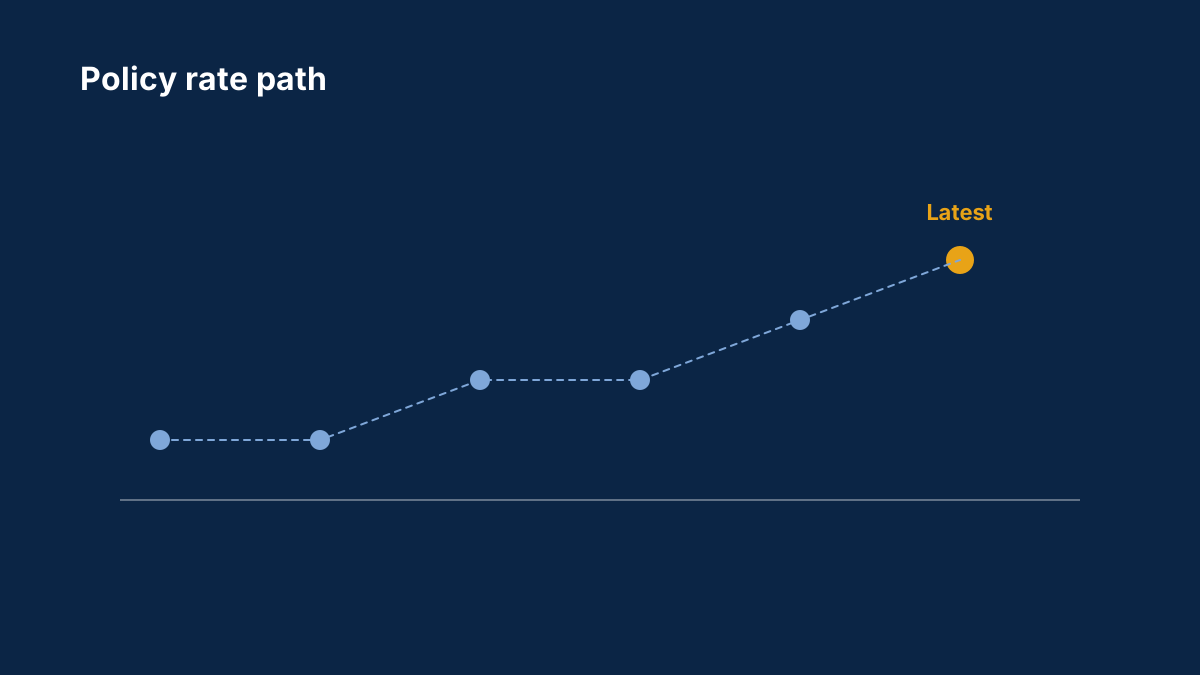
The surveys tell a different story for services. The ISM services index rose to 55.4 from 54.1 (report), and S&P Global's flash US PMI in August showed services activity at a 20-month high while manufacturing output slipped to a 13-month low. The ISM manufacturing index fell to 54.6 from 55.6 but stayed in expansion (report). The Federal Reserve then raised its target range to 3.75%–4.00% on 16 September (report).
So hard data and surveys don't line up neatly, and manufacturing and services are heading in different directions. We would like to hear how you deal with that.
- Do you give more weight to hard data such as industrial production, or to surveys such as the PMIs?
- Does a weak factory reading change your view of the dollar, or do you mostly follow services, jobs and inflation?
- When two reliable sources disagree, what do you do: wait for the next release, cross-check with a third, or trade smaller?
- Has a divergence like this ever caught you out, or helped you?
PMIs explained is a good refresher on how the survey numbers are built.
Please keep replies to your own reasoning. Posts that promise a direction or sell signals will be removed.
Background: PMIs explained: the survey data that moves currencies early
Purchasing managers' indexes are among the first economic numbers published each month. What the 50 line means, which PMIs matter and how traders use them.
What does a PMI of 50 mean?
50 is the dividing line: readings above 50 indicate that business activity is expanding compared with the previous month, and readings below 50 indicate contraction.
What is a flash PMI?
An early estimate published before the month ends, based on most of the survey responses. Flash PMIs often move markets more than the final figures.
Comments
Log in to join the discussion. Comments follow the community guidelines.
Log in to commentLoading comments…