The euro hit its lowest level since May 2025 while the ECB is raising rates. What does that say about rate differentials?
The European Central Bank's daily reference rate put EUR/USD at $1.1204 on 5 October, the lowest since 16 May 2025. It is down 3.6% since 4 September and has fallen for four consecutive weeks, and 6.4% below its January high (full report).
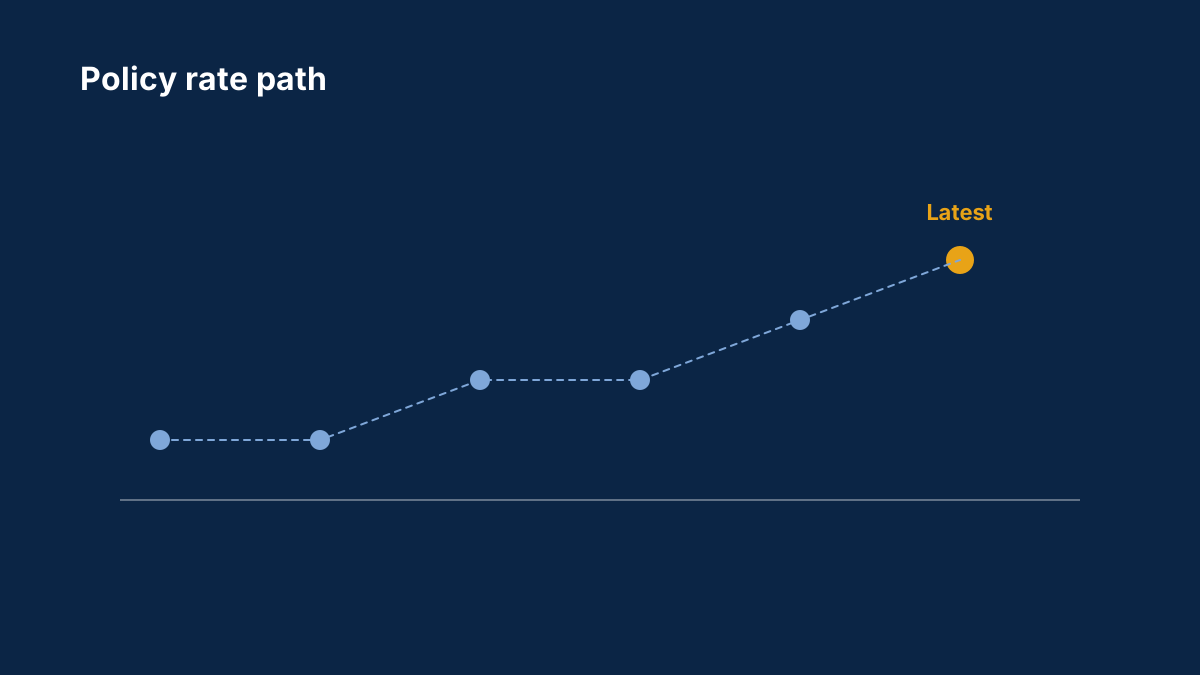
That happened while the central banks were both tightening: the ECB raised its deposit rate to 2.50% on 10 September (report) and the Federal Reserve raised its target range to 3.75%–4.00% on 16 September (report). Euro area inflation reached 3.8% in the September flash estimate, while US PCE inflation was 3.4% in August (report). The 10-year Treasury yield closed at 5.28% on 2 October (report).
Higher rates and above-target inflation do not move a currency in one direction by themselves. What matters is the gap between rates, what markets expect next, and what is happening to growth and risk.
We would like to hear how you read it:
- Do you look at the gap in policy rates, in 2-year yields, in 10-year yields or in real rates, and which has worked best for EUR/USD?
- How much weight do you give expected changes in rates compared with where they are now?
- When a currency falls while its central bank hikes, do you take that as a sign you have the wrong model, or as a sign the other forces are bigger?
- Where do you check yields, and how often?
Bond yields and exchange rates explains the basic link.
Please share your own approach and reasoning, not calls for others to copy. Posts that promise a direction or sell signals will be removed.
Comments
Log in to join the discussion. Comments follow the community guidelines.
Log in to commentLoading comments…