The Bank of Japan's board is split between 'accelerate if prices overshoot' and 'no need for haste'. How do you trade a divided central bank?
The Summary of Opinions from the Bank of Japan's 17–18 September meeting, published on 1 October, shows a board that agrees on direction but not pace. One opinion said: "If signs of an upward deviation in prices are observed, the Bank will need to accelerate the pace of rate hikes." Another said underlying inflation "does not seem to be accelerating at a speed that could lead the Bank to fall behind the curve, so there is no need to take hasty action." One opinion argued for holding at the September meeting, and two board members voted against the increase when the policy rate went to 1.25% on a 7–2 vote (full report).
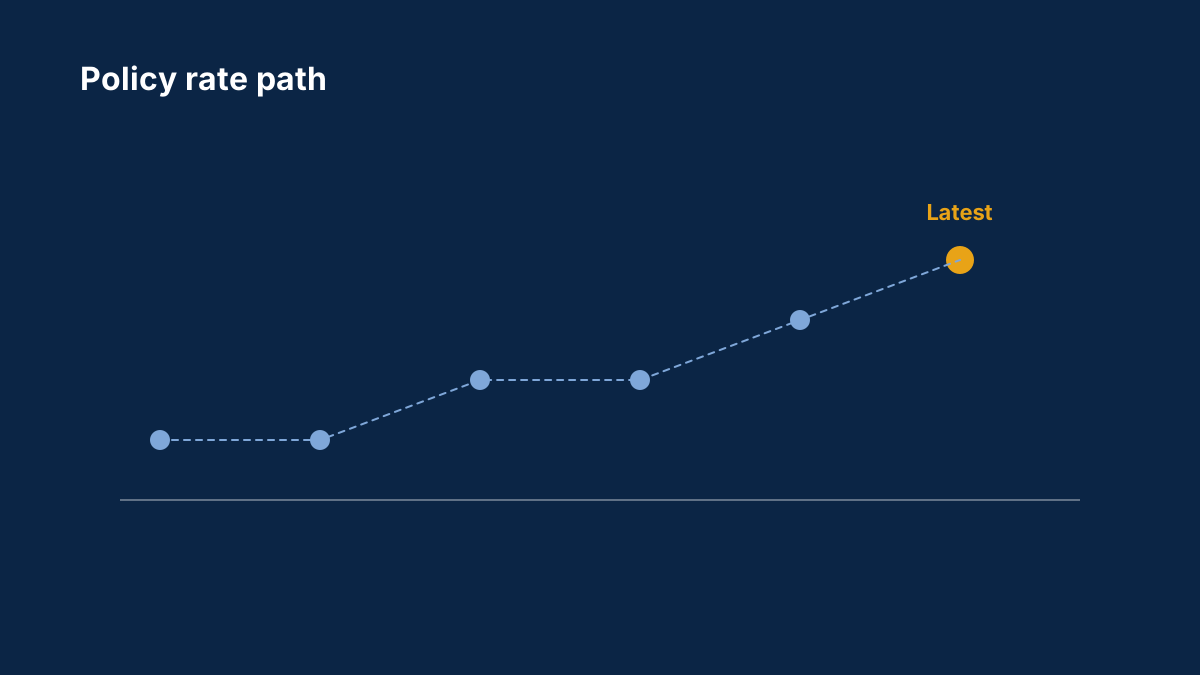
For yen traders, that creates a particular kind of uncertainty. The Bank's next meeting is on 29–30 October, with a new Outlook Report, and the dissent at the last meeting went in both directions. The Bank, the government and the exchange rate all matter: Japan and the United States intervened together to support the yen on 31 July (report).
We would like to hear how members handle it:
- Do you read a split board as a reason to trade less, or as a source of opportunity because the market may misjudge the next move?
- Which do you follow more closely: the decision itself, the dissent, the Summary of Opinions or the press conference?
- How do you factor intervention risk into a USD/JPY or EUR/JPY position when a rate decision is also due?
- Does a hawkish minority change how you think about the pace of the next move?
Carry trade explained shows why yen moves can be sharp when the rate gap changes.
Please share your own approach and reasoning, not calls for others to copy. Posts that promise a direction or sell signals will be removed.
Background: The carry trade explained, and why it can unwind so quickly
Borrowing in a low-interest currency to hold a high-interest one can earn steady income, until the exchange rate turns. How carry works and where the risk hides.
What is a carry trade in forex?
Buying a higher-yielding currency against a lower-yielding one to earn the interest rate difference, usually received as a positive overnight swap.
Why do carry trades unwind suddenly?
They are often crowded. When markets turn fearful, many traders close the same positions at once, buying back the funding currency and pushing it sharply higher.
Comments
Log in to join the discussion. Comments follow the community guidelines.
Log in to commentLoading comments…