Canada's GDP was flat in July ahead of the Bank of Canada on 28 October. Which Canadian number do you weight most?
Statistics Canada reported that real GDP was essentially unchanged in July, with construction up 1.3% for a fourth month, utilities up 1.7% and manufacturing down 0.9%, retail trade down 1.0% and mining and oil and gas down 0.5%. The advance estimate for August is +0.2%, to be replaced by the official figure on 30 October (full report).
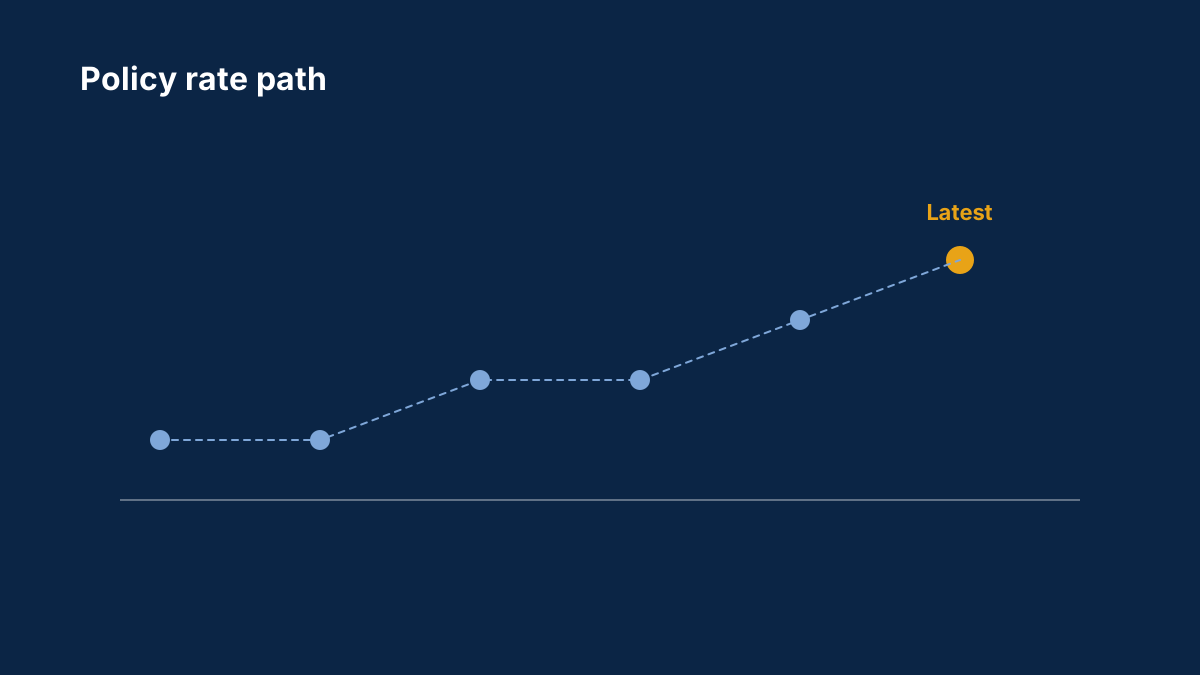
The Bank of Canada held its policy rate at 2.25% in September (report) and decides again on 28 October. Before then come the September jobs report on 9 October and consumer prices later in the month. Consumer price inflation was 3.0% in August (report), and the August jobs report is here.
A flat month can come from very different things: a refinery outage in Ontario pulled petroleum product output down 5.7%, while a heat wave lifted utilities. Part of GDP data is noise from one-off events, which is why some traders watch other releases more closely.
How do you decide which number matters most?
- For USD/CAD ahead of a Bank of Canada meeting, which do you weight most: GDP, jobs, CPI, or the Bank's own wording?
- Do you adjust for one-off events, such as the refinery outage, before you form a view?
- How do you treat an advance estimate like August's +0.2% before the official number arrives?
- Do you trade the oil price and the Canadian dollar together, or separately?
Oil prices and the Canadian dollar covers that link.
Please share your own approach and reasoning, not calls for others to copy. Posts that promise a direction or sell signals will be removed.
Background: Oil and currencies: why crude prices move the Canadian dollar
Crude oil links energy markets to currencies through trade, inflation and interest rates. How that works for the Canadian dollar, and why the link isn't fixed.
Why does oil affect the Canadian dollar?
Crude oil is one of Canada's largest exports. Higher prices increase export earnings and demand for Canadian dollars, and they also affect inflation and interest rate expectations.
Does USD/CAD go down when oil goes up?
Often, because a stronger Canadian dollar pushes USD/CAD lower. But the relationship isn't fixed: interest rates, trade relations and risk sentiment can outweigh oil.
Comments
Log in to join the discussion. Comments follow the community guidelines.
Log in to commentLoading comments…