China's PMIs crossed back above 50 in September. Does that change how you trade the Australian dollar?
China's National Bureau of Statistics reported on 30 September that the manufacturing PMI rose to 50.1 from 49.8, back above the 50 line after two months below it. The non-manufacturing PMI rose to 50.2 from 49.0, and the composite reached 50.7 from 49.5. Within manufacturing, the input price index was 60.8 and the output price index 54.0, up 4.2 and 3.6 points (full report).
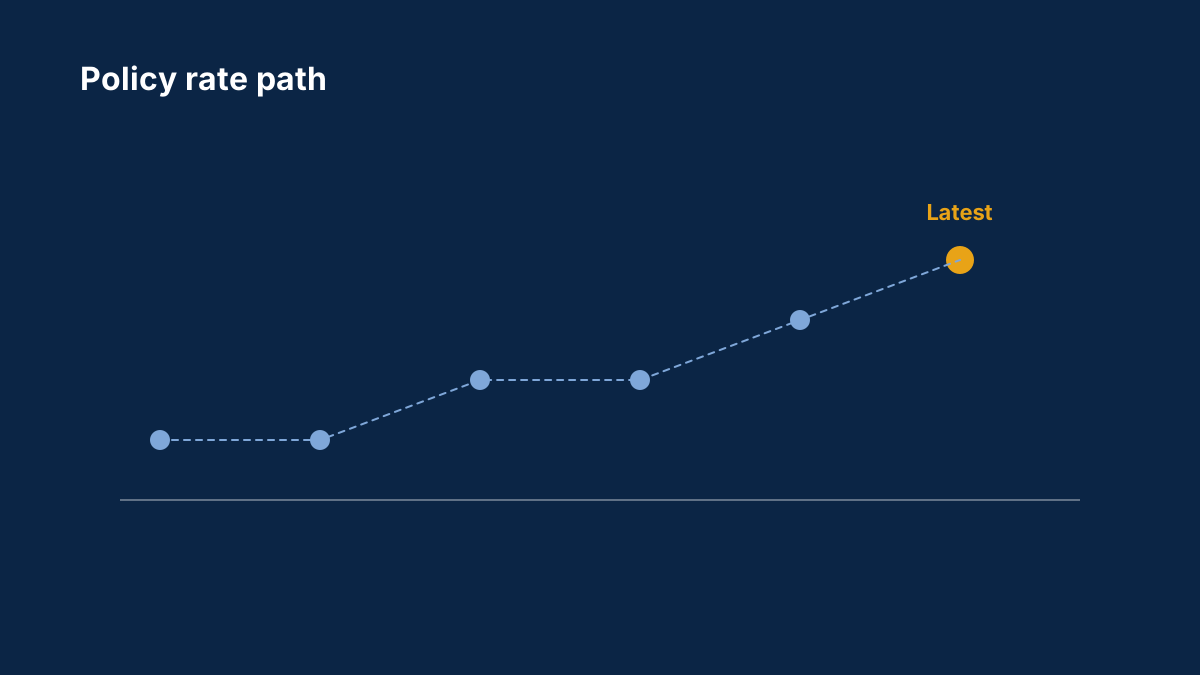
The Australian dollar has two big drivers at the moment. China is Australia's largest trading partner, so its data matter for the currency. And the Reserve Bank of Australia raised its cash rate to 4.60% on 29 September, its fourth increase this year, a day before Australian inflation came in at 4.0% for August (report). By FTC's calculation from ECB reference rates, AUD/USD went from 0.7203 on 4 September to 0.6960 on 5 October as the dollar strengthened.
Both China's data and the RBA were published within a day of each other, which makes it hard to say which one mattered.
We would like to hear how you separate the influences:
- When China's PMI and Australian rates move in the same week, which do you weight more for AUD/USD?
- Do you treat a PMI that has only just crossed 50 as a turning point, or wait for confirmation?
- Do you watch China's price components, such as that 60.8 input price index, as much as the headline?
- Which other China release do you use: trade data, inflation, or activity?
Please share your own approach and reasoning, not calls for others to copy. Posts that promise a direction or sell signals will be removed.
Comments
Log in to join the discussion. Comments follow the community guidelines.
Log in to commentLoading comments…