The RBA changed its guidance from 'if upside risks materialise' to 'if needed'. How do you read a one-phrase change?
In August the Reserve Bank of Australia held at 4.35% and said it would do what it considers necessary to bring inflation back to target, "including increasing the cash rate target further if upside risks materialise." On 29 September it raised the cash rate to 4.60%, its fourth increase of 2026, and the guidance now reads "including increasing the cash rate target further if needed." The statement also said that "since the previous meeting, some of the upside risks to inflation are materialising" (full report).
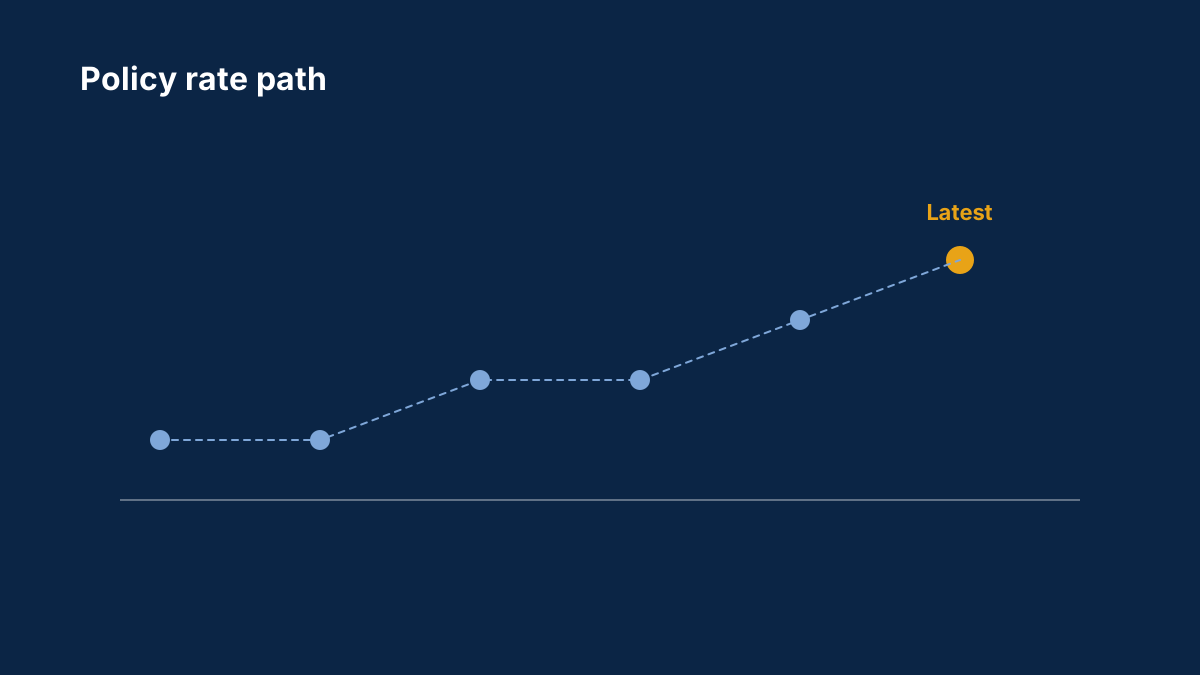
The condition tied to upside risks has been dropped. A day after the decision, the ABS reported that annual inflation had risen to 4.0% from 3.5% (report). Central banks often move guidance one phrase at a time, and traders treat those changes as signals, sometimes more than the decision itself.
We would like to hear how you handle it:
- Do you compare each statement with the last one, word by word, or do you read it once for the overall message?
- Did the change from "if upside risks materialise" to "if needed" change your view of where the cash rate goes next, or did you see it as a formality after the decision?
- How do you separate a real signal in a statement from routine rewording?
- Do you trade the statement the moment it is out, or wait for the press conference at 3:30 pm AEST?
How interest rate decisions move currencies explains why guidance matters. If you have a method for comparing statements, such as keeping the old and new text side by side, describe it.
Please share your own approach and reasoning, not calls for others to copy. Posts that promise a direction or sell signals will be removed.
Background: How interest rate decisions move currencies
Central bank decisions are the biggest scheduled events in forex. Why rates matter, why a hike can weaken a currency, and what to read beyond the decision.
Does a rate hike always strengthen a currency?
No. If the hike was fully expected, it is already in the price. The currency can even weaken if the central bank signals that it won't raise rates further.
What does hawkish mean?
Leaning towards higher interest rates to control inflation. A hawkish surprise usually supports the currency.
Comments
Log in to join the discussion. Comments follow the community guidelines.
Log in to commentLoading comments…