Swing trading: what's your typical holding period?
Swing trades last days to weeks, and the holding period decides everything else: the time frame you analyse, the stops you need and the swap you pay. New swing traders usually discover swap costs on their first statement.
Share:
- your average hold and your maximum
- how swap changes the economics of your holds
- the time frame that drives your entries
The trading styles guide and trading costs guide frame the trade-offs.
Background: Scalping, day trading, swing trading and position trading compared
Trading styles differ in holding time, costs, screen time and overnight risk. Compare them side by side to find the style that fits your schedule and account.
What is the difference between swing trading and day trading?
Day traders close every position within the same day, so they avoid swap and weekend gaps. Swing traders hold for days or weeks, paying or receiving swap and carrying gap risk, but their costs are smaller relative to their targets.
Is scalping a good style for beginners?
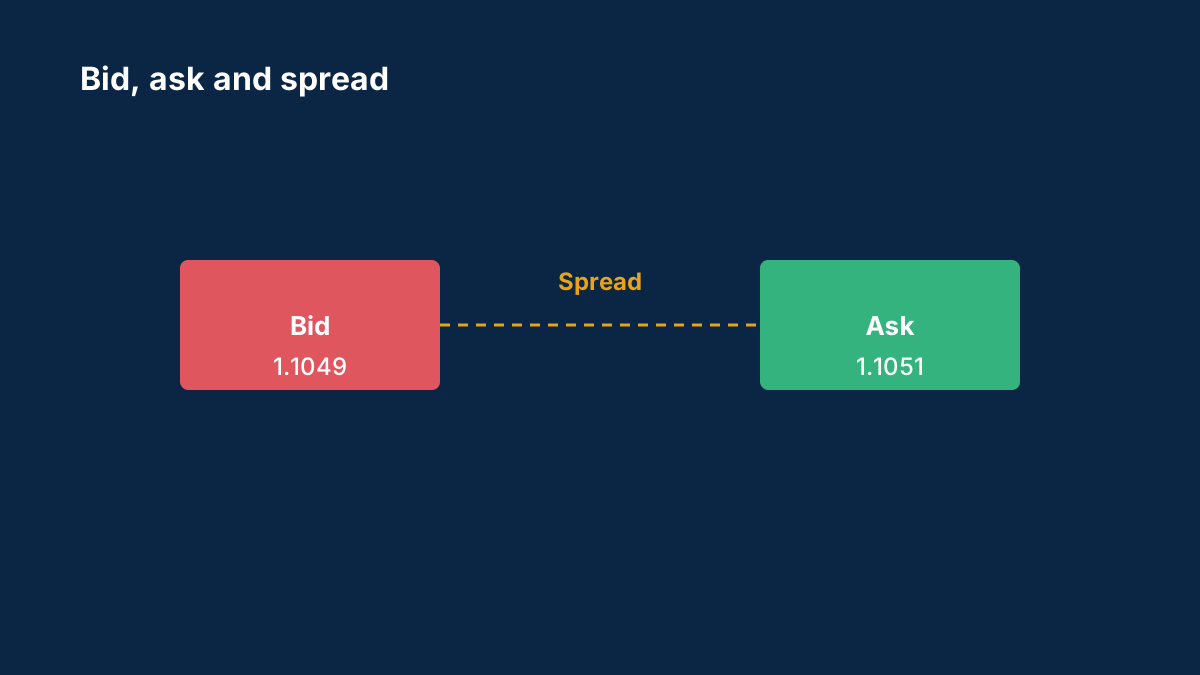
Scalping is difficult because costs are large relative to small targets: a 1-pip spread is 20% of a 5-pip target. It also demands fast execution and constant attention.
Comments
Log in to join the discussion. Comments follow the community guidelines.
Log in to commentLoading comments…