What is the term premium, and why do central banks and the BIS keep mentioning it? Explain it simply
If you have read about bond yields lately, you will have met the phrase "term premium". The Bank for International Settlements describes it as the compensation investors require to hold longer-term bonds. In its September review it said that the term premium on the US 10-year bond rose by around 10 basis points after the conflict with Iran flared up again at the end of June, accounting for about 40% of the overall rise in yields (BIS report).
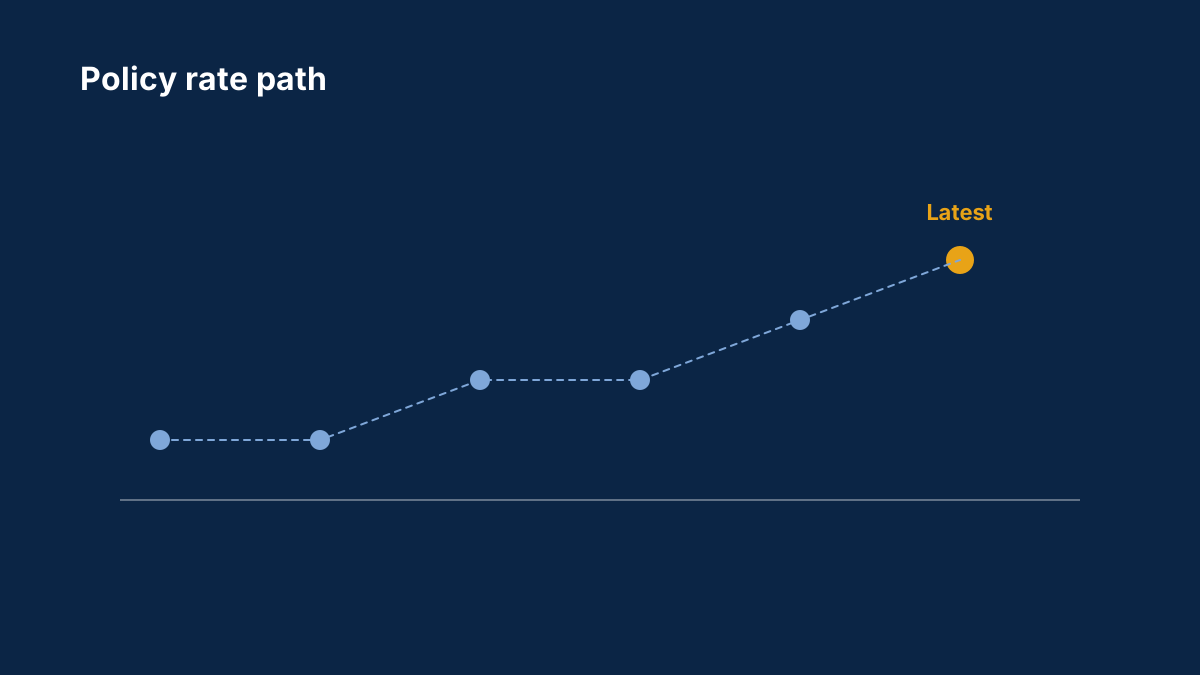
A way to picture it: a 10-year bond yield can be split into two parts. One is the average of the short-term interest rates investors expect over those ten years. The other is the extra yield they demand for the risk of locking their money up that long, the term premium. When the 10-year yield rises, it can be because expected policy rates have gone up, because the premium has gone up, or both. The US 10-year yield closed at 5.29% on 30 September, its highest since 2002 (yields report).
The term premium cannot be observed directly. It is estimated from models, so different institutions give different numbers.
We would like the friendliest explanation in the community:
- How would you explain the term premium to someone who has never traded bonds?
- Is there an everyday comparison, such as a fixed-rate loan or a long hotel booking, that made it click for you?
- Why does it matter for currency traders, if at all?
- What was the first source that helped you understand it?
Bond yields and exchange rates is a good starting point. Please keep replies friendly and practical. Posts that promise a direction or sell signals will be removed.
Background: Bond yields and exchange rates: why currency traders watch the 2-year yield
Currencies often follow the gap between two countries' government bond yields. How yield differentials work, why 2-year yields track central bank expectations, and when the link breaks down.
Why do currency traders watch bond yields?
Because money tends to flow toward higher returns. The gap between two countries' bond yields, especially 2-year yields that track central bank expectations, often moves in line with their exchange rate.
What is a yield differential?
The difference between the yields on comparable government bonds in two countries, such as US and German 2-year bonds. A gap widening in one country's favour tends to support its currency.
Comments
Log in to join the discussion. Comments follow the community guidelines.
Log in to commentLoading comments…