Norges Bank raised its rate and the Riksbank held: how are you trading the split between NOK and SEK?
On 24 September Norges Bank raised its policy rate a quarter point to 4.50%, while Sweden's Riksbank held at 1.75% but said increases are now likely to begin before the end of the year (full report). Two central banks that are often discussed together moved in different directions on the same morning.
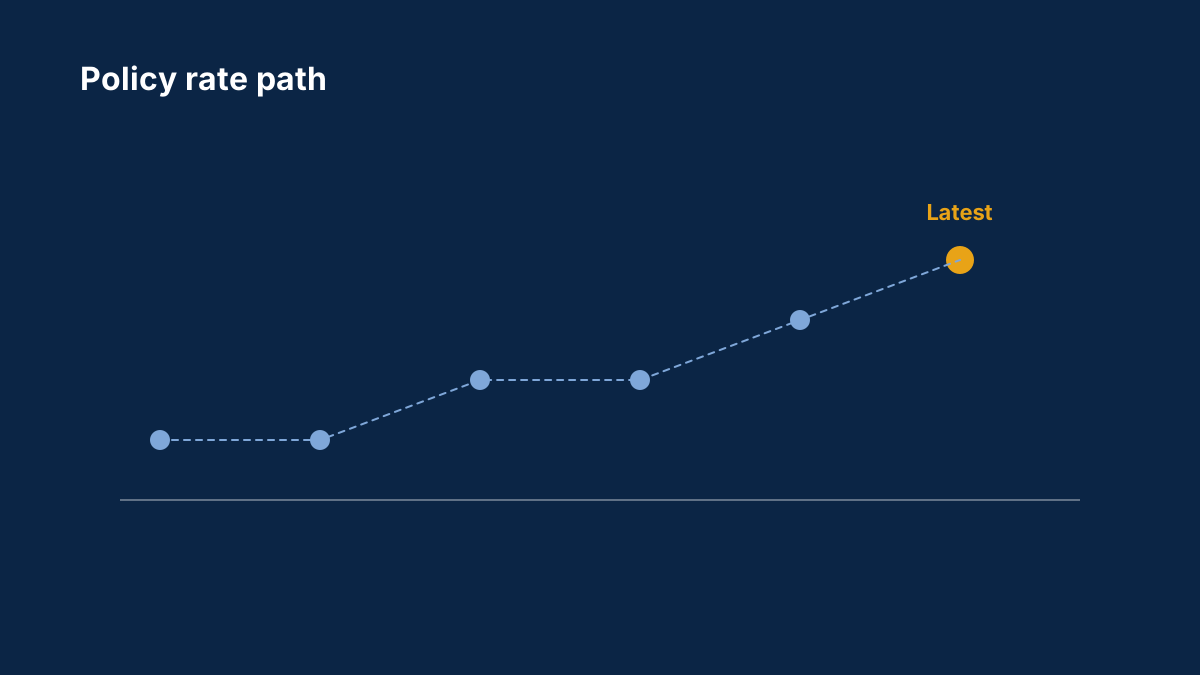
Norges Bank's move was justified by inflation running hotter than its June forecast even as the underlying CPI-ATE measure cooled. The Riksbank's hold came with unusually direct forward guidance: it now expects to raise its own rate more than it projected in June, "if the outlook for inflation and economic activity remains unchanged."
That leaves a genuine trading question, not just a "which pair do you watch" one:
- Do you treat this as NOK now having the clearer near-term rate advantage, or does the Riksbank's guidance mean SEK catches up before year-end anyway?
- How much of the krone's move on the day was the hike itself versus the new rate path in Norges Bank's forecast?
- Do you trade EUR/NOK and EUR/SEK as a pair, given both currencies now have diverging but hawkish-leaning central banks against a euro area that already raised rates on 10 September?
- Oil prices matter more for the krone than the krona (commodity currencies explained) — did Brent above $100 a barrel factor into your read at all?
Please share your own reasoning and positioning, not calls for others to copy. Posts that promise a direction or sell signals will be removed.
Background: Commodity currencies explained: the Australian, New Zealand and Canadian dollars and the Norwegian krone
Why the currencies of big commodity exporters move with iron ore, dairy and oil prices, what each country actually exports, and when the link weakens.
What are commodity currencies?
Currencies of countries where commodity exports are a large share of trade, such as the Australian dollar (iron ore), the New Zealand dollar (dairy), the Canadian dollar (oil) and the Norwegian krone (oil and gas).
Why does the Australian dollar follow China?
Iron ore is Australia's largest export and much of it is sold to China, so Chinese demand and data affect Australia's export income and its currency.
Comments
Log in to join the discussion. Comments follow the community guidelines.
Log in to commentLoading comments…