Managing the runner: what's your endgame for the final slice?
The runner is the trade's lottery ticket — the slice that catches the rare big trend. Its management (trail wide, target far, or let structure decide) defines how often that ticket pays.
What's your runner plan?
- the trail or target for the final slice
- how wide you let the give-back run
- the runner that made your year, if you've had one
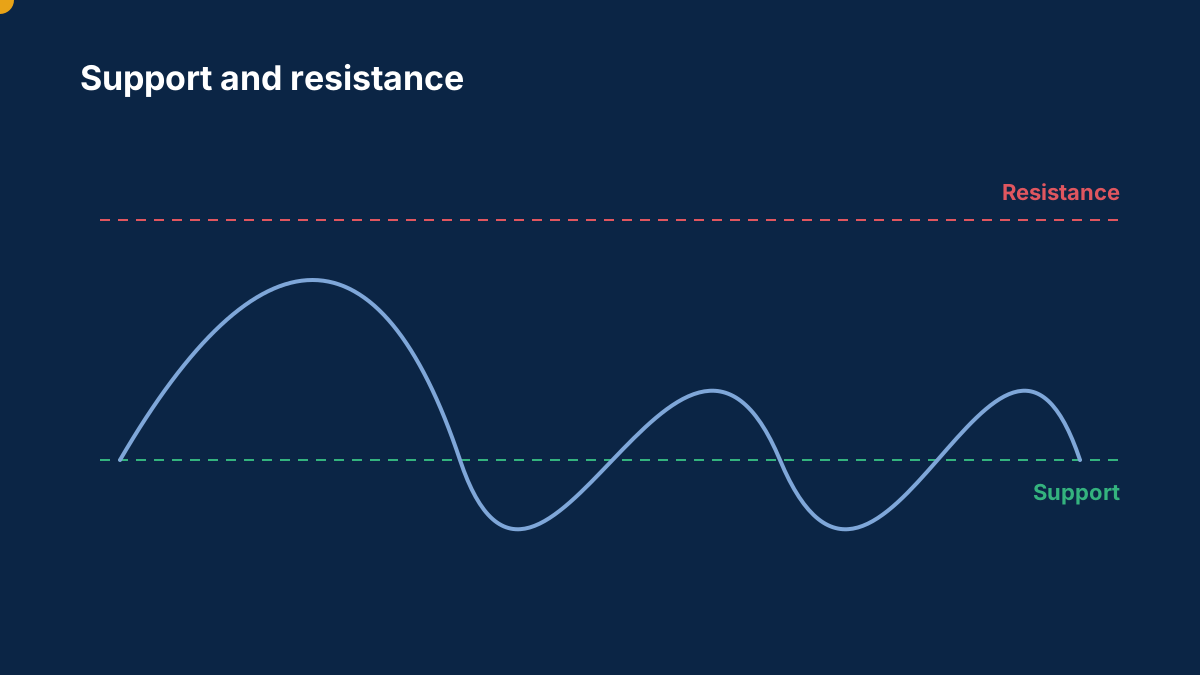
The ATR guide gives the trail for long runs.
Background: Average true range (ATR): measuring volatility and setting stops
ATR shows how far a pair typically moves in a period. Here is how true range is calculated, and how traders use ATR to place stops and size positions.
How is ATR calculated?
True range for each period is the largest of high minus low, high minus the previous close, and low minus the previous close, ignoring signs. ATR averages true range, typically over 14 periods with Wilder's smoothing.
What ATR multiple should I use for a stop-loss?
Many traders use 1.5 to 2 times ATR, but there is no correct number. Wider stops are hit less often and need a smaller position to keep the same amount of money at risk.
Comments
Log in to join the discussion. Comments follow the community guidelines.
Log in to commentLoading comments…